What is ISI Certification under BIS?
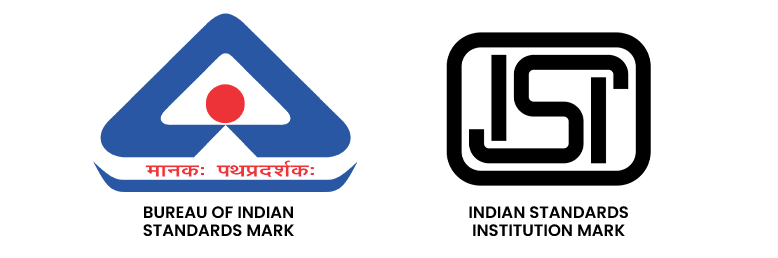
ISI full form is Indian Standards Institution. ISI Certification is a conformity assessment scheme managed by the Bureau of Indian Standards. This certification was originally introduced by Indian Standards Institution so as to ensure that consumers receive quality products that are safe. The ISI Marking Scheme was formally launched in 1955 under Indian Standards Institution Certification Marks Act 1952 and became a trusted symbol of product quality and conformity with Indian Standards.
Over time, the scope of certification expanded further, and as a result, more products were brought under mandatory quality requirements. To provide a stronger legal framework and wider authority for standardization and certification activities, the Bureau of Indian Standards was established under BIS Act, 1986 and became operational w.e.f 1 April 1987.
Since then, ISI Certification has been administered by BIS, and products certified under the BIS Product Certification Scheme (Scheme-I/ISI Mark Scheme) are allowed to carry the ISI Mark. Currently, ISI Certification is mandatory for hundreds of products under the Scheme.
Mandatory Products List for ISI Mark Certification
The mandatory products for ISI Mark Certification include, but are not limited to, the following:
|
Category
|
Product Name
|
|
Construction & Cement
|
Ordinary Portland Cement (OPC)
|
| |
Portland Pozzolana Cement (PPC)
|
| |
Steel Tubes and Tubulars
|
|
Electrical Goods
|
Domestic Pressure Cooker
|
| |
Stationary Storage Type Electric Water Heaters
|
| |
Electric Irons
|
| |
PVC Insulated Cables (up to 1100V)
|
| |
Switches for Domestic Use
|
| |
Miniature Circuit Breakers (MCB)
|
| |
Electrical Transformers
|
|
Automotive
|
Protective Helmets for Two-Wheelers
|
| |
Safety Glass (Automotive)
|
| |
Pneumatic Tyres and Tubes for Vehicles
|
|
Gas & Chemical
|
Domestic LPG Cylinders
|
| |
LPG Regulators
|
|
Food & Packaged
|
Packaged Drinking Water
|
| |
Packaged Natural Mineral Water
|
| |
Milk Powder
|
|
Consumer/Misc
|
Safety of Toys (Physical & Mechanical)
|
| |
Clinical Thermometers
|
For the complete list of products under ISI mark scheme, you can visit the official website of BIS.
Note: The Indian Government issues new Quality Control Orders (QCOs) for different products and industries, from time to time. In recent years, several products in sectors such as footwear, toys, chemicals, electrical goods and other consumer products have been brought under mandatory BIS certification requirements. Therefore, businesses are advised to regularly check whether their products fall under the mandatory certification list.
Key Benefits of Obtaining an ISI Mark for Your Business
The key benefits of obtaining an ISI Mark for your business are as follows:
-
The mark is mandatory for products under the ISI Mark Scheme. So, if your product falls under the scheme and you get this mark, you showcase compliance with legal requirements.
-
By having the mark, you build more trust among customers, distributors, retailers and business partners.
-
Many wholesalers and retailers purchase only ISI-certified products. Therefore, having the ISI Mark can help your business grow.
-
Customers trust your products knowing they carry ISI Mark and are more likely to purchase such products again and again.
-
The mark shows that your products meet the required quality as well as safety standards.
-
It improves your brand image as well as market reputation.
-
The ISI mark gives your products an advantage over non-certified products.
Eligibility Criteria for BIS ISI Certification
To obtain ISI Certification under ISI Certification Scheme, the business must meet the following requirements:
-
One of the key eligibility requirements is that the manufacturing unit must be located in India.
-
Also, the product must comply with the applicable Indian Standard.
-
The factory must have the required machinery and equipment so as to manufacture the product.
-
The manufacturer must have in place the required testing facilities as necessitated under the relevant Indian Standard.
-
A proper quality control system must be in place so as to ensure consistent product quality.
-
The manufacturer must follow all BIS requirements, including the Scheme of Inspection and Testing (SIT).
Documents Required for ISI Certification Application
The documents required for ISI certification under the BIS are as follows:
-
Certificate of Incorporation, Partnership Deed or MSME Registration
-
Factory Registration Certificate
-
Manufacturing License
-
Flow chart of the Manufacturing Process
-
Layout Plan of Factory
-
Quality Control Records
-
Product Test Reports from a BIS-recognized Lab
-
Raw Material Test Certificates
-
List of Manufacturing Machinery
-
List of Testing Equipment
-
Calibration Certificates of Testing Instruments
-
Authorization Letter, if applying through an Authorized Representative
Step-by-Step ISI Certification Process
The following are the steps to obtain ISI Certification in India:
Step 1: Identify the Indian Standard (IS) code applicable to your product. Your product must meet the quality and safety requirements prescribed by BIS.
Step 2: Submit an online application through the BIS Manakonline portal along with the required documents and fees.
Step 3: BIS officials will visit your factory to inspect the manufacturing unit. They will check the production process, quality control system, and testing facilities. Product samples may also be collected for testing.
Step 4: The product samples are tested to ensure that they meet the applicable Indian Standard.
Step 5: If the product successfully passes the inspection as well as testing process, BIS grants the licence to use the ISI Mark.
Note: A separate application must be submitted for each product.
Timeline, Validity, Renewal and Annual Fees of ISI Licence
The time required for grant of ISI Certification may vary depending on the product category, testing requirements and completeness of the application. Both the initial grant and the renewal of an ISI license can be valid for up to 5 years, subject to BIS approval. The renewal application must be submitted via BIS online portal before the license expires.
An ISI licence holder is also required to pay an Annual Licence Fee of Rs. 1,000 and the applicable Minimum Marking Fee as prescribed by BIS. The marking fee varies depending on product as well as production volume of the manufacturing unit. For eligible Micro and Small Enterprises, BIS provides concessions on marking fees.
Why Choose Registrationwala as Your BIS Certification Consultant?
You require precision when filing applications, thoroughness when drafting documents and vigilance when following up with the department. All these tasks are time-consuming – diverting your attention away from doing your business. Registrationwala won't let it happen. We take care of all that you need to do for ISI certification in India.
-
We are precise during application filing – making no errors when submitting it to the BIS
-
We are thorough regarding documentation – ensuring that no document is left out.
-
We are vigilant when following up with the department – taking preliminary measures to deal with any issues.
So, if you want to focus on your business, leave this ISI matter to us. Just give us your requirements and we will get started right away.
Frequently Asked Questions (FAQs)
Q. What is BIS ISI certification in India?
A. BIS ISI certification is a quality and safety assurance mark issued by the Bureau of Indian Standards (BIS).
Q. What is the name of the ISI certification agency in India?
A. The Bureau of Indian Standards (BIS) is the ISI certification agency.
Q. Who offers ISI certification services in India?
A. Registrationwala offers the best ISI certification services in India. We provide end-to-end assistance to businesses so they can obtain the ISI mark certification easily.
Q. What is the ISI and ISO full form?
A. ISI stands for Indian Standard Institute, and ISO stands for International Organization for Standardization.
Q. What is the difference between ISI and BIS?
A. ISI stands for Indian Standards Institution while BIS stands for the Bureau of Indian Standards. The difference between them is that ISI was the former national standards body of India whereas BIS is the current national standards authority.
Q. Is ISI certification mandatory for all products in India?
A. No, it is not mandatory for all products in India. It is mandatory only for the products notified by the BIS under the compulsory certification scheme.
Q. What is the penalty for selling mandatory products without an ISI mark?
A. The penalty for selling mandatory products without an ISI mark is imprisonment of up to two years or fines ranging from Rs.2 lakh to ten times the value of goods sold/offered for sale.
Q. How long is a BIS ISI certificate valid, and how to renew it?
A. It remains valid for up to 5 years. To renew it, you must visit the official BIS portal and file a renewal application on it.
Q. What are ISI registration fees?
A. There are no fixed ISI registration fees. The total ISI registration cost depends on the type of product, testing requirements and manufacturing unit size. As a result, the registration cost is different for each business. To know more, you can connect with Registrationwala consultants.