A Brand Name is a distinctive and unique name that is directly associated with a business. It is the identity by which customers, clients and the general public recognize and remember the business. A brand’s name is more than just a label, it functions as a symbol of the business’s values, quality, trustworthiness and uniqueness. It plays an important role in creating a strong impression in the minds of consumers and helps differentiate the business from the rest of its competitors in the market.
A well-chosen name can create a feeling of trust, emotional connections and encourage long-term customer loyalty. Given its importance in moulding public perception and influencing purchasing decisions, selecting the right name is an indispensable step in building a successful business. In this blog post, we will explain to you the different types of names. If you’re planning to register a company in India, this blog post will be helpful for you!
Different Types of Brand Names in India
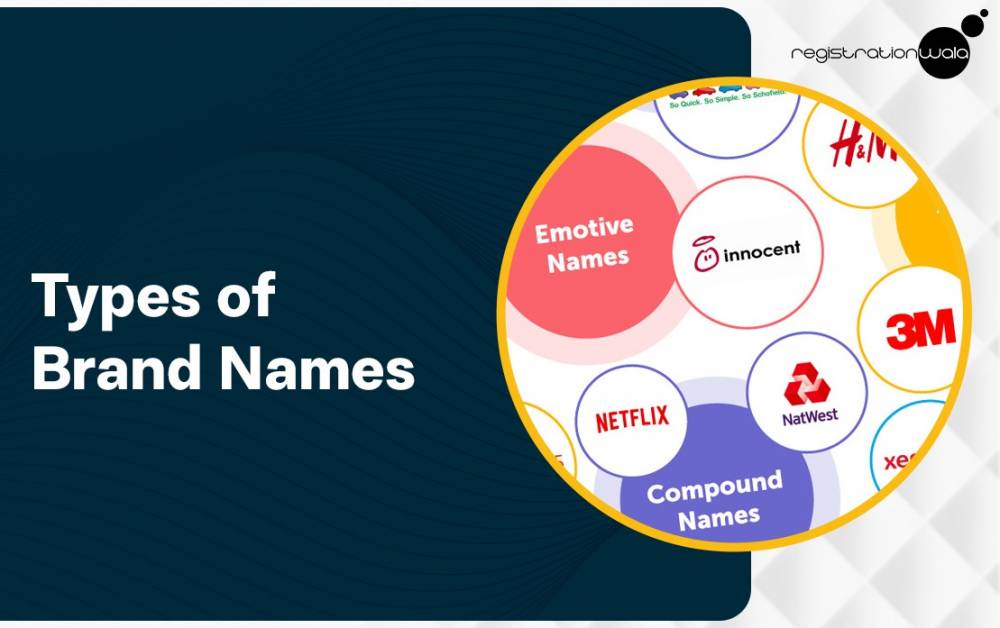
There are different types of brand names in India. The most common types are discussed below:
1. Evocative Brand Names
An evocative name is one that sparks emotions, images or ideas in people’s minds, helping them feel a deeper connection to the brand. These names often use words with a positive vibe like “Amazon,” which suggests vastness, variety and adventure.
By tapping into feelings and cultural meaning, evocative names make a brand stand out and stick in people’s memories.
2. Invented Brand Names
Another type of brand name in India is invented name. This type of name is entirely made up. It has no meaning in any language. So, it’s basically gibberish. Invented names, unlike evocative or descriptive names, don’t evoke any specific emotions or images. Also, they do not refer to any goods or services offered.
Invented names are completely original and typically lack any prior associations, making them easy to trademark, pronounce and remember. Their uniqueness also makes them flexible and adaptable across different markets or product lines. Brands like Google, Yahoo and Xerox are examples of how such names can become iconic and closely tied to the identity of the business itself.
3. Descriptive Brand Name
A descriptive name clearly outlines the nature of the business or the product it offers. These names are ideal for businesses wanting to immediately communicate their function, such as Fresh Fruit Mart, which indicates exactly what the customer can expect. They are straightforward, easy to recall and help establish immediate recognition by highlighting the core offering.
4. Personal Brand Names
Personal names for the brands are linked to individuals rather than companies or products. Depending on the intended image, they can be descriptive, abstract, invented, or evocative. These names are especially valuable for professionals like consultants or entrepreneurs seeking to build a reputation and distinguish themselves as experts. A compelling personal brand can foster trust, credibility and industry influence.
5. Acronym Brand Name
Acronym names are formed using the initial letters of longer phrases or names, such as IBM (International Business Machines). These names are often catchy, simple to remember and easier to trademark due to their uniqueness. However, it's important to ensure the acronym is easy to pronounce, has no unintended meanings and doesn’t resemble other existing brands.
6. Geographic Brand Names
Geographic names for brands draw on the identity of a specific place. Be it a city, region or country. They do this to create a strong local or cultural association. An example would be Hyderabad Biryani, which connects the dish to its place of origin. These names often convey authenticity, tradition, or quality, but should align meaningfully with the product or service offered.
7. Abstract Brand Name
Abstract names are typically made-up or unrelated to any real object, service, or concept. This lack of pre-existing meaning allows for greater creativity and brand flexibility. Names like Apple, Blackberry and Adidas are memorable and distinctive, helping companies build unique brand identities without being tied to a specific product category.
8. Founder Brand Name
A founder name uses the name of the individual who established the business, such as Ford, Cadbury or Calvin Klein. These eponymous names can convey a personal commitment to quality and help humanize the brand. While they may not be imaginative or descriptive, they can be powerful when the founder plays a visible role in the company’s success and public image.
9. Compound Brand Names
Compound names are formed by blending two (or more) words together. These names are often ones that hint at the brand’s mission or vibe. This approach can lead to creative and unique names like Snapdeal (snap + deal) or Netflix (internet + flicks). Basically, it’s a clever way to pack more meaning into a single word and make it your own.
10. Lexical Brand Name
Lexical names use wordplay for impact. This common name style includes onomatopoeia, alliteration, compound words, puns, phrases and deliberate misspellings. Lexical names are frequently witty. Some might contend that they are too intelligent.
There aren't many significant business-to-business businesses with names that fit into the lexical category when it comes to corporate branding. This is an excellent illustration of how to determine which naming style is most appropriate for the brand you want to develop and the market you compete in.
Regardless of the business, lexical names also run the danger of seeming a little archaic. When a customer sees a lexical name in the present market, they are more likely to roll their eyes than to open their wallets unless you can think of a brilliant pun that has never been utilized before. Examples of lexical names include Froot Loops, Krispy Kreme and Dunkin Donuts.
Register Trademark Now
Conclusion
There are different types of brand names in India. Some famous names include: evocative names, invented names, descriptive names, acronym names, abstract names, founder names and lexical names. During the company registration process, choosing the brand’s name is one of the key requirements. While choosing the name, make sure it is unique and not already taken by another business. If you want to protect your brand’s name, you can get trademark registration for it. For assistance, connect with Registrationwala.
Frequently Asked Questions (FAQs)
Q1. How to protect the brand name of a company?
A. To protect a company’s name, you must secure trademark registration.
Q2. What are Founder Brand Names?
A. A founder name is derived from the name of the person who established the business. Examples are Ford and Calvin Klein.
Q3. What do you mean by Lexical Brand Names?
A. A lexical name uses wordplay, puns or creative language to create a memorable/catchy brand identity.
Q4. What are Compound Brand Names?
A. A compound name combines two or more words to form a unique and meaningful name. Examples are Facebook or YouTube.
Q5. What does Evocative Name mean?
A. An evocative name suggests values/emotions of a brand in an indirect manner. It is used for sparking imagination without being literal such as Amazon or Nike.
-
Published: March 19, 2026
824 Views