
Explore the history of the classic Lorem Ipsum passage and generate your own text using any number of characters, words, sentences or paragraphs.
Extended Producer Responsibility (EPR) is a concept that was first formally introduced by Thomas Lindhqvist, a Swedish environmental researcher. He explained this concept in his 1990 report to the Swe ....
EPR compliance not only applies to producers, manufacturers and brand owners but also to importers who fall under the applicable EPR regulations. As part of EPR compliance, such importers must obtain ....
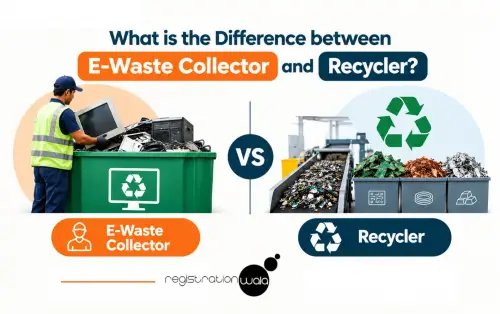
Under the Extended Producer Responsibility framework, both e-waste collectors and recyclers play an important role. They are responsible for managing electronic waste properly and protecting environme ....
The Environment (Construction and Demolition) Waste Management Rules, 2025 came into effect on 1 April 2026. These rules bring an organised system for managing construction and demolition (C&D) wa ....
Waste is a major environmental and public health concern when it is not managed properly. Poor waste management can cause pollution, harm the environment and create health risks for people. This is wh ....
The Indian government introduced a new Extended Producer Responsibility (EPR) framework for non-ferrous metal scrap under the Hazardous and Other Wastes (Management and Transboundary Movement) Amendme ....
From 1 April 2026, the Environment (Construction and Demolition) Waste Management Rules, 2025 came into effect in India. These rules introduced an Extended Producer Responsibility (EPR) system for con ....
The National Scholarship Portal is an online portal of the Government of India. It allows the students to apply for various scholarship schemes of Central and State Governments.
In this blog po ....
The Extended Producer Responsibility (EPR) framework in India was first introduced through Batteries (Management and Handling) Rules, 2001. However, the concept gained wider recognition through introd ....
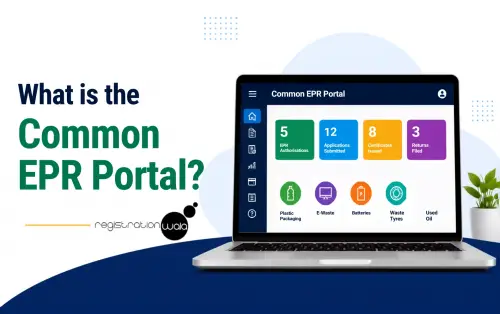
Until quite recently, Extended Producer Responsibility (EPR) compliance in India was highly fragmented. Businesses were required to create and manage separate accounts across multiple CPCB portals for ....
Transform your Business.