The responsibility of paying the income tax lies on the person receiving the income. However, TDS makes sure that the tax gets deducted from the payment itself in advance. Under this system, the deductor is responsible for deducting tax at the prescribed rate before making the payment and depositing it with the government on behalf of the deductee.
In this article, we shall discuss what TDS is, from its definition to its types and advantages. We shall also discuss what TDS return filing is and the common mistakes to avoid while filing this return.
What is Meant by Tax Deducted at Source (TDS)?
TDS full form is Tax Deducted at Source. It refers to a tax collection system introduced in India to improve the process of collecting income tax. Under this system, a person (deductor) who makes a specified payment to another person (deductee) is required to deduct tax at the prescribed rate before making the payment and deposit it with the Central Government.
Based on Form 26AS or the TDS certificate issued by the deductor, the deductee can claim credit for the tax deducted while filing their income tax return. TDS is governed by the Income Tax Act 1961 and the corresponding provisions of the Income Tax Act 2025.
How Exactly Does TDS Work?
TDS is based on the idea that anyone who makes a certain kind of payment to another person must deduct tax at the source at the rates prescribed in the Income Tax Act and deposit the same into the account of the government.
By looking at the Form 26AS, the deductee can easily verify the TDS from incomes paid to him. It is the responsibility of each deductor to provide a TDS certificate which attests to the amount withheld in the name of the deductee and deposited with the government.
What are Different Types of TDS?
Even while you’re making payments as an individual taxpayer, you are required to deduct TDS on certain payments made. Here are the various types of payments that attract TDS:-
-
Salary Transfer
-
Rent Payments
-
Transfer of Property
-
Professional Fee
-
Consultation Fee
-
Commission & Brokerage-related Payments
-
Interest earned on Securities & Deposits
-
Dividend on company shares and mutual funds
-
Lottery, lucky draw and other similar winnings
-
Royalty Payment
-
Director’s Remuneration
-
Other interest payments
What are the TDS rates in India?
The TDS rate in India depends on the nature of transactions and the applicable provision of the Income Tax Act. Different types of payments have different TDS rates and deduction rules. The Income Tax Act contains separate sections that specify the applicable rate, threshold limit and conditions for deducting TDS on each type of payment.
TDS Rates for FY 2026-27
The TDS Rates for FY 2026-27 are as follows:-
| Section of Income Tax Act |
Transaction |
Threshold Limit (Rs.) |
Applicable TDS Rate (%) |
| 192 |
Salary |
Basic Exemption Limit |
As Per Slab Rates |
| 192A |
Premature EPF Withdrawal |
Rs. 50,000 |
10% |
| 193 |
Interest on Securities |
Rs. 10,000 |
10% |
| 194 |
Dividends |
Rs. 10,000 |
10% |
| 194A |
Interest on Post Office/Bank Deposits |
Rs. 50,000 |
10% |
| Interest on Post Office or Bank Deposits (Senior Citizens) |
Rs. 1,00,000 |
10% |
| Interest (Others) |
Rs. 10,000 |
10% |
| 194K |
Mutual Funds' Dividends |
Rs. 10,000 |
10% |
| 194B |
Lottery, Crosswords, Game Shows or Gambling Winnings |
Rs. 10,000 |
30% |
| 194BA |
Online Game Winnings |
No Threshold |
30% |
| 194BB |
Horse Race Winnings |
Rs. 10,000 (Aggregate winnings in a financial year, not per transaction) |
30% |
| 194C |
Payment to Contractors/Sub-Contractors |
Rs. 30,000 (Single Payment) or Rs. 1 lakh in a Financial Year |
1% for Individual/HUF
2% for Others |
| 194D |
Insurance Commission |
Rs. 20,000 |
2% for Individual/HUF
10% for Others |
| 194DA |
Payment Received for Life Insurance Policy |
Rs. 1 lakh |
2% |
| 194EE |
Payment Received - National Savings Scheme (NSS) |
Rs. 2,500 |
10% |
| 194G |
Lottery Commission |
Rs. 20,000 |
2% |
| 194H |
Commission or Brokerage |
Rs. 20,000 |
2% |
Note:- The TDS rates are subject to change. In order to stay updated with the latest TDS rates, you can visit the official website of the Income Tax Department.
What are Advantages of TDS?
Whether we talk about the taxpayers or the Government of India, the Tax Deducted at Source has proved to be advantageous for both. Here are the main advantages of TDS, which highlight its importance.
Prevention of Tax Evasion
One of the major concerns of the Government of India is tax evasion. To deal with this problem, Tax Deducted at Source plays an essential role. TDS prevents tax evasion and keeps a check on the taxes paid by the taxpayers in India.
In addition to this, it creates transparency between the citizens who are paying the tax and the Government. Due to transparency, there is no discrepancy or evasion when it comes to the payment of tax.
TDS Acts as Stable Income for GOI
TDS is one of the best and the most stable incomes for the Government of India (GOI). With this, the Government of India is able to provide the citizens with several basic necessities like water, electricity, law and order, salaries of government employees, advancement and upgradation of science and technology, and so on.
TDS is Automatically Deducted Tax
Many individuals face complications while paying taxes. However, with the help of TDS, the tax payment process becomes much easier and smoother for the taxpayers since the Tax Deducted at Source (TDS) gets automatically deducted.
Proof of Income for Taxpayers
The TDS records serve as the official proof of income for the taxpayers. When applying for a loan or visa, TDS documents like Form 16, Form 16A and the TDS details reflected in Form 26AS help verify your income and the tax deducted on it. Because of this, the application process becomes smoother as well as more reliable.
What Is TDS Return Filing and Who Is Required to File It?
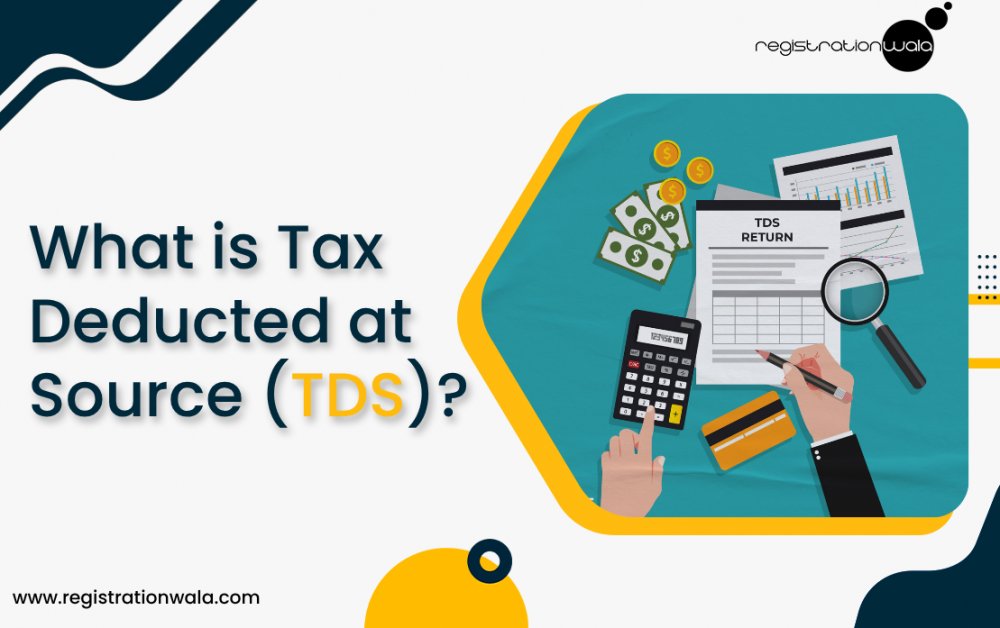
TDS return filing is the process of submitting a quarterly return to the Income Tax Department of India that contains details of all TDS transactions made during that quarter. It helps the Income Tax Department keep a record of the TDS that has been deducted as well as deposited by the deductor.
A TDS return needs to be filed mandatorily. It must be filed by the deductor, i.e., the person, company, firm or any other entity that is responsible for deducting TDS before making specified payments and depositing the deducted tax with the Central Government.
The TDS return includes important details such as the deductor's and deductee's information, nature payment, amount of payment, the amount of TDS deducted and the details of tax deposited with government.
TDS Return Due Dates for FY 2026-27
The TDS return due dates for FY 2026-27 are as follows:-
| Quarter (Q) |
Period |
Due Date |
| Q1 |
April - June 2026 |
31 July 2026 |
| Q2 |
July - September 2026 |
31 October 2026 |
| Q3 |
October - December 2026 |
31 January 2027 |
| Q4 |
January - March 2027 |
31 May 2027 |
TDS Return Filing: 4 Common Mistakes to Avoid This Tax Season
While filing a TDS return, deductors often make certain mistakes that can lead to notices, penalties or delays in processing. Below, we have discussed four common mistakes that should be avoided while filing a TDS return:-
Late Deposit of TDS or Late filing of Return
A common mistake is making delayed TDS deposit or filing TDS return after the due date has passed. In case the deducted TDS is not deposited on time, you need to pay interest under Section 201(1A) of the Income Tax Act.
Late filing of TDS return will attract a late fee of Rs. 200 per day as per Section 234E. To avoid this, file your return and deposit TDS on time. Also, check your details on TRACES to find and correct mistakes early on.
Entering the Wrong PAN, TAN or TDS Section
Another common mistake is the entry of wrong PAN, TDS section or TAN. Mismatch in Form 26AS may be due to wrong or invalid PAN/TAN. TDS can also be deducted at the wrong rate if the wrong TDS section is selected (for instance, you use Section 194C instead of Section 194J). This may create issues of compliance and delay the tax credit to deductee.
Mistakes in Challan Details
Many people also make mistakes while filling challan details. For example, using the Assessment Year in place of the Financial Year or entering a challan amount that does not actually match the account records. If the details of the challan like CIN, BSR code and date do not match the details in the TDS return, then the tax credit may not get processed.
Using an Old Return Filing Utility
Another common mistake is to use an old Return Preparation Utility (RPU). The Income Tax Department regularly updates the File Validation Utility (FVU). If you prepare and file your TDS return using an old version of RPU, your file may be rejected. This means you will have to correct the errors and refile your return all over again.
Also Read:- What is Form 16 for Salaried Employees?
Conclusion
Tax Deducted at Source is an essential component of tax system in India. The reason is that it ensures efficient tax collection as well as compliance with the rules and regulations related to income tax. It is important for individuals as well as business entities to understand TDS and its implications for maintaining financial discipline and meeting their tax obligations.
Your tax planning can be optimized by staying aware of latest applicable rates for TDS. This can help you minimize your overall tax burden. In order to ensure accurate compliance with the TDS regulations or TDS returns in India, you can consult with our experienced and skilled Chartered Accountants and Tax Consultants at Registrationwala.
Try Our Free TDS Calculator Tool
Frequently Asked Questions (FAQs)
Q1. Who is responsible for deducting TDS and depositing it with the Government?
A. The deductor is responsible for deducting TDS from the payment made to the deductee and then depositing the same with the Central Government.
Q2. How many times in a year is a TDS return filed?
A. A TDS return is generally filed four times a year, once for each quarter of financial year.
Q3. What are the due dates for filing TDS returns for FY 2026-27?
A. The due dates for filing TDS returns for FY 2026-27 are: (i.) 31 July 2026 (Q1), (ii.) 31 October 2026 (Q2), (iii.) 31 January 2027 (Q3), and (iv.) 31 May 2027 (Q4).