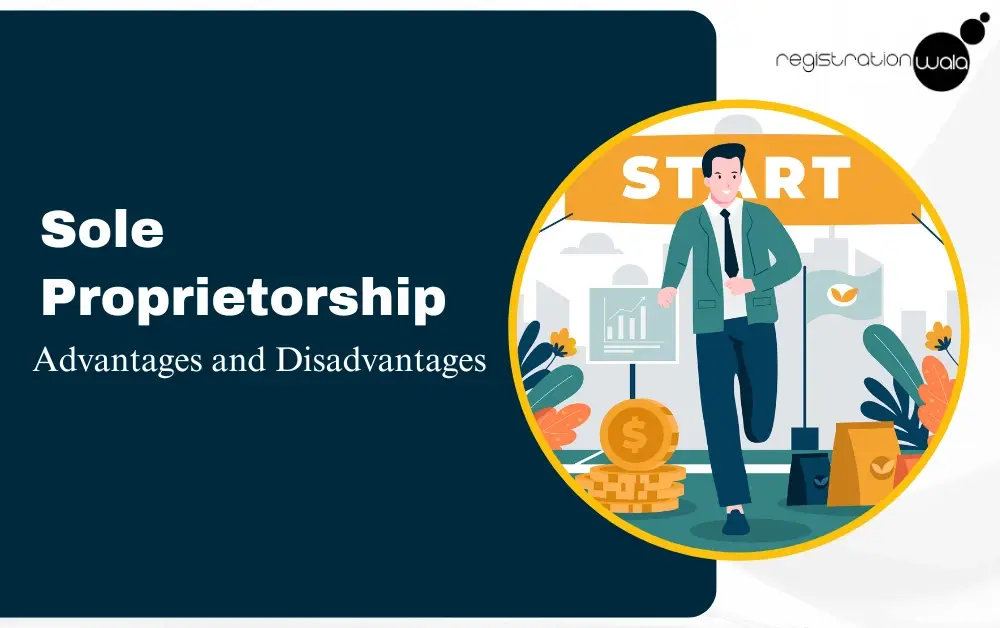
A sole proprietorship is one of the most common forms of business worldwide. This type of business is owned by a single person who owns the assets and manages the day-to-day affairs of the business. Legally, the proprietor and the business are not considered separate entities.
If you are planning to start your own business and become a sole proprietor, going through this blog post will be helpful. Here, we shall discuss the major advantages and disadvantages of a sole proprietorship in the context of India.
What is Sole Proprietorship in India?
A sole proprietorship is an unregistered one-person business model. It is owned by a single person known as a ‘proprietor’. He owns the assets of the business and also handles the day-to-day affairs of the business. A sole proprietorship is not a separate legal entity from its owner. As a result, the owner is entirely responsible for all the losses and liabilities made by the proprietorship during the course of business.
With that being said, he also gets to keep all the profit generated by the business. Many small business owners in India opt for this model as it does with the need for registration with MCA. However, such businesses may still require GST registration depending on their annual business turnover.
Advantages of Sole Proprietorship
Below, we have provided with the key advantages of sole proprietorship:
Quick to Establish
The best part about a proprietorship is that it does not have any registration requirements like companies (i.e., businesses registered under Companies Act, 2013). As a result, it is much quicker to establish a proprietorship.
Setting up a proprietorship helps the business owner to save up costs pertaining to company registration. Also, it doesn’t have annual report requirements that are mandatory for companies. A proprietorship has minimal statutory compliance requirements as it isn’t a separate entity from its owner.
Easier to Run Business Operations
As a single person is responsible for everything, it is much easier to operate a proprietorship firm (in comparison to pvt ltd/public ltd companies). The proprietor is the sole decision maker. He does not need to consider the opinions of other stakeholders before making decisions for his business.
In a proprietorship, there is no concept of a board meeting. However, even though the proprietorship alone makes business-related decisions, he must ensure his decisions align with the legal and regulatory requirements.
Profits Attributed to the Single Owner
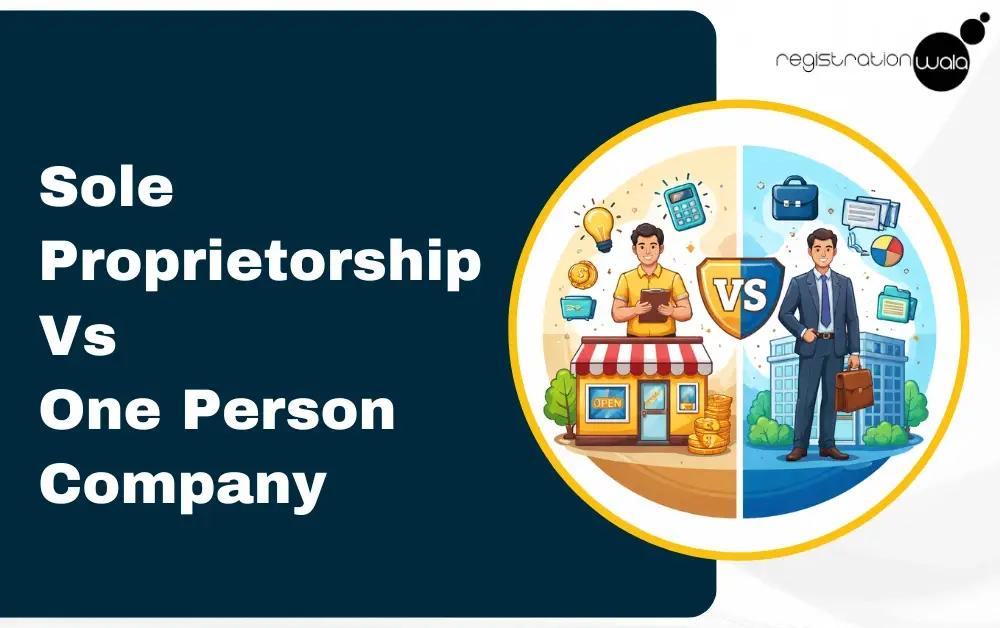
Only the Sole Proprietorship and One Person Company models allow the owner to be the sole beneficiary of the profits earned. In other business models, at least two stakeholders are involved in sharing the profits.
Limited Tax Compliance Burden
Since a Sole Proprietorship is an unregistered business entity, its tax compliance requirements are minimal. The business income of the proprietorship is taxed as personal income at individual income tax slab rates. No separate tax filing needs to be done for the business unlike in case of the corporations.
Offers More ‘Privacy’ Than Other Business Models
Every Proprietorship is an unregistered entity. The Government maintains no database of a list of sole proprietorship registrations. Hence, proprietorships are more private when compared to other corporate entities whose details officials publish on the Ministry portal.
Related Service : Sole proprietorship registration
Disadvantages of Sole Proprietorship
The following are the disadvantages that you must take into perspective while planning to start your business as a Sole Proprietorship:
Unlimited Liability for Proprietor
This scenario disturbs every aspect of the sole proprietorship registration. On loss occurrence, the proprietor must meet the pending liabilities at any cost. If such a situation occurs, the owner’s personal assets may be at stake for discharging the liabilities.
Difficulty in Funds Arrangement
A proprietor cannot indulge in the sale of his business shares to the general public. It deprives the firm of the receipt of any funding from the share market. Further, banks are also wary of lending large sums to a proprietorship as its existence is tied solely to the proprietor.
It is much easier for a company or LLP to raise funds from the bank when compared to a proprietorship registration. The public limited companies, in particular, can raise funds from the general public via IPO launch.
Tax Incidence is High in a Proprietorship
A proprietorship’s business income is taxed as the proprietor’s personal income, meaning the tax rate for a proprietorship is based on individual tax slabs. Though the tax rate for income of 10 lakhs rupees under the old regime is lower when compared to a registered company, a proprietorship cannot enjoy tax benefits like other corporate entities do.
Furthermore, for annual taxable income of more than 10 lakhs rupees, the tax rate for a sole proprietorship is higher than the company’s tax rate. In the long run, it would be more prudent for the proprietor to register his business as a company to reduce the tax liability.
Difficulty in Separating Personal and Business Finances
In a proprietorship firm, it can be quite challenging to separate the personal finances from the business ones. It can be difficult to accurately determine if the business is profitable or just operating on personal subsidies when the records are mixed. When there are no clear boundaries, it can be pretty complicated to track income, expenses and tax obligations.
In case the proprietor fails to manage the funds properly, they can fall into debt. In such a situation, even their personal assets like cars and houses can be seized to pay off the business debts.
Conclusion
For individuals who want to own and manage their business alone, sole proprietorship is a popular choice. This business model is an unregistered business model, and helps the proprietor to save up on registration costs and has less compliance burden compared to registered companies.
With that being said, it does have certain disadvantages. In case the business makes losses, the proprietor’s personal assets fall at risk. Also, it is harder for such a business to obtain a loan as it is considered as less credible when compared to pvt ltd companies or other registered companies.
To know more about sole proprietorships in India, connect with the legal experts at Registrationwala.
-
Published: February 17, 2026
4619 Views