Preface: This post was originally published in 2022 and has been updated on February 20, 2026, to provide you with the most current and accurate information.
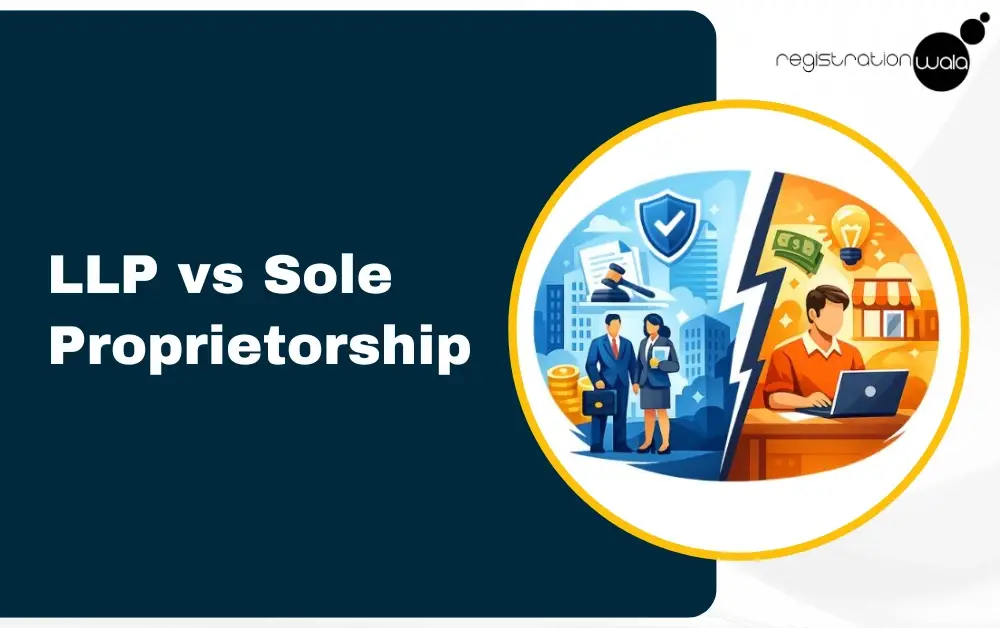
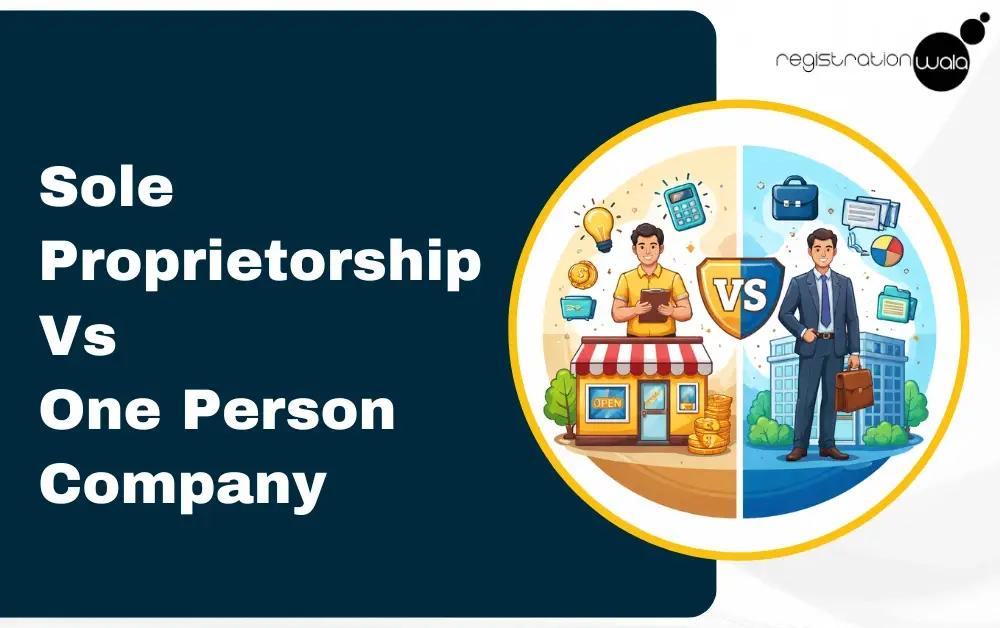
LLP stands for Limited Liability Partnership, a business structure introduced in India under the Limited Liability Partnership Act, 2008, which came into force on 1 April 2009. On the other hand, a sole proprietorship is the oldest form of business in the world and isn’t governed by any specific business Act in India. While a proprietorship is owned and operated by a single person, an LLP is owned by at least two persons.
Before starting any business, an entrepreneur should consider which business structure to choose so that the business can grow successfully. In this blog post, we shall help you to understand the difference between LLP and sole proprietorship. You can then decide which one would be ideal in your case.
What is Limited Liability Partnership?
A Limited Liability Partnership, abbreviated as LLP, is a business structure formed by at least two partners who agree to come together to jointly own and operate a profit-making business while limiting their personal liability for the business’s debts, obligations and actions/misconduct of other partners. There is no limit on the maximum number of partners an LLP can have. LLP registration process is a mandatory requirement for setting up an LLP in India.
Before the enactment of the LLP Act, 2008, no such structure existed. Only traditional partnerships were recognized, which were governed by the Indian Partnership Act, 1932. These partnerships did not provide limited liability protection.
Due to this, the partners had unlimited personal liability for the debts and obligations of the firm. An LLP is a separate legal entity from its owners.
What is Sole Proprietorship?
A Sole Proprietorship, also known as Proprietorship Firm and Sole Tradership, is a business structure that is owned and operated by a single person, known as a ‘proprietor’. It is a one-person business model that does not require any formal business registration. More than one individual cannot possibly own and operate a proprietorship business.
A proprietorship firm is the simplest form of business. It is also the cheapest form of business as it doesn’t require any mandatory business registration. It has to fulfill minimal legal formalities.
It is important to note that a proprietorship is not regarded as a separate legal entity from its owner. Legally, a proprietorship and its proprietor are regarded as the same entity.
Key Distinctions Between LLP and Sole Proprietorship
To understand the difference between limited liability partnership and sole proprietorship, check out the comprehensive table provided below:
|
Difference
|
LLP
|
Sole Proprietorship
|
|
Definition
|
An LLP is a business structure formed by two or more partners and is registered under LLP Act 2008. It provides limited liability protection to its partners.
In an LLP, each partner’s personal assets are generally protected in case of business debts or losses. An LLP is a separate legal entity from its owners.
|
A sole proprietorship is a business owned and operated by a single individual. It is not registered as a separate legal entity from the owner.
Unlike an LLP, it does not provide limited liability protection. This means the owner of proprietorship is personally responsible for all business debts as well as liabilities.
Inability to pay debts can result in seizure of personal assets like cars and house.
|
|
Minimum/Maximum No. of Owners Required
|
A minimum of two designated partners are required for LLP formation. Out of them, at least one partner needs to be a resident of India.
There’s no maximum limit on the number of LLP partners.
|
To form a proprietorship, only one person is required.
More than one person cannot form a proprietorship.
|
|
Business Registration
|
It is mandatory to register an LLP in India. For registration, form FiLLiP needs to be filed online with MCA.
|
It doesn’t have any formal business registration requirement. However, other registrations may be required. For example, in case the proprietorship deals in food, then FSSAI registration will be required.
In case the business annual turnover exceeds the threshold limits for goods or services, securing GST registration will be mandatory.
|
|
Taxability
|
LLPs are taxed at a flat rate of 30% on their total income.
|
In case of a proprietorship firm, the income tax slabs are applicable according to the personal income.
|
|
Cost-Effectiveness
|
Setting up an LLP is more expensive compared to setting up a proprietorship. This is because an LLP needs to prepare incorporation documents and must get registered with MCA.
Additionally, the LLP partners must obtain LLPIN and DSC.
|
Setting up a proprietorship is pretty easy and cost-effective as no formal business registration is required.
The legal formalities are quite basic and minimal.
|
|
Property Ownership
|
An LLP, being a separate legal entity from its owners, can own a property in its own name.
|
A proprietorship cannot own a property in its own name. This is because it isn’t a separate legal entity from its owner.
|
Ready to start your business journey? Whether it's an LLP or a Sole Proprietorship, we make registration seamless.
Start Your Registration Today
Conclusion
An LLP is an alternative to the traditional partnerships. It is a hybrid business structure that combines the flexibility of a traditional partnership with the limited liability protection of a company. This business model requires mandatory registration with the MCA. A sole proprietorship, on the other hand, is a one-person business structure. It is an unregistered form of business. Therefore, no formal business registration process needs to be completed to establish a proprietorship. While an LLP offers limited liability protection, the proprietorship imposes unlimited liability on the owner for the business debts and obligations.
Need assistance in LLP incorporation in India? Feel free to reach out to our LLP consultants at Registrationwala. We will help you to register your LLP with the MCA and ensure you obtain an LLP certificate of incorporation in a smooth and hassle free manner.
Frequently Asked Questions (FAQs)
Q1. What is the difference between Sole Proprietorship vs LLC?
A. A Sole Proprietorship is an unregistered business structure owned and managed by a single person where the owner has unlimited liability. On the contrary, an LLC (Limited Liability Company) is a business structure with one or more owners that provides limited liability protection to its members.
Q2. When was the concept of LLP introduced in India?
A. The concept of LLP was introduced in India through the enactment of the Limited Liability Partnership Act, 2008, which came into effect on 31 March 2009.
Q3. Does Sole Proprietorship provide limited liability protection?
A. No, a Sole Proprietorship does not provide limited liability protection. It does the opposite. The owner is personally liable for all business debts as well as obligations.
-
Published: February 20, 2026
15801 Views