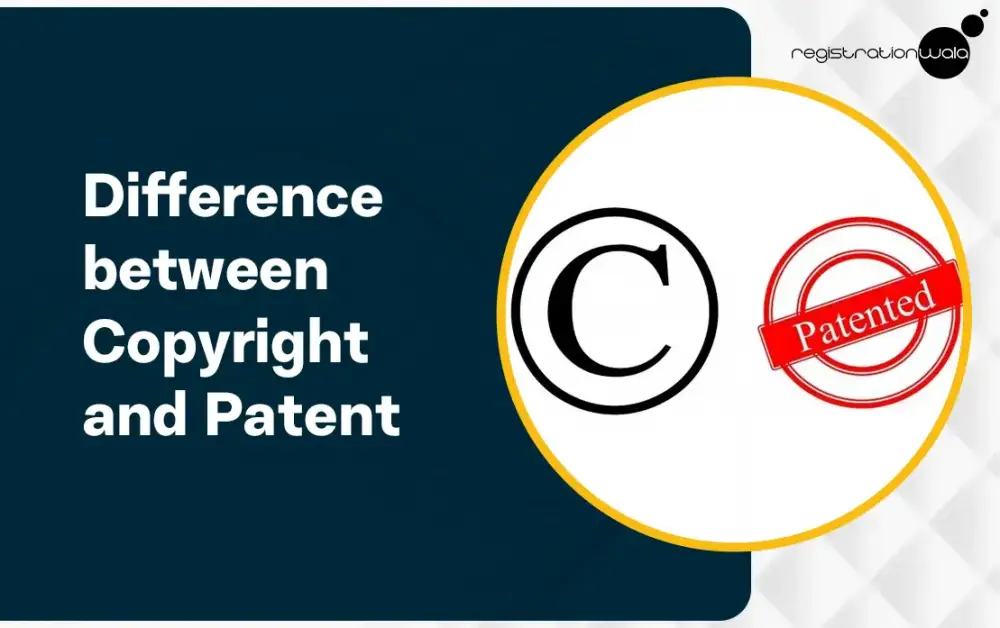
A copyright is a type of intellectual property right that is specifically granted to original works of authorship fixed in a tangible medium of expression like books, movies, music, photographs, software and paintings to name a few. This legal right arises automatically as soon as the work gets created and recorded in a tangible form. However, many creators still choose to register their copyright as an additional step so as to obtain stronger legal protection.
Although copyright registration is not mandatory at all, it is still highly recommended as it serves as legal evidence of ownership and helps greatly when it comes to enforcing rights in case of infringement. Copyright protects the creator’s original work from unauthorized copying, reproduction, publication, distribution or use by others.
It also grants copyright owner exclusive rights to reproduce, publish, license or assign the work, wholly or partially, to any person. When the owner transfers these rights to another person or entity, the process is known as copyright assignment. In this blog post, we shall discuss copyright assignment in a detailed manner.
Assignment of Copyright in IPR
Assignment of copyright, a.k.a copyright assignment, is the act of transferring ownership of all/some exclusive rights in a copyrighted work from current owner to another party. The current owner is known as the assignor while the other party is known as the assignee. Often, there is monetary consideration involved in this act. Chapter IV of the Copyright Act, 1957 governs the assignment of copyright in India.
In India, for assignment to become effective, a copyright assignment agreement India is required. This agreement is a written agreement that clearly states relevant terms and conditions of the transfer of copyright ownership from one party to another.
Once the agreement is signed, the assignee is allowed to use, license or sell the work as their own in accordance with the agreed terms. In case of lack of copyright assignment agreed, the assignment shall be considered null and void.
Section 19: Mode of Assignment
The mode of assignment of copyright is governed by ‘Section 19: Mode of Assignment’ of the Copyright Act, 1957. This section details how the copyright ownership can be legally transferred. It ensures that the transfer happens in a clear and fair manner, and that the same is properly documented so as to avoid any confusion/disputes. Here are the key provisions of this Section:
|
S. No.
|
Key Provision u/s 19: Mode of Assignment
|
|
1.
|
No assignment of the copyright in any work will be considered valid unless it is done so in writing and is signed by the assignor or by their duly authorized agent.
|
|
2.
|
The assignment of copyright must clearly identify the work in question. Also, it must clearly specify the rights being assigned as well as the assignment’s duration and territorial scope.
|
|
3.
|
The assignment must state the amount of royalty and any other compensation payable to original author/their legal heirs, as the case may be, during assignment period. The assignment shall also be subject to revision, extension or termination on the basis on terms mutually agreed upon by parties involved (i.e., assignor and assignee).
|
|
4.
|
If the assignee does not exercise the rights assigned to them under any of the other sub-sections of Section 19 within one year from date of assignment, the assignment regarding that right shall be deemed to have lapsed after the expiry of this period unless the agreement states otherwise.
|
|
5.
|
If the period of assignment is not stated, it shall be deemed to be five years from the date of assignment.
|
|
6.
|
If the territorial extent of assignment of rights is not mentioned, it shall be considered to extend throughout India.
|
|
7.
|
Sections (2), (3), (4), (5) and (6) do not apply to assignments made before Copyright Amendment Act 1994 came into effect.
|
|
8.
|
The assignment of copyright in any work that contradicts the terms and conditions of rights already assigned to a copyright society, of which the author of the work is a member, shall be considered to be void.
|
|
9.
|
No assignment of copyright in any work for purpose of making a cinematograph film shall affect the author's right to claim an equal share of royalties as well as considerations payable for any utilization of the work in any form other than its communication to the public in conjunction with the cinematograph film in a cinema hall.
|
|
10.
|
No copyright assignment in any work for the purpose of making a sound recording, which does not form part of any cinematograph film, shall affect the author's right to claim an equal share of royalties as well as considerations payable for any utilization of such work in any manner whatsoever.
|
Section 19A: Disputes with Respect to Assignment of Copyright
Disputes regarding the assignment of copyright are governed by ‘Section 19A: Disputes with Respect to Assignment of Copyright’ of the Act. Here are the key provisions of this Section:
|
S. No.
|
Key Provision u/s 19A: Disputes with Respect to Assignment of Copyright
|
|
1.
|
If an assignee fails to sufficiently exercise rights that were assigned to them and this failure is not due to an action/omission on the part of assignor, the Commercial Court may revoke the assignment upon receiving a complaint filed by the assignor. It is important to note that this will be done after holding any necessary inquiry regarding complaint.
|
|
2.
|
If a dispute arises regarding any copyright’s assignment, the Commercial Court may, upon receiving a complaint from the aggrieved party and after conducting any necessary inquiry, issue an order it deems to be appropriate. This may include an order for the recovery of any royalties payable.
However, the Commercial Court shall not revoke the assignment unless it is satisfied that the assignment terms are unfair to the assignor if the assignor is also the author. Furthermore, pending the resolution of an application for revocation of the assignment, the Commercial Court may issue any orders it sees fit regarding the implementation of the assignment’s terms and conditions, including any compensation to be paid for enjoyment of the assigned rights.
Lastly, no order revoking the assignment shall be made within five years from the date of the assignment.
|
|
3.
|
Every complaint received under subsection (2) shall be addressed by Commercial Court. This will be done as promptly as possible. In addition, efforts will be made so as to reach a final order within six months from the date the complaint is received. If there are any delays in the final order, the reasons for the same shall be recorded by Commercial Court.
|
Also Read: Understand the Meaning of Trademark, Copyright and Patent
In a Nutshell
Copyright assignment is the process of legally transferring the ownership of copyright rights from the original owner (i.e., assignor) to another party (i.e., assignee). For the assignment to be considered valid, it must be made through a written agreement known as the copyright assignment agreement. The provisions regarding the mode of assignment and dispute resolution mechanism are provided under the Copyright Act, 1957.
To seek assistance in copyright registration or assignment, you can connect with Registrationwala.
Frequently Asked Questions (FAQs)
Q1. Is assignment of copyright for a work valid if it is not in writing and signed by the assignor?
A. No. According to Section 19(1) of the Copyright Act, 1957, no assignment of the copyright in any work would be considered to be valid unless it is in writing signed by the assignor or by his duly authorised agent.
Q2. What happens if the period of assignment is not mentioned in the copyright assignment agreement India?
A. If the period of assignment is not mentioned in the agreement, it shall be deemed to be five years from the date of assignment.
Q3. What is a copyright assignment agreement?
A. It is a written agreement that clearly states the terms and conditions of the transfer of copyright ownership from one party to another.
PS: This post was originally published in 2022 and has been updated on May 13, 2026 to provide you with the most current and accurate information.
-
Published: September 21, 2022
4889 Views