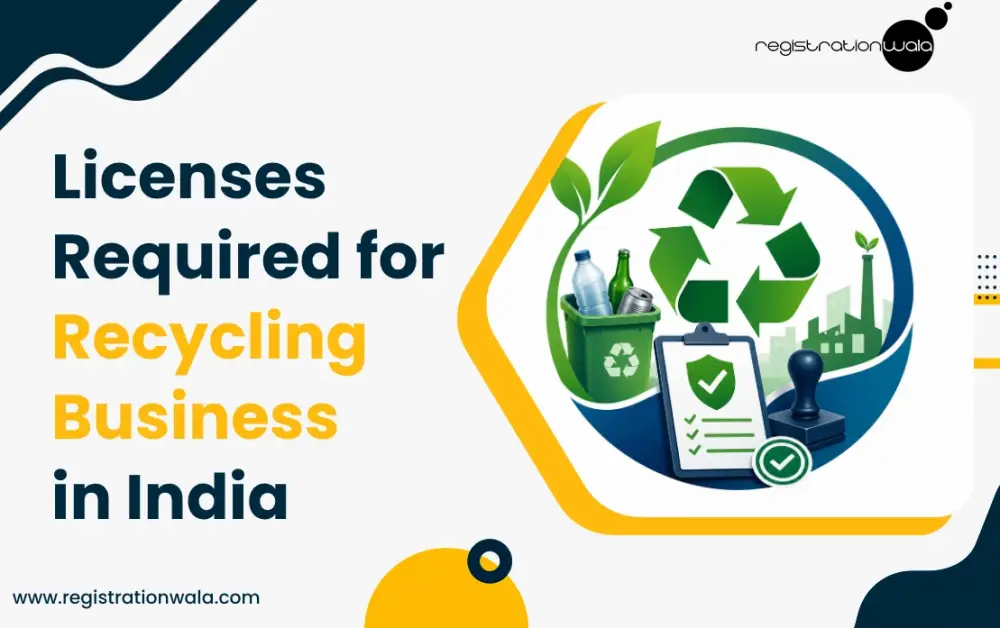
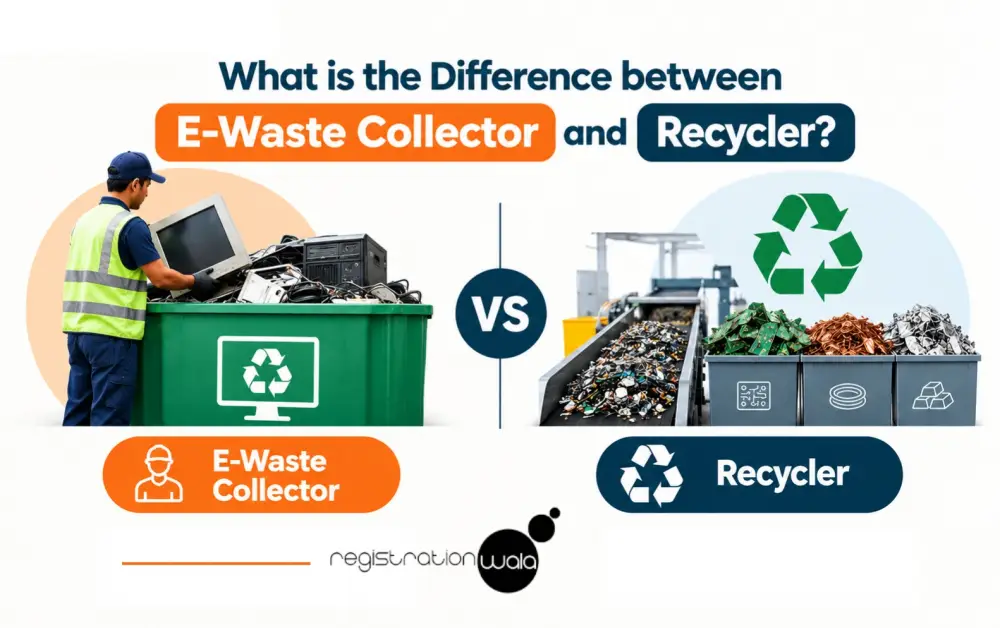
The journey of a product does not end after it is used. After the product is no longer of any use to the consumer, it must be recycled responsibly to reduce waste and protect the environment. This responsibility is carried out by recycling businesses. Such businesses play an important role in environmental protection. If you care about nature, then starting a recycling business can be a great idea.
However, to start this business, certain licenses and registrations such as business registration, EPR license and other approvals may be required. In this blog post, we discuss all the major licenses and registration requirements for the recycling business in a detailed manner.
What is a Recycling Company?
A recycling company is a company that is engaged in recycling waste materials and used products. It may recycle goods limited to a specific industry or a mix of different types of waste such as plastic, paper, metal, glass, electronic waste, etc.
The recycling companies play an essential role in protecting the environment. They ensure that recyclable waste does not end up in landfills along other unrecyclable wastes and is instead reused for making new products.
List of Products Recycled by Recycling Businesses
Products that are often recycled by the recycling businesses include the following:
|
S. No.
|
Used Products
|
Recycled Into
|
|
1.
|
Used Mobile phones and batteries
|
New batteries, metals and electronic parts
|
|
2.
|
Vehicle Scrap like cars, bikes and trucks
|
Steel, iron and reusable auto parts
|
|
3.
|
Plastic bottles, containers, PET bottles and plastic packaging
|
New plastic products, polyester fiber and pipes
|
|
4.
|
Glass bottles, jars and broken glass
|
New glass bottles and construction material
|
|
5.
|
Aluminum cans, steel tins and metal containers
|
New cans, metal sheets and tools
|
|
6.
|
Computers, printers, laptops and mobile phones
|
Recovered metals, reusable parts and refurbished devices
|
|
7.
|
Toasters, TVs, refrigerators and washing machines
|
Metal, plastic and reusable electronic parts
|
|
8.
|
Biscuit wrappers, snack wrappers and chips packets
|
Plastic boards, fuel products and recycled packaging material
|
|
9.
|
Paper, cardboard, newspaper magazines and cartons
|
New paper, cardboard boxes and tissue products
|
|
10.
|
Rubber tyres
|
Rubber mats, playground surfaces and road material
|
|
11.
|
Used oil
|
Re-refined oil, industrial fuel and lubricants
|
How to Start a Recycling Company?
To start a recycling company, the following general steps need to be followed:
Step 1: Research and Planning for Business
First, you must do proper research about recycling business. It is extremely important to understand what the market demand currently is and check if the business can be profitable. Also plan your budget, investment, business goals and location.
Step 2: Choose the Type of Recycling Business
Now you must decide regarding waste/used products you want to recycle from options like plastic waste, paper waste, metal waste, electronic waste, oil waste, tyre waste, etc. Some materials are easier and cheaper to recycle than others. For example, paper recycling tends to be much easier than metal scrap recycling.
Step 3: Register the Business
After planning, register your recycling business. You can choose company registration or LLP registration. Other licenses and registrations are also required for legally running the business. In the next section, we shall discuss them in a detailed manner.
Step 4: Arrange Machinery and Raw Materials
Now you need to arrange the machines, tools and raw materials, all of which are needed for the recycling process. Make sure to choose machinery in accordance with the type and size of your recycling business.
Step 5: Hire Workers
Hire skilled workers and staff who can help in collecting, sorting and recycling the waste materials. If they have prior experience, then it’ll be easier for you to operate the business.
Step 6: Promote the Business
Make people aware of your recycling business. Use different marketing methods to attract customers and clients. Good branding, quality service and better pricing can help your business stand out from your competitors.
List of Licenses and Registrations Required for a Recycling Business
The following licenses and registrations are required for opening and operating a recycling business in India:
Business Registration
You must choose a proper business structure to legally operate a recycling business in India. You can start recycle business as a sole proprietorship (if you want to be the sole owner) or partnership firm (for more than one partner/owner) if you do not want to register your business entity separately.
Both these structures do not require mandatory registration and allow you to save up on business registration costs. However, in both of them, the owners face unlimited liability in case of business debts/losses. That’s why many owners prefer other available structures like Limited Liability Partnership (LLP), Private Limited Company and One Person Company (OPC). All these structures require business registration.
LLP is often a preferred option among small and medium businesses because it provides limited liability protection to partners. We can say that it is a more secure and organized version of partnership firm. A Private Limited Company offers better corporate governance and is a preferred option for businesses seeking funding and investors. That’s why many startups in India are incorporated under this model.
A One Person Company is a more structured version of a sole proprietorship where the owner gets limited liability protection along with a separate legal identity for the business. Depending on your requirements, you must choose the most appropriate structure. For guidance regarding this, you can connect with our company registration experts at Registrationwala.
GST Registration
GST registration is mandatory for a business if its annual turnover exceeds the threshold limits, i.e., Rs. 40 lakhs in most states or Rs. 20 lakhs in special category states. This requirement applies to recycling businesses as well. Many businesses choose to register under the GST system on a voluntary basis even when their annual turnover is less than the threshold limit.
The reason behind this is that GST registration makes the business look more credible in the eyes of the clients and customers. This license can be applied for and obtained online easily, especially when you reach out to a professional consultant for assistance.
State Pollution Control Board (SPCB) Registration
To operate any kind of project, a business must get consent to operate from the state pollution control board. For this, the entity must register on the SPCB’s official portal.
There, they must submit an application for seeking permission for their specific recycling business. After that, the authority reviews the application and provides approval if the application aligns with the requirements.
Factory License
If the recycling unit uses machines and employs workers beyond the prescribed limit, then it must obtain the factory license. This license is one of the most important legal requirements.
It demonstrates that your business complies with safety, health and welfare standards of workers. This license is granted by the State Factories Department after conducting an inspection of the unit.
EPR Registration
An EPR registration or license is required for recycling businesses in India. It is needed for businesses dealing with regulated wastes like e-waste, plastic waste, battery waste and tyre waste. The recycling businesses must register on the CPCB portal to run their business in waste management legally.
After registration, they can generate as well as sell EPR certificates to producers. These certificates help track waste, from collection stage to final recycling stage. For assistance in obtaining to EPR license to start a recycling business, you can get in touch with our EPR experts at Registrationwala. We’ll help you secure this recycling license in a smooth manner without any unnecessary hassle.
Also Read: Top 10 Plastic Recycling Companies in India
Final Words
To start a recycling business from scratch, you need to complete many steps such as business research and planning, choosing the type of recycling business, registering the business, arranging machinery and raw materials, hiring workers and promoting the business. To ensure legal as well as regulatory compliance, you need to get important licenses and registrations like GST registration, company registration, State Pollution Control Board registration, EPR registration and factory license. Depending on the exact type of recycling business and location, some additional approvals and requirements may also apply.
If you need assistance in starting your own recycling company, you can get in touch with Registrationwala. We will help you fulfill the major legal and regulatory requirements like obtaining company registration certificate, EPR license and GST registration among others.
Frequently Asked Questions (FAQs)
Q1. What are some of the most popular recycle business ideas?
A. Popular business recycling ideas include plastic recycling, paper recycling, e-waste recycling, tyre recycling, battery recycling, glass recycling, metal scrap recycling, textile recycling and used oil recycling businesses among others.
Q2. How can I recycle for businesses?
A. To recycle for businesses, you can start your very own recycling business. Requirements include market search, choosing business location, company registration, GST registration, factory license, etc.
Q3. Can I start a recycling business from home?
A. Yes, you can start a recycling business from home for small-scale recycling. However, for large-scale recycling, you will require a substantial industrial space.
Q4. Is there any Central Scrap Business License in India?
A. No. There is no single Central Scrap Business License in India. Instead, there are multiple local licenses and registrations for a scrap business like trade license, GST registration, shop and establishment license, udyam registration, etc.
Q5. Is plastic recycling for businesses a profitable business idea?
A. Yes. You can start a recycle plastic business where you offer plastic recycling services to businesses and help them meet their EPR obligations. In return, you can make money out of it.
Disclaimer:- The information provided in this article is meant for general informational purposes only and may vary depending on type/location of recycling business. Applicable licenses, registrations and compliance requirements should be verified prior to commencement of business.