Gold is one of the most precious metals in the world. It is prized for its rarity, durability and comes with a long term ability to preserve wealth not only at a personal level for individuals but also at a national level for many nations. To ensure economic stability as well as financial security, many countries across the globe hold large quantities of gold as part of their national reserves.
The central banks are majorly responsible for maintaining these reserves. In this blog post, we shall provide you with the list of top 10 countries with gold reserves.
List of Top 10 Countries with Gold Reserves
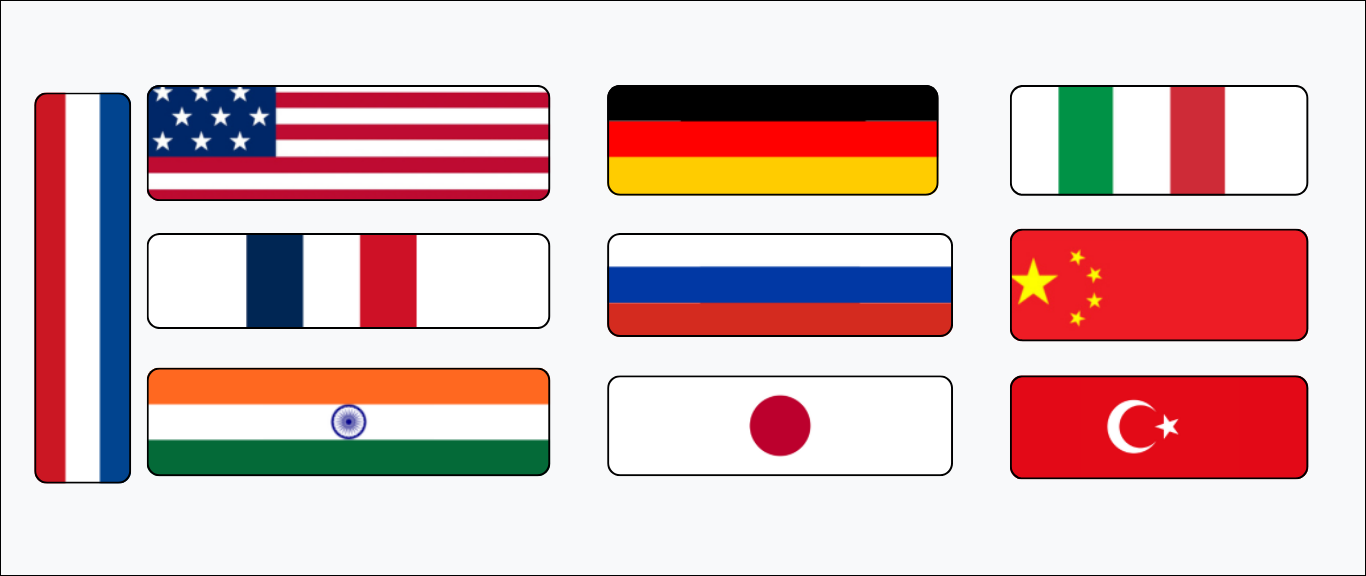
The top 10 countries with gold reserves are listed below. Please note that the rankings are on the basis of data published by the World Gold Council for Q3 - 2025 :-
1. United States of America
Gold Reserves in Tonnes: 8,133.46 Tonnes
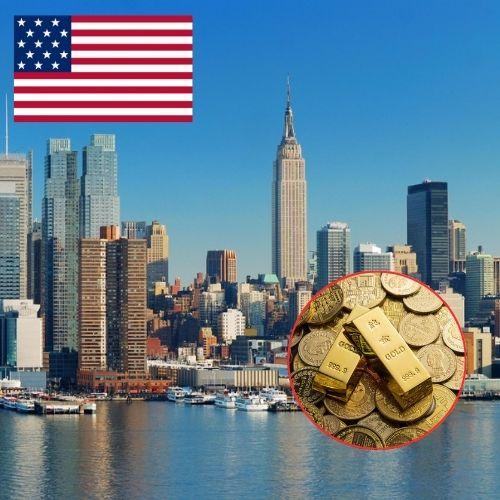
The United States of America holds the largest gold reserves in the world with approx. 8,133.46 metric tonnes. Its reserves of gold constitute over 75% of its total foreign reserves. The gold is stored in Fort Knox, New York Fed’s vault and other reserve locations. Much of this gold accumulated gradually over nearly a century rather than within just one or two decades.
In the 19th century, gold rushes like California Gold Rush, for one, led to massive domestic mining that fed into national reserves. At the time of World War I and World War II, many countries sent gold to US for the safety reasons and also as payment for wartime supplies. After the 1944 Bretton Woods Agreement, the US dollar was pegged to gold at USD 35 per ounce and became global reference currency. This system concentrated gold, trade power and monetary influence in the hands of USA.
2. Germany
Gold Reserves in Tonnes: 3,350.25 Tonnes

After the United States of America, Germany holds the largest gold-reserves with nearly 3,350.25 tonnes. However, it holds less than half of the gold-reserves held by the USA. Germany is the #1 country in Europe when it comes to holding the largest gold-reserves.
Most of its gold was accumulated during the Wirtschaftswunder (economic miracle) post-WWII. During this period, massive export surpluses allowed the Deutsche Bundesbank to convert dollars into gold. This strategy helped to protect national wealth during the Cold War. For security reasons, a significant portion of Germany’s gold was stored abroad.
3. Italy
Gold Reserves in Tonnes: 2,451.84 Tonnes
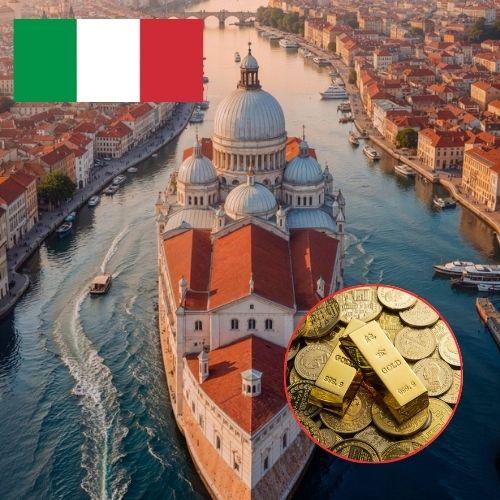
After Germany, Italy is the second country with largest reserves of gold in the Europe. It is gold reserves top 10 countries. The country accumulated gold in a massive quantity during the post-WWII economic miracle of the 1950s and 60s.
The country’s reserves of gold have remained untouched and in place since 1999. The central bank of Italy continues to rely on gold as a safe haven despite economic ups and downs, and has a massive stockpile of this precious metal.
4. France
Gold Reserves in Tonnes: 2437.00 Tonnes
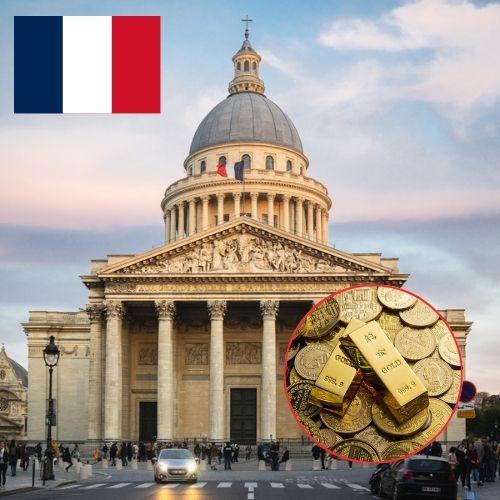
France is one of the top 10 countries with largest gold reserves. It has historically given priority to holding precious metals as a secure asset. After the USA, Germany and Italy, France has the fourth biggest gold-reserves in the world. In France, the Banque de France has the responsibility for the safe custody and management of the reserves of gold under Article L. 141-2 of the Monetary and Financial Code.
The Banque stores the reserves in an ultra-secure vault known as the Souterraine. This vault is located 27 metres below ground. In 1940, it won the International Underground Architecture award.
5. Russia
Gold Reserves in Tonnes: 2329.63 Tonnes
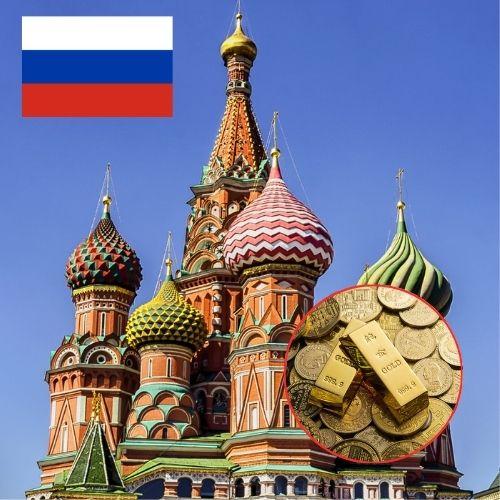
It is one of the largest gold producing countries. With reserves of gold of approximately 2329.63, the Russian Federation ranks as the fifth country in the list of countries with reserves of gold. The country stores the vast majority of its gold-reserves domestically within the vault system of the Central Bank of the Russian Federation a.k.a the Bank of Russia.
According to the Moscow Times, “Russians have been buying gold at an unprecedented pace since the full-scale invasion of Ukraine, with Western sanctions and restrictions on foreign currency transactions making the metal a popular option for Russians seeking to safeguard their wealth.”
6. China
Gold Reserves in Tonnes: 2,303.51 Tonnes
It is the largest consumer of gold in the world. With that being said, it is also the largest producer of gold in the world. China ranks as the 6th country with largest reserves of gold. The People's Bank of China, which is the central bank of China, has the responsibility for management of the country's official reserves of gold.
China has been accumulating large amounts of gold. This would reduce reliance on US dollar and allow for diversification in forex reserves. Moreover, it would hedge against geopolitical risks like the western sanctions.
7. India
Gold Reserves in Tonnes: 880.18 Tonnes
It is the second largest gold consuming country in the world. It is one of the top 10 countries with gold reserves. The Central Bank, i.e., the Reserve Bank of India (RBI), is responsible for managing the gold-reserves. The gold is stored in RBI vaults located at Mumbai’s mint road and Nagpur. The remainder is stored in the Bank of England (UK) and Bank for International Settlements (Switzerland).
The gold-reserves accumulated by India helps to diversify foreign exchange reserves, manage geopolitical risks and hedge against economic volatility. Gold is deeply ingrained in India’s culture. It is estimated that Indian households hold approx. 35,000 tonnes of gold, i.e., the world’s largest private stock. This precious metal is a symbol of security and prosperity in Indian culture.
8. Japan
Gold Reserves in Tonnes: 845.97 Tonnes
Japan owns slightly less reserves of gold than India. This East Asian country ranks 8th in the list of countries with gold reserves. Around 1897, Japan acquired a significant amount of gold-reserves using reparations from Sino-Japanese War for adoption of gold standard. This move’s purpose was stabilization of yen, reduction in exchange rate volatility and lowering borrowing costs.
During the Post-WWII era, there was further notable accumulation of gold-reserves. Now, these reserves have reached 845.7 tonnes in the country. The Ministry of Finance in Japan is responsible for managing the country’s gold stockpile.
9. Turkey
Gold Reserves in Tonnes: 641.28 Tonnes
Turkey has about 641.28 tonnes of official reserves of the gold. It is one of the top gold holders in the world. The Central Bank of the Republic of Turkiye has the responsibility for management of gold and foreign exchange reserves in Turkey, in accordance with the CBRT Law No. 1211.
Since 2017, the Central Bank has been buying reserves of gold aggressively. The country has accumulated its reserves of gold significantly from 114 tonnes in 2017 to 641.28 in 2025. It is one of the top gold purchasers in the world.
10. Netherlands
Gold Reserves in Tonnes: 612.45 Tonnes
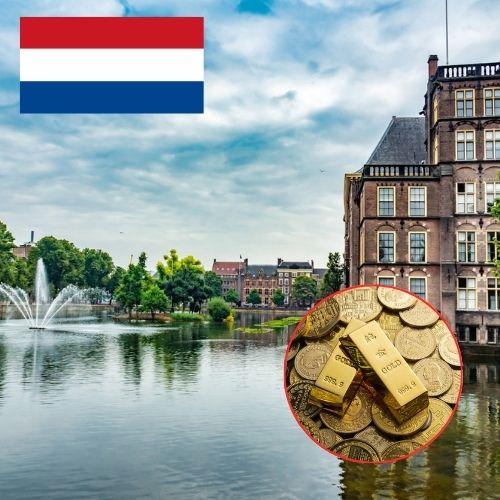
The Netherlands is one of the leading gold holding countries in the world. It has 612.45 tonnes of official reserves of gold. The Netherlands has been in possession of a substantial amount of gold for a long time. The responsibility of managing the reserves of gold in the Netherlands lies with De Nederlandsche Bank (DNB), the central bank of the country.
The gold-reserves are stored in DNB Cash Center in Zeist, New York, Ottawa and London. The stock of gold primarily functions as a reserve asset and as an anchor of trust for the country.
Conclusion
Gold is a classic safe haven asset for many countries across the world. It has been trusted for centuries to preserve wealth as well as to ensure economic stability. In this blog post, we mentioned the nations that rank highest in gold reserves by country worldwide. The top countries with the highest gold reserves are USA, Germany, Italy, France, Russia, China, India, Japan, Turkey and Netherlands. These countries are the biggest gold holders in the world, and they rely on this precious metal to protect their economies from inflation, currency fluctuations and global financial uncertainty.
Disclaimer: The rankings mentioned in this blog post titled ‘Top 10 Countries with Gold Reserves’ are based on World Gold Council’s published data. These rankings are subject to change. We don’t claim any responsibility regarding the accuracy, completeness or timeliness of the information provided herein. We advise readers to refer to official and updated sources instead of relying on these rankings for any decisions.
Frequently Asked Questions (FAQs)
Q1. What are the top 10 countries with gold reserves?
A. The top 10 countries with reserves (gold) are the USA, Germany, Italy, France, Russia, China, India, Japan, Turkey and the Netherlands.
Q2. Which country holds the largest gold reserves in the world?
A. The United States of America is the country with the most gold. It holds the largest gold-reserves in the world. It holds approximately 8,133.46 metric tonnes of gold. This figure is closely equal to the combined gold-reserves of the next three largest gold-holding countries, i.e., Germany, Italy and France.
Q3. Which country holds the second largest gold reserves in the world?
A. Germany holds the second largest reserves of gold in the world. It holds approx. 3,350.25 Tonnes.
Q4. Which country has the most gold in the world?
A. The United States of America has the most gold in the world.
Q5. How much gold does India hold?
A. India holds nearly 880.18 tonnes of reserves of gold.
Q6. Where are the gold-reserves of India kept?
A. They are kept in RBI vaults in Mumbai’s mint road and Nagpur. The remainder is stored in the Bank of England (UK) and Bank for International Settlements (Switzerland).
Q7. Which country has lowest gold price?
A. Switzerland has the lowest gold price.
Q8. Which country holds the largest gold reserves in Europe?
A. Germany is the biggest gold holder in Europe.
Q9. Which country is the largest gold consumer in the world?
A. China is the largest consumer of gold in the world, followed by India.
Q10. Which country is the largest producer of gold in the world?
A. China is the largest gold producer in the world.
-
Published: January 29, 2026
13538 Views