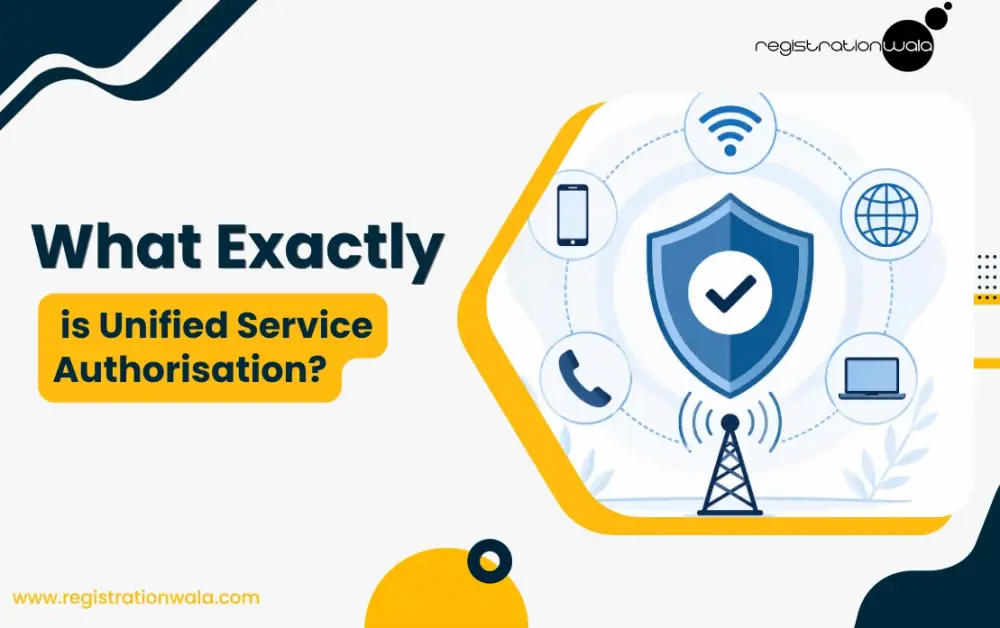
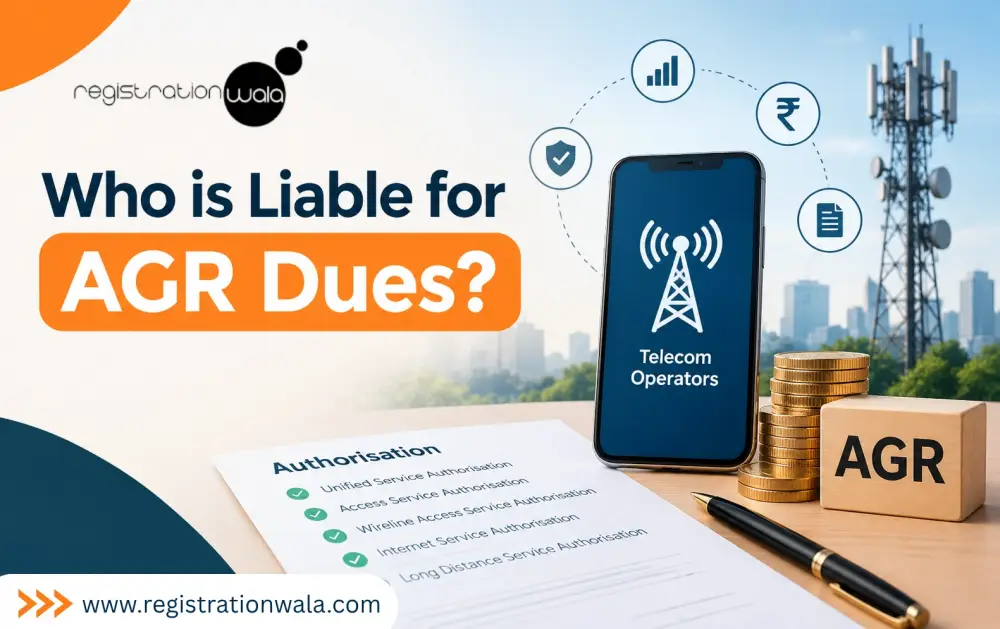
Unified Service Authorisation (USA) is a type of telecom service authorisation introduced under the new telecom authorisation framework. It allows authorised entities to provide multiple telecom services, including access, internet and long-distance services, under a single authorisation. USA can be granted to both Network Service Operators (NSOs) and Virtual Network Operators (VNOs).
The services and conditions may vary depending on whether the USA is granted to an NSO or a VNO. In this blog post, we will explain Unified Service Authorisation, its types and more.
Meaning of Unified Service Authorisation
Unified Service Authorisation is an approval granted by the Department of Telecommunications (DoT) under the Telecom Authorisation Rules, 2026. This authorisation creates a single gateway for eligible companies to provide Access Services, Internet Services and Long Distance Services in the National Service Area, which covers the territory of India, its territorial waters, continental shelf and exclusive economic zone.
Instead of following different authorisation paths for each service, everything comes together under one single authorisation. The Unified Service Authorization is available to both Network Service Operators (NSOs) and Virtual Network Operators (VNOs).
What are Types of Unified Service Authorisation?
There are two types of Unified Service Authorization granted by the DoT. Both are granted for the National Service Area. Below, we have explained both types of Unified Service Authorization.
-
Unified Service Authorisation for Network Service Operators (USA NSO): A Unified Service Authorization for NSOs allows the authorised entity to establish, operate, maintain and own the network required to provide the services covered under Access Service Authorization - NSO, Internet Service Authorization - NSO and Long Distance Service Authorization - NSO. The initial validity of the authorisation is 20 years and it can be renewed. Compared to a USA VNO, a USA NSO requires a higher entry fee, higher initial bank guarantee, higher minimum equity and a higher minimum net worth.
-
Unified Service Authorisation for Virtual Network Operators (USA VNO): A Unified Service Authorization for VNOs allows the authorised entity to provide the services covered under Access Service Authorisation - VNO, Internet Service Authorisation - VNO and Long Distance Service Authorisation - VNO. A VNO provides these services by using/leasing the network of a parent NSO and is not permitted to establish, own, operate or maintain the telecom network. As a result, a USA VNO has lower entry fee, lower initial bank guarantee, lower minimum equity and lower minimum net worth requirements than a USA NSO.
Also Read:- Step-by-Step Process to Apply for IS Authorisation in India (2026)
What are Benefits of Unified Service Authorisation?
The benefits of unified service authorisation granted by DoT are as follows:
-
The main benefit of the Unified Authorisation is the fact that it brings Access Services, Internet Services and Long Distance Services under a single authorisation. This removes the need to obtain separate authorisations for these telecom services.
-
It offers a long initial validity of 20 years. Because of this, businesses do not have to apply for renewal again and again within a short period.
-
The DoT provides two USA options, i.e., USA NSO and USA VNO, instead of just one option. Depending on their business requirements, companies can choose the right option. For example, if a company wants to establish, own, operate and maintain a telecom network, it can opt for a USA NSO. If it wants to provide services using the network of a Parent NSO instead, it can opt for a USA VNO.
-
Whether it is a USA NSO or a USA VNO, both are granted for the National Service Area rather than a specific telecom circle or metro service area. This allows authorised entities to provide the covered telecom services throughout India, subject to applicable terms and conditions.
Conclusion
Unified Service Authorisation is a telecom service authorisation granted by the Department of Telecommunications (DoT) under the Telecom Authorisation Rules 2026. It is available to both Network Service Operators (NSOs) and Virtual Network Operators (VNOs). While NSOs establish, operate, maintain and own their telecom network, VNOs provide telecom services by using the network of a Parent NSO. Unified Authorisation is a suitable option for companies that want to provide Access Services, Internet Services and Long Distance Services in the National Service Area under a single authorisation.
If you need assistance in obtaining a Unified Service Authorisation, get in touch with our telecom consultants at Registrationwala. We will assess your eligibility, help you collect the required documents, prepare your application and file it in accordance with the Telecom Authorisation Rules.
Frequently Asked Questions (FAQs)
Q1. What is the validity of the USA VNO?
A. The initial validity of USA VNO is 20 years. It can be renewed for up to 20 years at a time, subject to applicable rules and regulations.
Q2. What is the validity of the USA NSO?
A. The initial validity of USA NSO is 20 years. It can be renewed for up to 20 years at a time, subject to applicable rules and regulations.
Q3. Who issues Unified Service Authorization to VNOs and NSOs?
A. The Department of Telecommunications issues Unified Service Authorization to VNOs and NSOs.
|
Disclaimer:- This blog post is meant for general information only. We have tried our best to keep the information accurate and up to date. However, telecom rules and regulations may change from time to time. Please check the latest DoT guidelines or consult a professional before taking any action.
|