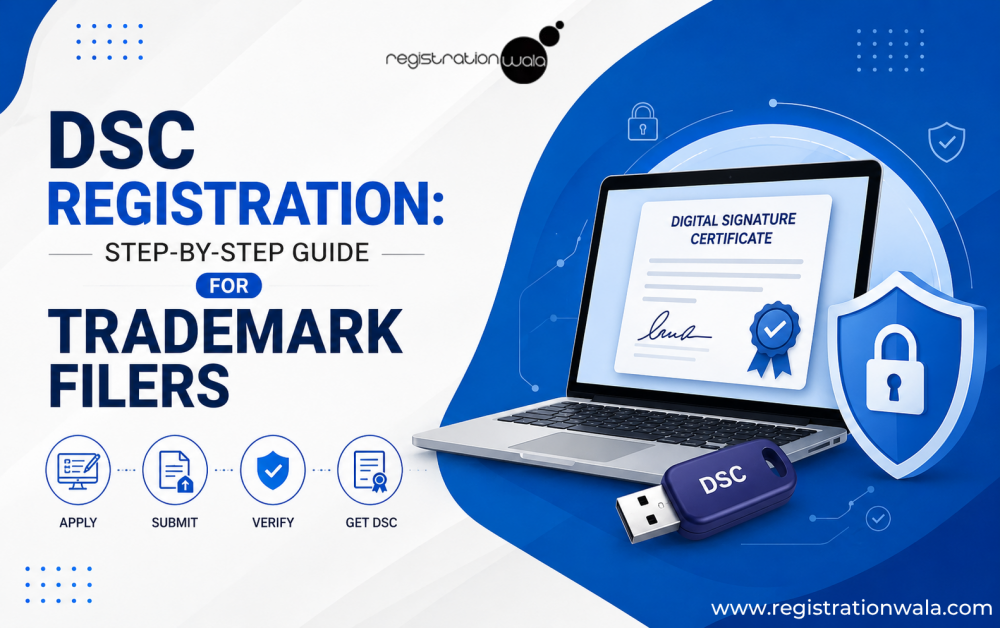
DSC full form is Digital Signature Certificate. It serves as the digital equivalent of a handwritten signature and is used for various online transactions as well as filings. It is an important requirement for several government and business-related processes, such as company registration, GST-related filings and certain Import Export Code (IEC) applications and related submissions. A DSC is also often used for filing trademark applications online in India. Any individual, attorney or trademark agent who is required to use a DSC for online trademark filing must obtain a Class 3 DSC before proceeding with trademark application or filing process online.
If you need a DSC for your trademark-related filing, it is important to obtain one in advance so as to avoid delays during trademark application process. In this blog post, we will provide a step-by-step guide to help trademark filers understand the process of obtaining a DSC in India.
What is a DSC?
A Digital Signature Certificate, abbreviated as DSC, is a secure digital key issued by a trusted Certifying Authority. It is used to verify a person's identity and sign documents online securely. In simple terms, it works like an electronic version of a handwritten signature or a rubber stamp. There are different classes of DSCs. For trademark registration, a Class 3 DSC is generally required. It is the active and legally valid standard used for high-security government and business filings.
Earlier, Class 1 and Class 2 DSCs were used for certain purposes but now they have been phased out and discontinued under guidelines of the Controller of Certifying Authorities. Therefore, a Class 3 DSC is required when filing trademark applications electronically where applicable.
Importance of DSC for Trademark Filing
The importance and advantages of DSC for trademark registration can be understood with the help of the following points:-
-
A trademark cannot be registered unless an application is filed for it. For filing a trademark application online, a DSC is required.
-
A DSC serves as a secure digital authentication tool. It uses encryption to protect the application and documents. As a result, it helps ensure that the information is not tampered with/altered during transmission to Trademark Registry.
-
Under Information Technology Act, 2000, a valid digital signature has legal recognition that is quite similar to a physical or handwritten signature. So, you do not have to worry about the DSC’s legal validity at all.
-
Filing a trademark application online is cheaper than physical filing. Applicants can save on government fees by choosing e-filing. For individuals, startups and MSMEs, the government fee is Rs. 4,500 per class for online filing, compared to Rs. 5,000 per class for physical filing. Similarly, for companies and other entities, the online filing fee is Rs. 9,000 per class while the physical filing fee is Rs. 10,000 per class.
-
Online filing of a trademark application tends to be faster and more convenient than physical or offline filing. It eliminates delays caused by physical paperwork, printing and document delivery.
How to Obtain a DSC and Use it For Trademark Filing?
In the simple steps below, we have explained how you can obtain a DSC and then use it for the purpose of trademark application filing:-
Step 1:- Choose Certifying Authority for DSC
The first step is to choose an authorised Certifying Authority to get your DSC. You should get your DSC from an authorised Indian Certifying Authority or its authorised service provider only. Make sure you choose a reliable provider that issues a valid Class 3 DSC.
Step 2:- Apply for Class 3 DSC
Next, you need to apply for Class 3 Digital Signature Certificate. The reason is that for trademark e-filing, the IP India registration process specifically requires procuring a Class 3 digital signature from an Indian Certifying Authority. Make sure to choose DSC according to your requirements whether you need it in your individual capacity or for use on behalf of an organisation.
Step 3:- Complete DSC Application and Submit Required Documents
After choosing your DSC provider, you need to complete DSC application process. The Certifying Authority will ask for the required documents as well as details in order to verify your identity.
The exact documents may vary depending on provider as well as type of applicant. You may be required to provide identity proof, PAN details, contact details and other documents required for the verification process.
Step 4:- Complete Identity Verification Process
Next, you must complete the identity verification process required by the Certifying Authority. Depending on DSC provider, the verification may be completed via different methods.
This includes verification through methods like Aadhaar-based verification, OTP verification, Video KYC or another approved method. Once your identity verification is successfully completed, your DSC application can then move forward for approval.
Step 5:- Get Your DSC Issued and Installed
After your application and verification are approved, your Class 3 DSC will finally be issued. The DSC is generally provided through a secure cryptographic USB token, depending on type of certificate as well as the DSC provider's process. Once you receive the DSC, follow the instructions given by your Certifying Authority to install and activate it on your computer.
Step 6:- Install the Required Signing Component
Upon installation of DSC, you need to install the required Signing Component on your computer. Visit the official IP India Trademark e-Filing portal and follow the instructions given in the latest Digital Signature Manual so as to install the Signing Component properly. This step is really important because the signing component allows the e-filing system to communicate with your Digital Signature Certificate.
Step 7:- Register for Trademark E-Filing
Once your DSC and Signing Component are properly installed, visit the official IP India Trademark e-Filing portal. Complete required user registration process so you can create your e-filing account. Follow instructions provided on portal to set up your account for online trademark filing.
If you face any technical issue during TM registration or in DSC setup for TM application, you can reach out to IP India helpdesk or trademark consultant for further assistance.
Step 8:- File Your Trademark Application Online
After completion of registration process, you must log in to Trademark e-Filing portal and then you can start your trademark application process. Fill in the required application form known as Form TM-A and provide all the necessary details in it. You must also upload supporting documents wherever applicable.
Before submitting application, make sure to digitally sign required form or documents with the help of your registered Class 3 DSC. Upon completion of digital signing process, you must pay the government fee and submit your trademark application. Once the application is successfully submitted, the e-filing system will generate acknowledgement/application number for future reference.
You May Also Read: Trademark Registration Checklist: Things to Know Before Registering Your Brand
Conclusion
For trademark filers who need to complete trademark e-filing process, obtaining a Class 3 DSC is a very important step. By following all the steps we mentioned in this article, you can obtain your DSC, complete required setup and use it for filing your trademark application online. To avoid any technical issues/delays, make sure you follow latest instructions provided on official IP India Trademark e-Filing portal.
Need assistance in trademark registration? Get in touch with Registrationwala.
Free Consultation
Frequently Asked Questions (FAQs)
Q1. Which DSC is required for online trademark registration?
A. Class 3 DSC is required for trademark registration online.
Q2. What is the validity of Class 3 DSC?
A. Class 3 DSC is usually issued with a validity of 1, 2 or 3 years, depending on the plan chosen at the time of purchase.
Q3. Can an attorney file a trademark application online on my behalf?
A. Yes. An attorney can file a trademark application online on your behalf.
Disclaimer:- This blog is for general informational purposes only. Before proceeding with DSC or trademark filing, please check latest guidelines on official IP India and CCA websites.
-
Published: September 01, 2026
285 Views