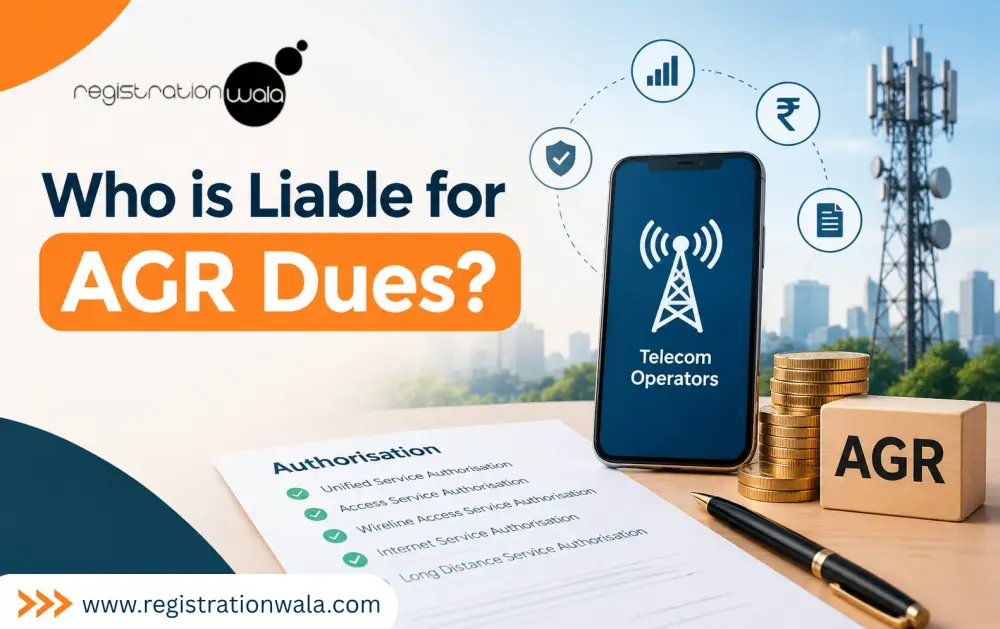
AGR stands for Adjusted Gross Revenue. It is the revenue base used by the Department of Telecommunications (DoT) to calculate financial obligations of telecom operators in India. The liability to pay AGR dues generally rests with the telecom company that incurred them under its authorisation.
What is AGR?
The full form of AGR is Adjusted Gross Revenue. It refers to the revenue figure the Department of Telecommunications (DoT) uses to calculate how much telecom companies have to pay the government. The money collected through the telcos contributes to government’s revenue from telecom sector. And this is no small amount, as telecom companies owe thousands of crores to DoT in AGR dues.
Currently, Vi has the largest outstanding AGR liabilities in the telecom sector, amounting to Rs. 64,046 crore. The formula for calculating the AGR dues is laid down under Telecommunications (Authorisation for Provision of Principal Telecommunication Services) Rules, 2026. These Rules were notified on 23 June 2026 and came into force with immediate effect.
Understanding AGR Dues’ Liability
Any business holding a telecom authorisation under the Telecommunications (Authorisation for Provision of Principal Telecommunication Services) Rules, 2026, or other applicable rules, is liable to pay the AGR dues.
Some of the telecom authorisations whose holders are required to pay these dues include the following:-
How is AGR Calculated?
AGR is calculated using steps set out in Rule 23(1) of Telecommunications (Authorisation for Provision of Principal Telecommunication Services) Rules, 2026. The calculation of AGR involves three stages, i.e., Gross Revenue (GR), Applicable Gross Revenue (ApGR) and Adjusted Gross Revenue (AGR). All of these stages are explained below.
-
Gross Revenue (GR):- It includes all revenue earned from the telecom entity’s operations and activities, as well as income from any source, including interest, dividends, rent, profits from the sale of fixed assets and miscellaneous income. Expenses cannot be deducted at this stage.
-
Applicable Gross Revenue (ApGR):- For reaching to ApGR, the gross revenue is reduced by specified items, including non-telecom revenue, revenue from activities authorised by the Ministry of Information and Broadcasting, receipts from the Digital Bharat Nidhi, and certain income such as dividends, interest, capital gains, foreign exchange gains, property rent, insurance claims, recovered bad debts and excess provisions written back.
-
Adjusted Gross Revenue (AGR):- Further deductions depend on the type of operator:
-
Network Service Operators:- Eligible interconnection usage charges and roaming payments made to other operators.
-
Virtual Network Operators:- Eligible payments to parent network service operators for bandwidth, leased circuits, call minutes and SMS.
The annual authorisation fee is generally calculated at 8% of AGR, subject to conditions under Rule 23 of Authorisation Rules 2026. Spectrum charges linked to AGR may also be payable separately where applicable.
AGR dues have been a major issue for India’s telecom sector for decades and it all comes down to one disagreement: what should count as revenue? Telecom companies argued that only revenue from telecom services should be counted. However, the DoT maintained that income from other sources, such as interest, dividends and profits from asset sales, should also be included.
Finally, on 24 October 2019, the Supreme Court upheld DoT’s interpretation and made the department’s broader definition applicable to disputed dues. However, the problem did not come to an end with the apex court’s decision. Since dues had accumulated over many years, the interest, the penalties and the interest on penalties added significantly to total amount owed to DoT.
The Supreme Court later set a payment schedule for outstanding dues. In 2025, it also allowed government to reconsider Vodafone Idea’s additional AGR dues given the specific circumstances of its case. Meanwhile, going through old financial records, correcting calculation errors and dealing with companies that had merged or entered insolvency added to challenge. All of this made calculating and recovering AGR dues a lot more difficult than simply working out the original fees.
Even today, AGR dues remain a major financial burden for telcos in India’s telecom sector. As of 31 March 2026, telecom operators collectively owed government approx. Rs. 1.41 lakh crore in outstanding AGR dues. Vodafone Idea had the largest share among all the telcos, followed by Bharti Group, Tata Group and MTNL.
The Bottom Line…
In the Indian telecom sector, Adjusted Gross Revenue (AGR) is an important term. It refers to the revenue base used by the DoT to calculate the fees payable by telecom authorisation holders. Whether a business holds an internet service authorisation or a long-distance service authorisation, understanding AGR and meeting the applicable payment requirements is truly essential. AGR is used to calculate annual authorisation fees and, where applicable, spectrum usage charges too. The applicable rates and charges totally depend on type of authorisation and regulatory requirements.
If you need help with AGR return filing or in obtaining a telecom authorisation from DoT, you can connect with our experienced telecom consultants at Registrationwala. We provide professional assistance to help you understand the requirements and complete the process smoothly.
Free Telecom Compliance Consultation
Frequently Asked Questions (FAQs)
Q1. Under which ministry does DoT function?
A. DoT, or the Department of Telecommunications, operates under the Ministry of Communications in the Government of India.
Q2. Are AGR Dues and Annual Authorisation Fee different?
A. Yes. Both of them are different. In the telecom sector, AGR dues refer to outstanding liabilities related to Adjusted Gross Revenue (AGR) while Annual Authorisation Fee refers to the yearly fee that telecom authorisation holders are required to pay. This fee is generally calculated at 8% of AGR.
Q3. Which telecom company has the highest AGR Dues liability as of 17 October 2026?
A. Vi has the highest AGR Dues liability. As per latest figures available after DoT reassessment, Vi's AGR dues stood at Rs. 64,046 crore.
Q4. Can Registrationwala help me with my Telecom Authorisation compliance?
A. Yes, absolutely. Registrationwala can help you understand compliance requirements related to Telecom Authorisation and assist you with the necessary procedures.
Disclaimer:-This blog post is intended for educational and general informational purposes only. While every effort has been made to ensure that the information provided is accurate and up to date, there may be errors or differences in interpretation. Readers are advised to verify the information through official sources or consult a professional for guidance wherever necessary.
-
Published: October 19, 2026
52 Views