Until quite recently, Extended Producer Responsibility (EPR) compliance in India was highly fragmented. Businesses were required to create and manage separate accounts across multiple CPCB portals for different waste streams, i.e., Plastic Packaging, E-Waste, Batteries, Waste Tyres and Used Oil.
Since each portal worked separately, businesses had to register, file returns and manage EPR certificates on different portals. This made the compliance process confusing as well as time consuming. It also increased the administrative work for producers and other businesses covered under EPR rules.
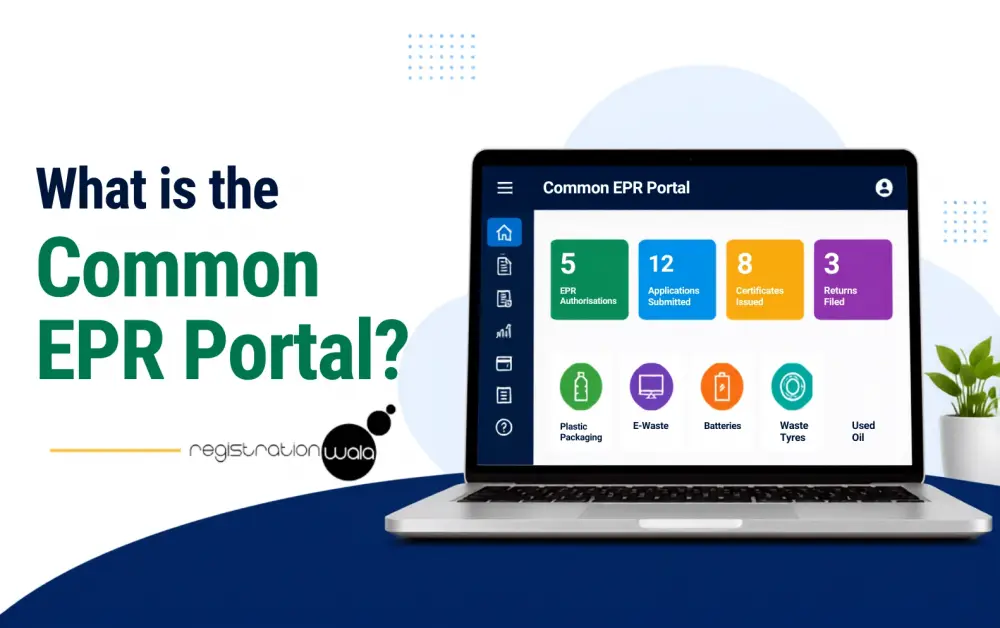
To make the process easier and faster, the Central Pollution Control Board (CPCB) has introduced EPR Common Portal. This portal is essentially a unified digital platform that consolidates all the previously separate systems. In this article, we explain the Common EPR Portal in detail, including its main features.
About Common EPR Portal
The Common EPR Portal (https://epr.cpcb.gov.in/) is a newly launched portal. It was developed as a single online platform by the Central Pollution Control Board (CPCB). It brings together the EPR portals for Plastic Packaging, E-Waste, Battery Waste, Waste Tyres and Used Oil into one system. Businesses can visit and use this portal for EPR registration and compliance related activities.
The CEPR portal became operational in the month of July 2026 and replaced the earlier system of separate EPR portals. This means that the previously used separate portals for Plastic Packaging, E-Waste, Battery Waste, Waste Tyres and Used Oil are no longer in use. All EPR-related activities are now carried out via Common EPR Portal.
Main Features of EPR Common Portal
The main features of the Common EPR Portal CPCB are as follows:-
-
Centralized EPR platform:- The EPR Common Portal provides a common platform for the users where they can access EPR systems covering areas such as plastic packaging, e-waste, battery waste, waste tyres and used oil to name a few.
-
Provision of Single Sign-On (SSO):- The Centralized EPR portal provides a Unified Single Sign-On system. This system allows the portal’s users to access different EPR modules through a common login instead of maintaining separate login credentials for each waste stream. A unique Common EPR ID (CEPR ID) is used for accessing the CEPR Portal.
-
Latest updates feature:- Users can check the latest EPR-related updates and information available through the EPR Common Portal, including updates concerning different waste-management categories.
-
Circulars and orders:- The portal provides access to relevant circulars, orders and other regulatory updates relating to different EPR categories, such as plastic waste, battery waste, e-waste, used oil and waste tyres.
-
Linking existing EPR accounts:- Existing users can link their accounts to the Common EPR Portal. For this, they need to register using the same Authorized Person PAN and Company PAN used for their existing account on the old Plastic EPR Portal or other existing EPR portals. The PAN details must match exactly.
-
Migrated user data:- CPCB has migrated the data of registered users from the discontinued EPR portal to the newly built Common EPR Portal. Existing users have been asked to verify their migrated data. In case they find any discrepancies, the same must be reported via CEPR Portal.
Also Read: Plastic Waste Management Amendment Rules 2026: All You Need to Know
What is the Common EPR Portal Registration Process?
If you are wondering how to register on the Common EPR Portal, you are in the right place. Below, we have explained all the steps you need to follow to complete the registration process:-
Step 1:- Visit the official Common EPR SSO Portal @ https://epr.cpcb.gov.in/home.
Step 2:- Once you are on the homepage, click on the “Register” button.
Step 3:- Then, enter the company and user details.
Step 4:- Thereafter, click on the ‘Continue’ button.
Step 5:- Now, you are supposed to enter the general information requested on the portal.
Step 6:- To proceed, click on the “Continue’ button.
Step 7:- Now, you must upload all the required documents in the prescribed format.
Step 8:- Click on “Submit” to complete the registration successfully.
After successful submission, a CEPR ID will be generated and sent to the user's registered mobile number and email ID. Then, you can use this ID for Common EPR Portal Login.
Conclusion
The Common EPR Portal is a new digital platform launched by CPCB to bring together different EPR systems on one platform. It provides a Single Sign-On (SSO) system and a CEPR ID to make EPR registration and compliance easier for businesses. Existing entities registered under EPR also need to migrate to the new portal to continue their EPR related activities.
You can contact Registrationwala for help with EPR registration, certification and post-registration compliance for different waste categories.
Frequently Asked Questions (FAQs)
Q1. Which authority developed the EPR Common Portal?
A. The EPR common portal was developed by the Central Pollution Control Board (CPCB).
Q2. What documents are required for EPR SSO Portal registration?
A. The required documents/details generally include the company GST number, company PAN number, authorized person’s PAN number and date of birth, registered email ID and mobile number for OTP verification, GST-linked details, company CIN number (if applicable) and supporting documents in PDF/JPG/PNG format.
Q3. Are Common EPR Portal and CEPR Portal the same?
A. Yes. The Common EPR Portal is also often referred to as the CEPR Portal.
Q4. What is a CEPR ID?
A. A CEPR ID, a.k.a Common EPR ID, is a unique identification number generated through the CEPR Portal. It serves as a common identity for accessing applicable EPR services through the Single Sign-On (SSO) system.
Q5. Is the Plastic EPR Portal still active?
A. No. The Plastic EPR Portal was discontinued from 28 June 2026. All user data from the old portal has been migrated to the newly developed CEPR Portal. Now, the old portal is available only for stakeholders for the purpose of verifying historical data up to 28 June 2026 against the migrated data. On the new portal, the users can continue their EPR-related activities.
Q6. Do EPR-registered entities need to migrate to the new CEPR portal?
A. Yes. Migrating to the new CEPR portal is mandatory for the EPR-registered entities.
Disclaimer:- This blog post is intended for informational purposes only. The CEPR portal is relatively new and many of it features are still either being built or updated. Portal layouts and functionality may change as development continues. Always visit the official website for the latest real-time compliance updates.
-
Published: September 02, 2026
513 Views