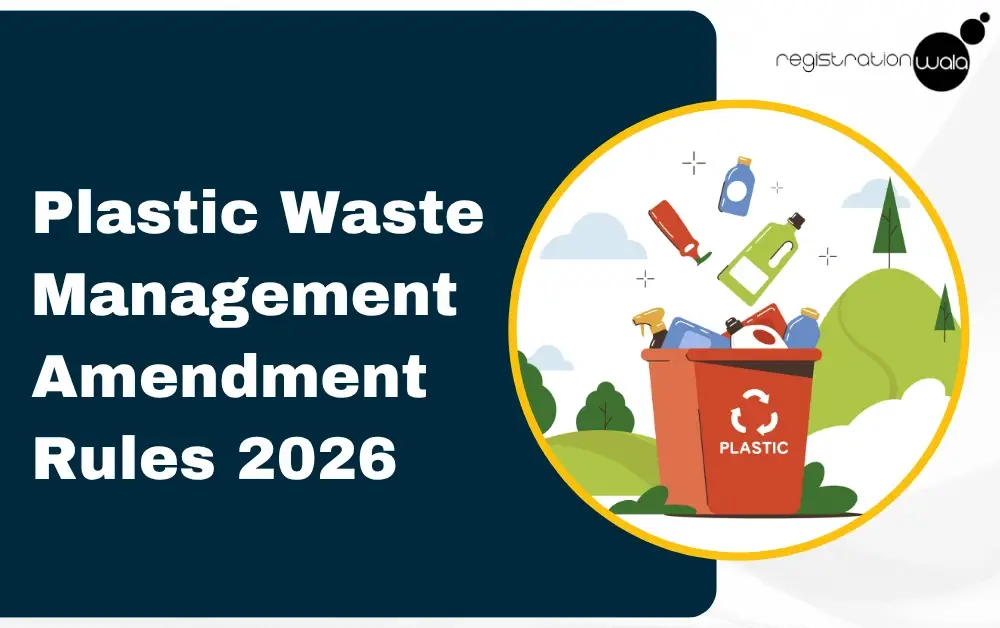
On 31 March 2026, the Plastic Waste Management (Amendment) Rules, 2026, were notified. With the amendment, the government aims to make compliance easier for companies by allowing them to carry forward unfulfilled Extended Producer Responsibility (EPR) targets from the fiscal year 2025–26 for up to three years, starting from 2026-27.
In this blog post, we shall discuss Plastic Waste Management (Amendment) Rules, 2026 in detail. We shall outline the important terms defined under these rules and also explain these rules’ key features.
Key Terms: Plastic Waste Management Amendment Rules 2026
The following key terms are defined under the recently notified Plastic Waste Management Amendment Rules 2026. :-
End of Life Disposal
It means the utilization of plastic wastes for energy recovery including coprocessing in industries such as cement, steel and any other similar industry, waste-to-energy processes, waste-to-oil conversion and use in road construction in accordance with relevant guidelines.
Plastic Waste Processors
It refers to entities that are engaged in recycling of plastic wastes or entities engaged in end of life disposal of plastic wastes.
Registered Environment Auditor
It means Environment Auditor as defined under the Environment Audit Rules, 2025. They are authorized to conduct verification of EPR compliance and recycled content usage.
Reuse
Under the recently notified Plastic Waste Management Amendment Rules 2026, the term ‘Reuse’ means using an object or resource material again for either the same purpose or another purpose without changing the structure of the object.
Seller
It refers to a person selling plastic raw materials like resins or pellets or intermediate materials used for producing plastic packaging.
Key Features of Amendment Rules
The key features of the Plastic Waste Management Amendment Rules 2026 are explained below. :-
Carry forward of unfulfilled targets
Under the amendment rules, the companies that don't meet their recycling goals for the 2025-26 financial year won't be penalized right away. They can now carry over their unmet goals from 2025–26 for up to three more years, starting in 2026-27. With that being said, they must clear at least one-third of the deficit annually.
Sale & Purchase of Recycling Certificates
The rules set up a way for businesses to buy and sell recycling certificates. If a company recycles more plastic than required, it gets additional certificates. Another company that doesn't reach its goal can buy these certificates to ensure compliance instead of recycling its own plastic.
Utilization of Unrecyclable Plastic Wastes for Energy
The 2026 amendment rules enable plastic wastes that can’t be recycled to be utilized for creating energy. We refer to this as end-of-life disposal. It includes techniques like burning plastic in waste-to-energy facilities, utilizing it in the steel and cement industries, turning it into fuel or using it for the purpose of constructing roads.
Exemption for Pesticide Packaging
These rules exempt pesticide packaging from mandatory recycled content targets. This exemption is applicable when other regulations, specifically regulations of the Central Insecticides Board & Registration Committee, restrict recycled plastic’s use for ensuring safety as well as chemical stability reasons.
Mandatory Targets for PIBOs
The amendment rules introduce mandatory, increasing yearly targets for recycled plastic content in packaging for Producers, Importers and Brand Owners (collectively called PIBOs). These rules target a total of three specific categories, i.e., Category I (Rigid plastic packaging), Category II (Flexible plastic packaging) and Category III (Multi-layered plastic packaging).
Conclusion
The Plastic Waste Management (Amendment) Rules, 2026 are a big step forward for India's environmental policy. These rules were introduced to amend the Plastic Waste Management Rules of 2016. They make it easier for businesses to comply with the EPR framework. The rules allow for a three-year carry forward of unfulfilled 2025-26 EPR obligations while setting stricter targets for the PIBOs. If you need professional assistance in EPR registration or in fulfilling the EPR compliance requirements, you can get in touch with our experienced EPR consultants at Registrationwala.
Frequently Asked Questions (FAQs)
Q1. When were the Plastic Waste Management Amendment Rules 2026 notified?
A. These rules were notified by the government on 31 March, 2026 to amend the Plastic Waste Management Rules 2016.
Q2. Who are Plastic Waste Processors?
A. Under the 2026 amendment rules for plastic wastes management, the Plastic Waste Processors are described as entities that are involved in plastic wastes recycling or entities engaged in end of life disposal of plastic wastes.
Q3. Who are PIBOs?
A. PIBOs are Producers, Importers and Brand Owners. They are basically entities that are responsible for plastic waste’s management under EPR framework.
Q4. Is pesticide packaging exempt from mandatory recycled content targets under the amendment rules?
A. Yes. Under the Plastic Waste Management (Amendment) Rules, 2026, pesticide packaging is exempt from mandatory recycled content targets.
Disclaimer :- This blog post is purely meant for educational purposes. While we have made every effort to provide our readers with accurate as well as complete information in this post, we cannot guarantee its full accuracy or completeness. Therefore, we suggest the readers verify with the official sources before making any decisions. Information in this content should not be interpreted as professional, academic, business, financial or legal advice at all.
-
Published: April 11, 2026
1407 Views