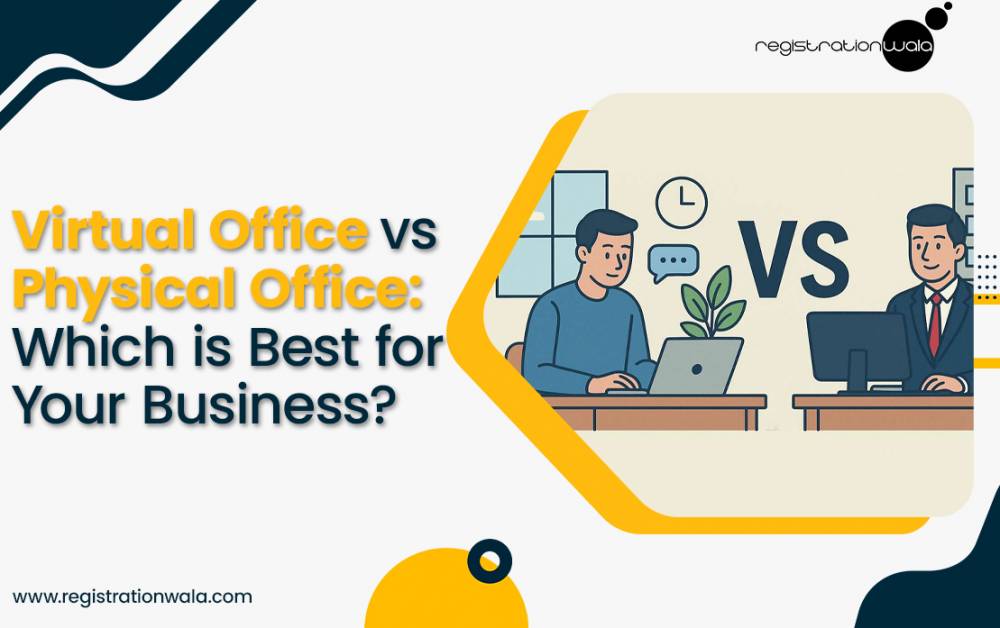
When starting a business, many business owners think about whether they should use a virtual office or a physical office for handling their business. A virtual office is a business setup that allows employees to work from home or any place while maintaining a business address, mail handling and other office services. On the contrary, a physical office is a traditional office where employees go and work every day (unless they are allowed/required to work from home on certain days of the week).
Physical offices have been used since businesses started. However, virtual offices became popular because of the internet and online work. They became even more popular during the COVID-19 pandemic that led to lockdown in many countries. Both have their own unique features. So, which one is better for your business? In this blog post, we will compare both so you can choose the best option for your business.
What is Virtual Office?
A virtual office is a modern business setup that came into existence after growth of internet as well as digital communication technologies. Using this setup, businesses can operate in a remote manner without needing to maintain a full time traditional office space. Although it operates virtually, a prime physical commercial address is still required for business registration, GST registration and marketing purposes.
During company registration, proof of a business address is required whether you plan to operate through a virtual/digital office or a physical office. A virtual/digital office also helps businesses save costs such as office rent, electricity, water bills, maintenance and other office expenses.
What is Physical Office?
A physical office is a traditional office where employees go to work every day unless they work from home on some days. This office gives a business a fixed place for work, meetings, customers and teamwork. A virtual office is good for some businesses but not for all. Many businesses like factories, restaurants, shops, hospitals and warehouses cannot operate without a physical office. They require a dedicated place to work properly.
Even today, most businesses still use physical offices and only a small number work fully online. However, during COVID-19 pandemic, many businesses started using virtual offices as well as work-from-home systems.
Virtual Office vs Physical Office: Comparative Table
Below, we have provided you with a table to help you learn about the difference between virtual office and physical office. After learning about the differences, it’ll be easier for you to decide which one is better for you:
|
Parameter
|
Virtual Office
|
Physical Office
|
|
Definition
|
A virtual-office is an office setup that allows businesses to operate remotely without maintaining a dedicated physical workspace for daily operations.
This office usually provides a business with services like a business address, mail handling and communication support.
|
A physical office is a traditional office setup. In this type of office, the business activities are conducted from a dedicated commercial space rather than virtually.
It is more common among businesses with regular staff, client meetings and operational requirements.
|
|
Cost
|
Minimal expenses as you do not need to pay high electricity bills, water bills, office maintenance, pantry costs, furniture expenses or daily operational overheads.
|
Higher expenses as you may need to pay rent (unless you own the property), electricity bills, water charges, internet costs, office maintenance, pantry expenses and employee facility costs.
Tip: Many businesses today follow a hybrid model wherein employees work from office only on certain days and work remotely on other remaining days. This model helps to reduce operational costs.
|
|
Suitability
|
Suitable for startups, freelancers, small businesses, consultants and any other businesses that are looking to start and operate with requirement of minimal investment.
Many businesses initially operate through virtual offices and later on, they decide to shift to physical offices as their revenue and operational requirements grow with time.
|
Common among medium sized as well as large businesses.
It is more suitable for businesses that require daily physical operations, customer interaction, inventory management or continuous team coordination.
|
|
Collaboration
|
In the case of virtual offices, there is limited in-person engagement as businesses must primarily rely on remote communication tools like video calls, emails and messaging platforms.
|
In the case of physical offices, there tends to be a high level of in-person collaboration. Because of this, there tends to be better coordination, spontaneous discussions and stronger team bonding in such offices.
|
Tips for Choosing Between a Virtual Office and a Physical Office
Here are a few tips to help you choose between a virtual office and a physical office:
-
Ask yourself what your budget is and if you operate a physical workspace, will you be able to pay rent and utility bills comfortably? It’s not always the case that a business thrives within a few months; it could go into losses. In such a situation, can you still sustain operating physically? If not, a virtual office could be a better option.
-
Remember that virtual offices aren't ideal for all businesses. They may not be suitable for businesses like restaurants, factories, retail shops, hospitals, warehouses, etc. that require a dedicated physical space for operations as well as customer handling.
-
Consider whether your business requires regular face-to-face meetings with clients, employees or vendors. If frequent in-person interaction is important, a physical workspace with a meeting room may be much more suitable in your case.
-
Think about the future growth of your business while making the choice. Many startups begin with virtual offices so they can save up costs. Later on, such businesses shift to a dedicated physical work space once their revenue, team size and operational requirements increase with time.
-
If your employees can work remotely in an efficient manner using online communication and collaboration tools, then you can choose a virtual workspace. This way you can certainly help improve flexibility and reduce operational expenses of your business.
-
You can also consider a hybrid work model where employees work from physical-office on selected days and remotely on other days. This will help to balance flexibility and operational costs.
Also Read: How to Change Company Address
Conclusion
While setting up a company in India, one of the most common dilemmas entrepreneurs face is choosing between a virtual office and a physical office. A virtual office is ideal if you want a cost effective solution with flexibility as well as minimal operational expenses. On the other hand, a physical office is appropriate for you if you require a dedicated workspace, regular client meetings and day-to-day team operations and are okay with all the expenses associated with running the office physically. We hope that after going through this blog post, you will now find it much easier to choose which option is better for you.
Remember that, regardless of whether it is a physical or virtual office, a company address is mandatory for legal compliance. If you need assistance with company registration process, you can get in touch with our consultants at Registrationwala for professional guidance as well as support.
Frequently Asked Questions (FAQs)
Q1. Is it cheaper to operate a virtual office for business compared to a physical office?
A. Yes. A virtual office is certainly cheaper because businesses do not have to pay costs like high office rent, maintenance, utilities and administrative expenses.
Q2. Is a physical company address required if I want to operate my business through a virtual office?
A. Yes. Even if you want to operate a business through a virtual/digital office, a registered address is mandatory for legal and official purposes.
Q3. What exactly is a virtual office?
A. It is a modern digital office that operates in a remote manner without needing to maintain a full time traditional office space. Because of this, the employees work from home or elsewhere.
Q4. Are virtual offices ideal for startups?
A. Yes, generally the virtual offices are ideal for startups, especially in their initial phase of business. It helps them to save up costs associated with physical workspace.