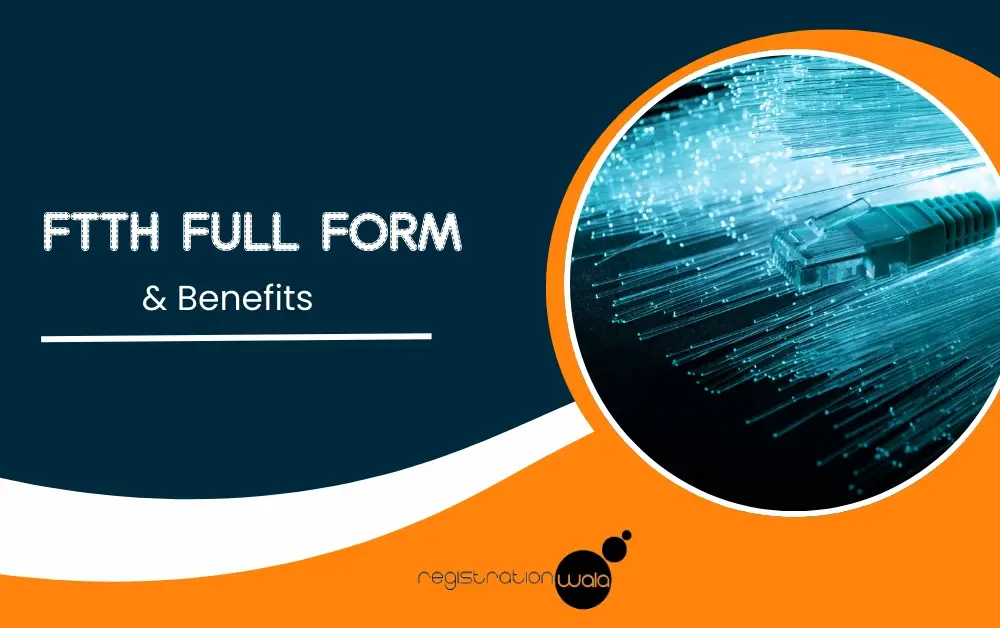
FTTH is a commonly used abbreviation in the telecom industry. The FTTH full form is Fiber-to-the-Home. Sometimes, it is also known as Fibre to the Premises (FTTP). It provides high speed internet directly to internet subscribers using fiber optic cables.
In this blog post, we shall provide you with an in-depth understanding of FTTH and also explain its benefits to you.
FTTH full form is Fiber-to-the-Home - a broadband internet connection technology. This technology makes use of fibre optic cables for data transmission. These cables consist of thin strands of glass/plastic that transmit light signals.
They allow for very high-speed data transfer. In an FTTH connection, the fiber optic cables run directly from the internet service provider's network to the subscriber's home and offer a direct internet connection.
This connection is different from other broadband options like DSL or cable, which are dependent on traditional copper wires/coaxial cables for data transmission. FTTH connections are well-known for their fast speeds and high reliability. It is quite a popular choice among internet service providers and consumers.
Benefits of FTTH
Here are some of the major benefits of fiber to the home (FTTH) technology :-
-
It provides high speed internet to the internet subscribers.
-
Another benefit of the FTTH technology is that it uses fibre optic cables. These cables are resistant to electromagnetic interference, weather conditions and signal degradation over long distances.
-
FTTH provides interrupted internet browsing experience. It is ideal for video conferencing and online gaming.
-
The upload and download speeds are more or less equal when it comes to FTTH.
-
For individuals who enjoy watching movies on OTT platforms like Netflix and Amazon Prime, FTTH network is ideal. This technology ensures that movies are displayed in high quality without buffering for too long.
-
In the long run, the FTTH network is cost effective in many cases. This is because the fibre optic cables used in this network are less prone to damage. Their lifespan is longer compared to other cable types and require fewer repairs/replacements.
-
For individuals who work for companies remotely or are freelancers, FTTH is suitable.
Conclusion
FTTH full form is Fiber-to-the-Home. It is basically a broadband internet connection technology that offers reliable as well as fast internet connection to individuals and organizations. It uses fiber optic cable for delivering data directly to homes or offices. For those requiring high speed, stable internet for streaming, gaming, video conferencing, remote work or online learning, FTTH is often a preferred choice. The fiber optic cables used in FTTH networks can withstand harsh weather conditions. They are less prone to electromagnetic interference or signal loss and require fewer replacements/repairs as compared to other cables.
If you want to become an internet service provider, it is mandatory to obtain the ISP license from the Department of Telecommunications (DoT). For assistance in obtaining this license in a smooth and hassle free manner, you can reach out to our ISP consultants at Registrationwala.
Frequently Asked Questions (FAQs)
Q1. What is FTTH full form?
A. FTTH full form is Fiber-to-the-Home. It refers to a broadband internet technology that uses fibre optic cables (made up of thin glass/plastic strands) to offer high speed internet to residential apartments, corporate offices and other premises.
Q2. Which type of cable is used for the FTTH network?
A. Fiber optic cable is used for the FTTH network.
Q3. Is FTTH ideal for online gaming?
A. Yes, FTTH is ideal for online gaming because it offers reliable and high speed internet.
Q4. How does FTTH perform in rainy weather?
A. FTTH performs quite well in rainy weather. This is because it uses fibre optic cables that are resistant to moisture and are not easily affected by rain or electromagnetic interference.
Q5. Is a fibre optic cable better than a copper cable?
A. Yes, a fibre optic cable is believed to be more superior than a copper cable. The former type of cable offers faster data transmission speeds, higher bandwidth, lower signal loss chances and improved reliability over long distances. As a result, fibre optic cables provide better user experience to the internet subscribers.
Q6. What is fibre optic cable made up of?
A. This type of cable is made up of thin strands of glass or plastic. These strands transmit data in the form of light signals.
-
Published: February 03, 2026
1338 Views