Stockbrokers are financial intermediaries who buy and sell securities on behalf of their clients. To operate legally in India, they must obtain membership of a recognised stock exchange, such as NSE, BSE or MSE, and also meet SEBI's registration requirements.
If you are passionate about the stock market and finance, becoming a stockbroker could be the right career choice for you. Wondering how to become a stockbroker in India? This blog will guide you through all the requirements you need to complete.
Who is a Stockbroker?
A stockbroker is an individual or business entity that buys and sells stocks, bonds and other securities on behalf of their clients. In return, they charge a flat fee, commission or markup for their services.
A stockbroker must obtain membership in each specific stock exchange where they intend to execute buy and sell orders. Additionally, they must be registered with SEBI, in accordance with the SEBI (Stock Brokers) Regulations, 2026.
What does a Stockbroker do?
A stockbroker’s primary responsibility is to execute buy and sell orders on behalf of their retail and institutional clients. But apart from this, they also engage in the following activities:-
-
Quite often, the stockbrokers help their clients to file IPO applications.
-
The stockbrokers also help investors to open trading and demat accounts. During the process, they help the investors to fulfill the KYC requirements.
-
Many SEBI stockbrokers trade in securities to make profits for their firm. For this, they use their own corporate funds, not their clients’.
-
Some stockbrokers also offer investment advice and market insights to their clients. However, for this purpose, they need to obtain investment advisor registration from SEBI.
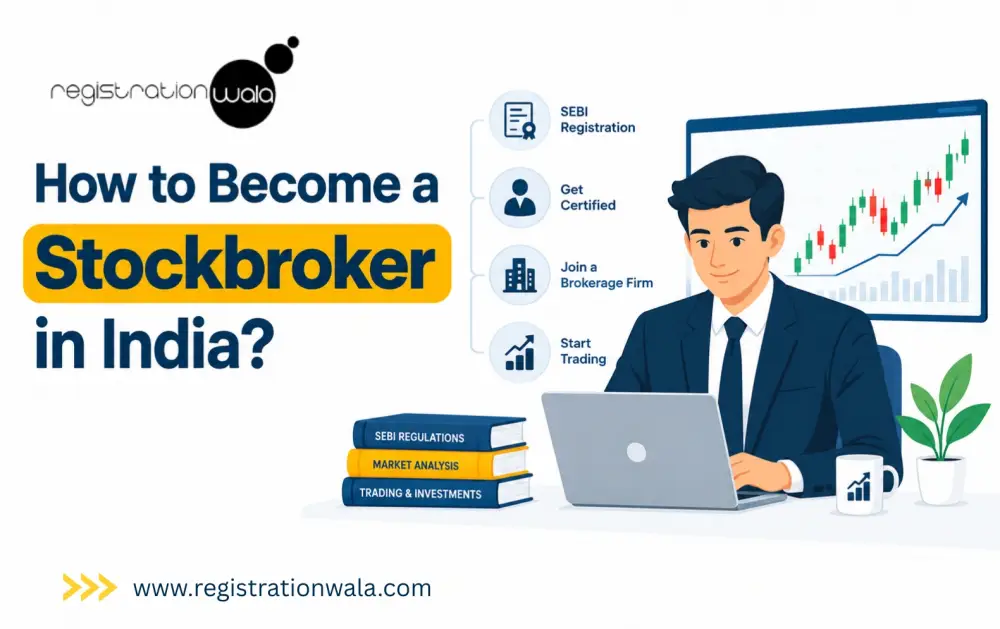
Becoming a Stockbroker in India: Step-by-Step Process
Below, we have explained the step-by-step process that needs to be followed by those who want to become a stockbroker in India:-
Step 1:- Meeting Eligibility Criteria
The first step in the process of becoming a stockbroker is ensuring that the applicant fulfills the eligibility requirements. Below, we have stated some of the key requirements:-
-
The individual intending to become a stockbroker must be at least 21 years of age. In case of a non-individual applicant, the partners or directors must be at least 21 years of age.
-
The proprietor, partner or director must be an Indian citizen.
-
They should possess at least HSC or equivalent qualification.
-
The applicant must have obtained the relevant NISM certification.
-
The individual applicant, or at least two partners/directors of a business entity, must have a minimum of 2 years of experience in activities related to securities trading, portfolio management or financial services.
-
Must fulfill all other requirements set forth by SEBI and the concerned stock exchange(s).
For detailed information about the eligibility criteria or any related queries, you can contact our consultants at Registrationwala.
Step 2:- Passing NISM Certificate Examination
After ensuring the eligibility requirements are met, the applicant must pass the prescribed NISM certificate examination to become a stockbroker. NISM-Series-VII: Securities Operations and Risk Management (SORM) Certification examination is the prescribed examination for individuals who want to work in stock brokerage, clearing and settlement operations.
However, individuals who want to work in the equity derivatives (futures and options) segment are required to pass the NISM-Series-VIII: Equity Derivatives Certification examination. After passing the examination, NISM will issue the relevant certificate.
Step 3:- Obtaining Membership from a Stock Exchange
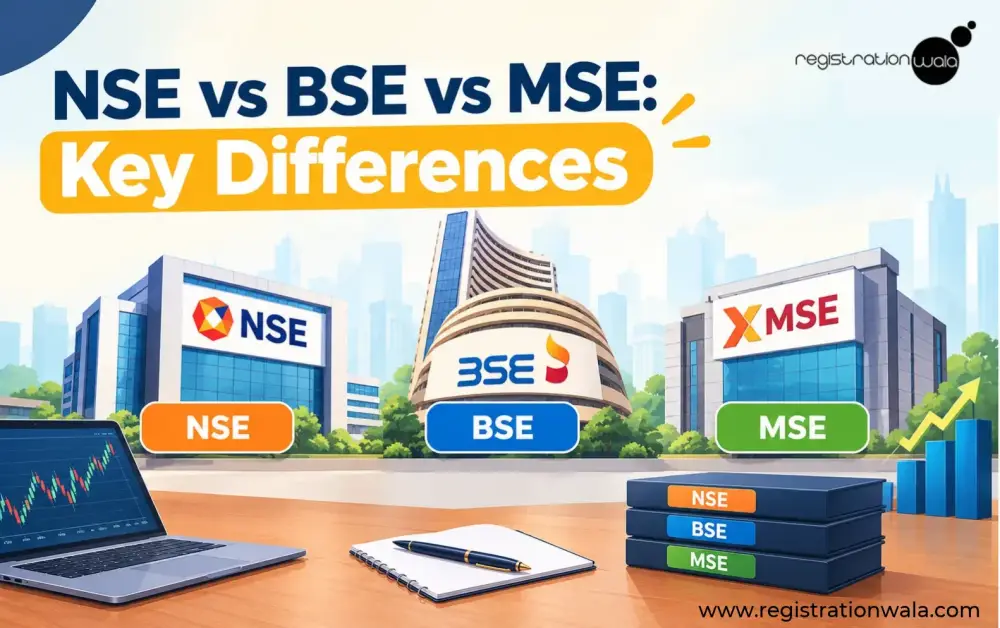
After obtaining the NISM certificate, the applicant who wishes to become a stockbroker must obtain membership of the stock exchange where they want to trade or execute transactions on behalf of their clients. For instance, if they wish to trade or execute transactions on the National Stock Exchange (NSE), they must obtain NSE membership.
Similarly, if they want to operate through Bombay Stock Exchange (BSE) or the Metropolitan Stock Exchange of India (MSE), they must apply for membership of the respective stock exchange. The application for the membership must be filed in the manner prescribed by the concerned stock exchange.
Step 4:- Applying for SEBI Stock Broker Registration
Once the applicant has obtained the concerned stock exchange’s membership certificate, they can then file an application for stockbroker registration with SEBI through the stock exchange they are a member of.
For filing the application, they must use Form A. In the form, all the required details must be provided. While submitting the application, they must pay the prescribed processing fee and admission fee.
Step 5:- Application Verification & Issuance of Stockbroker Certificate by SEBI
Once SEBI receives the application in Form A, it will verify the applicant’s background, infrastructure and compliance requirements. If satisfied, the Board will issue the stockbroker registration certificate to the applicant. This certificate serves as official proof of stockbroker registration.
The following details are required to be filled in Form A - Application Form for
registration as a stock broker with Securities and Exchange Board of India:
-
Name of Member with Code No
-
Trade name of Member
-
Name of the Stock Exchange/ segment of which the applicant is the member
-
Date of admission to exchange/ segment
-
Address of Member
-
Phone Number(s) of office and residence and email
-
address
-
Form of Organization — Sole proprietorship, partnership, limited liability partnership, body corporate, financial institution
-
Net worth along with supporting document
-
PAN of the applicant
-
Details of proprietor/partners/directors
Final Thoughts…
For those who are passionate about the stock market, becoming a stockbroker can be a truly rewarding career choice. By becoming a stockbroker, you can buy and sell securities on behalf of clients and earn money through a flat fee, commission or markup for the meaningful services you offer. You can help clients invest in the stock market and earn profits, although losses are also possible. To become a stockbroker in India, you must pass NISM examination, obtain membership of a recognised stock exchange and then obtain a stockbroker registration certificate from SEBI. After obtaining registration, you must comply with all the applicable rules and regulations of SEBI and the concerned stock exchange so as to ensure ongoing legal and regulatory compliance.
For assistance in becoming a stockbroker in India, you can get in touch with our experienced compliance consultants at Registrationwala. We will help you fulfill all the regulatory and legal requirements, so you can get your SEBI stockbroker registration as soon as possible.
Free Stockbroker Registration Consultation
Frequently Asked Questions (FAQs)
Q1. Which authority do I need to file an application with to become a stockbroker in India?
A. To become a stockbroker in India, you need to file an application (Form A) with the Securities and Exchange Board of India (SEBI). You do not need to file this application directly with SEBI. You are supposed to file it through a recognized stock exchange, like NSE or BSE, where you are registered as a member.
Q2. Which is the prescribed form for SEBI stockbroker registration?
A. The prescribed form for SEBI stockbroker registration is Form A under SEBI (Stock Brokers) Regulations, 2026.
Q3. What is the validity of stockbroker registration certificate?
A. The stockbroker registration certificate offers an indefinite validity period unless it is surrendered, cancelled or suspended.
Q4. What is the minimum age requirement for becoming a stockbroker in India?
A. The minimum age requirement for becoming a stockbroker in India is 21 years of age.
Q5. How can an investor verify whether a stockbroker is registered with SEBI?
A. To verify whether a stockbroker is registered with SEBI, the investor can check the list of SEBI registered intermediaries available on the official SEBI website.
Q6. Which are the primary regulations governing stockbrokers in India?
A. The primary regulations governing stockbrokers in India are the SEBI (Stock Brokers) Regulations, 2026, which came into effect on 7 January 2026 and replaced the SEBI (Stock Brokers) Regulations, 1992.
Q7. Do stockbrokers need to register with AMFI?
A. No. The stockbrokers need to register as a member with the stock exchange where they want to buy and sell securities on behalf of their clients. Additionally, they need to register with SEBI to obtain stockbroker registration certificate. Registration with AMFI is generally required to become a mutual fund distributor in India.
Q8. Can a stockbroker registered with SEBI provide stock market research reports to clients?
A. A SEBI-registered stockbroker can execute buy and sell orders on behalf of clients. However, if they wish to provide stock market research reports to clients, they must obtain SEBI Research Analyst license. Our consultants at Registrationwala can assist clients with the Research Analyst registration process.
|
Disclaimer:- The information provided in this article is for general informational purposes only and should not be considered legal or financial advice. Our readers are, therefore, advised to verify the latest SEBI regulations and stock exchange requirements prior to proceeding with stockbroker registration. Alternatively, they can connect with an experienced consultant for assistance.
|
-
Published: October 24, 2026
43 Views