Last Updated on March 17, 2026
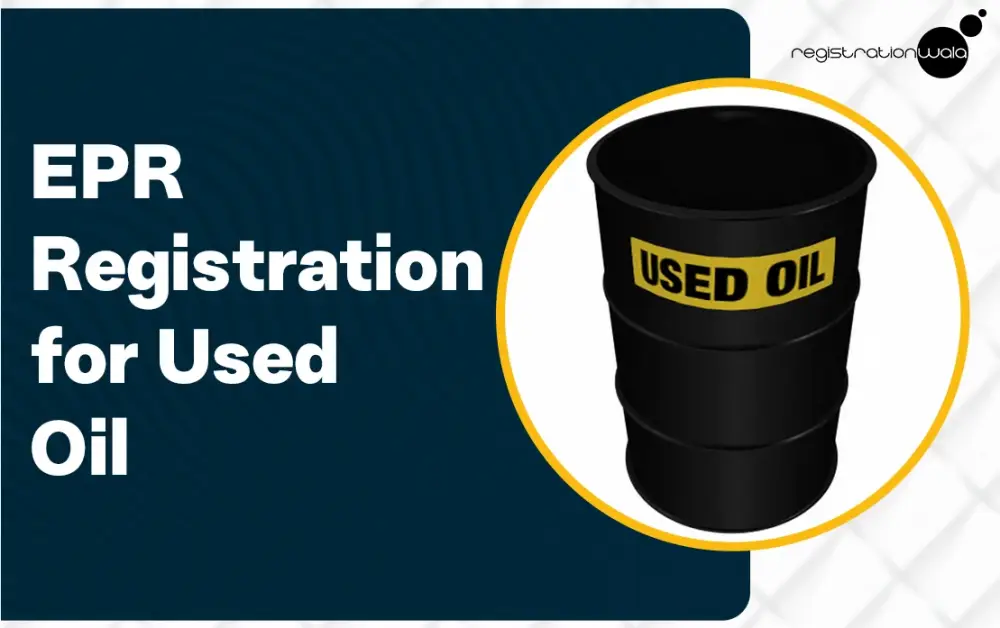
Extended Producer Responsibility (EPR) regulations are not just limited to electronic and plastic waste. Now, they cover oil waste as well. EPR for used oil means the responsibility of the producer of base/lubrication oil to meet recycling targets through registered recyclers. The Government of India notified Hazardous and Other Wastes (Management and Transboundary Movement) Second Amendment Rules, 2023 by addition of Chapter-VII “Extended Producer Responsibility for Used Oil”.
These rules commenced from the 1st day of April, 2024. Those who are waste oil manufacturers, importers and recyclers must ensure their compliance with EPR rules. If you want to get an EPR certificate for used oil, connect with Registrationwala. By obtaining this certificate, your business will show extended producer responsibility for used oils.
What is Used Oil?
Used oil can be defined as any oil derived from crude oil or mixtures which contain synthetic oil including spent oil, used engine oil, gear oil, hydraulic oil, turbine oil, compressor oil, industrial gear oil, heat transfer oil, transformer oil and their tank bottom sludge and suitable for reprocessing.
Stakeholders Requiring EPR Certificate for Used Oil
The following stakeholders require EPR for used oil:
-
Producers
-
Collection Agents
-
Recyclers
-
Used Oil Importers
Benefits of EPR Oil Waste
EPR Oil Waste management is extremely important for the environment. It puts the responsibility of oil waste management on the stakeholders. Some of the benefits of EPR for used oil are mentioned below:
-
Used Oil contains toxic chemicals like lead, zinc, cadmium and benzene. If not treated well, these harmful substances can mix up and contaminate the environment. However, EPR registration for used oil prevents this.
-
Companies with EPR for used oil show their responsibility towards the environment which enhances their brand image. Customers are more likely to support businesses that contribute to sustainable practices.
-
EPR for used oil encourages responsible handling and recycling of used oils and minimizes environmental pollution. It contributes rto fresher air, cleaner water and healthier soil and supports the ecosystem’s overall health.
-
By getting extended producer responsibility for used oil, your business will ensure compliance with waste management rules and protect it from legal issues.
Documents Required for EPR Oil Waste Management
The following documents are required for EPR for oil waste:
-
CIN
-
MoA
-
Partnership Deed
-
PAN Card
-
Identity Proof such as Aadhaar Card, Passport
-
Proof of Address (Water, Electricity Bill or Rent Agreement)
-
GST Registration Certificate
-
Import-Export Code
-
Manufacturing Details
-
EPR Plan to Fulfill EPR Target
-
Annual Returns
-
Used oil generation data
Process of EPR Oil Waste
To register for EPR for Oil Waste, you must follow certain steps.
Visiting EPR Portal
The applicant must sign up on the EPR for oil waste portal by Central Pollution Control Board (CPCB) and get login credentials so that he can log onto the portal. He must provide details such as type of entity, GST number, name of company, authorized person details, etc.
Filing Application
Now, after logging into the portal, the applicant must file an application to get EPR registration. All the required information must be duly filled and all the required documents must be submitted on the portal.
Review of Application
Upon receiving the application, it will be carefully examined by the CPCB, along with all the submitted documents. In case of any shortcomings, the applicant will be intimated.
Registration for EPR Oil Waste
If the application is complete, the applicant will be registered and he will receive a registration number by CPCB within a stipulated period. The registration is valid for 2 years. After this, an application must be submitted for EPR registration renewal in the applicant’s specific category.
Why Choose Registrationwala for EPR Used Oil Registration
Advice and Consultation
At Registrationwala, we offer professional advice on the legal requirements and compliance process for EPR registration for used oil. Our consultants help you understand the mandatory guidelines of the Central Pollution Control Board (CPCB) and other authorities.
Assistance in Preparing Documents
We help you gather and prepare all the required documents for EPR registration with the support of our experienced advisors, ensuring all paperwork is correct to avoid delays or rejection.
Tailored EPR Compliance Plan
Our experts create a customized EPR compliance plan for your business to ensure proper waste collection, recycling, and transportation as per EPR regulations.
On-time Registration
We ensure your application is submitted on the CPCB portal on time and track the progress regularly. Our team keeps you updated and helps you obtain EPR registration quickly and smoothly.

FAQs About EPR for Oil
Q1. Who needs to register on the EPR Used Oil Portal of CPCB?
A. Producers, Collection Agents, Recyclers and Used Oil Importers are required to register on the EPR Used Oil Portal.
Q2. Which oils are exempted from the used oil EPR target?
A. White oil, process oils used in manufacturing processes, as well as lubricants such as greases, which do not lead to generation of any residual used oil do not have EPR obligation.
Q3. Does EPR certificate for oil waste require renewal?
A. Yes, the EPR certificate for oil waste requires renewal after every 2 years.
Q4. Are the EPR certificates for used oil tradable between registered producers and used oil importers?
A. No, these certificates are not tradable between them.
Q5. What is the EPR Used Oil Portal?
A. The EPR Used Oil Portal is an online platform of CPCB where producers, recyclers, collection agents and importers register and manage their EPR obligations for used oil.
Q6. What is meant by used oil under EPR rules?
A. Used oil refers to lubricating oil that has been used in machines, vehicles or equipment and has become contaminated during use.
Q7. Who issues the EPR registration for used oil?
A. The EPR registration for used oil is issued by the Central Pollution Control Board (CPCB).
Q8. Is EPR registration mandatory for producers of lubricating oil?
A. Yes, producers of lubricating oil must register on the CPCB portal and fulfil their recycling targets under EPR rules.
Q9. Can a producer meet the EPR target through recyclers?
A. Yes, producers can meet their EPR targets by purchasing EPR certificates from registered used oil recyclers.
Q10. What happens if a producer does not meet the EPR target?
A. If the target is not achieved, the producer may face environmental compensation or penalties as per CPCB rules.
Also Read: EPR Registration for Waste Tyres
-
Published: September 16, 2024
4739 Views