Gold is one of the most popular investment choices not only in India but across many different parts of the world. This lustrous metal is not only aesthetically pleasing to the eye but is also widely regarded as a safe haven asset during unfortunate times of economic uncertainty, high inflation and share market volatility. For individuals planning to invest in gold, learning about the different types/forms of gold available for investment is of utmost importance.
They are physical gold, digital gold, gold exchange traded funds, sovereign gold bonds and gold mutual funds. In this blog post, we shall discuss each of these options one by one in detail.
The various types of gold individuals can invest in are explained below:-
1. Physical Gold
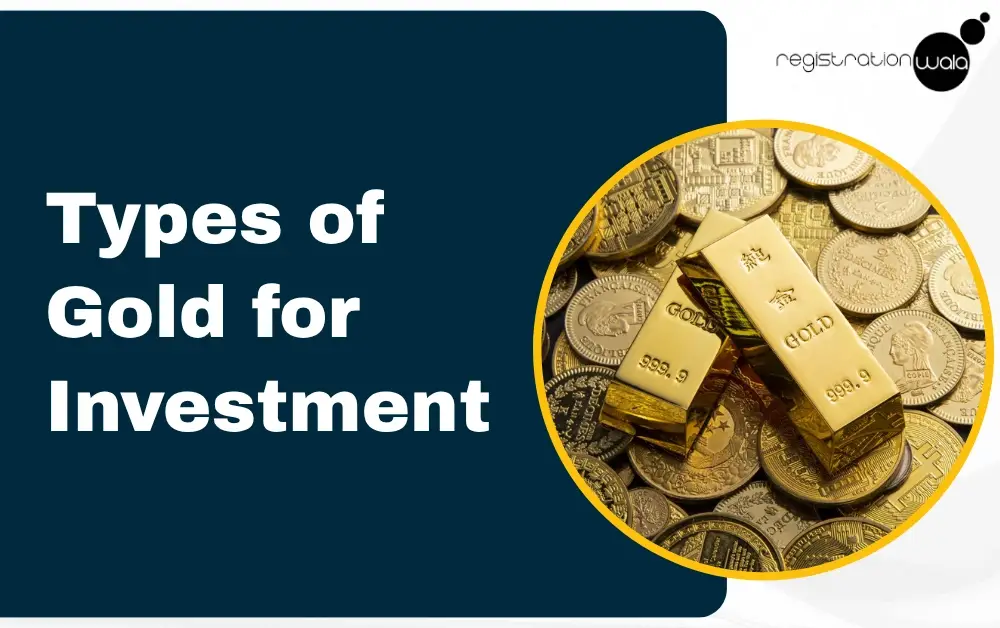
Physical gold is the tangible form/type of gold. It is the real form of gold that can be touched, stored and held by individuals. This type of gold offers high liquidity as it can be easily sold for cash at any given time. Examples of physical gold are gold coins, gold bars and gold jewellery. This type of gold is the most common and generally requires buyers to pay ‘making charges’ at the time of purchase. To ensure purity, only gold products that carry the BIS hallmark must be purchased.
For ensuring maximum safety, physical form of gold is usually stored in a secure bank locker or a private vault facility. Many investors have started investing in digital gold to avoid the costs associated with such storage options. While storing gold at home is quite common, even in private safes, it carries risks like theft and fire.
2. Digital Gold
Digital gold is nothing but the electronic equivalent of physical gold. It does not carry any making charges. Unlike the physical form of gold, the digital form of gold does not need to be stored physically. Because of this very reason, it is more convenient and secure to hold. Also, it saves up on storage related costs.
Another advantage of digital form of gold is that individuals don’t have to worry about its purity unlike in the case of physical gold that can be adulterated. Digital Gold must only be purchased through trusted, reputable platforms like Paytm, Tanishq, Caratlane, etc.
3. Gold Exchange Traded Funds
Gold Exchange Traded Funds, abbreviated as Gold ETFs, are securities that track physical gold’s domestic price. They are a popular gold investment option. They are secure as well as highly liquid.
Individuals can purchase and sell Gold ETFs just like stocks during market hours. Popular gold exchange traded funds include Nippon India ETF Gold BeES (GOLDBEES), HDFC Gold ETF (HDFCGOLD), SBI Gold ETF (SETFGOLD) and ICICI Prudential Gold ETF (GOLDIETF).
4. Sovereign Gold Bonds
The sovereign gold bonds (SGBs) are a popular gold investment option. They are issued by the Reserve Bank of India (RBI). Therefore, the investors do not have to worry about theft or purity.
The SGBs come with an 8-year tenure, and a mandatory 5-year lock-in period. Interested investors can invest in SGB via designated post offices, scheduled commercial banks and stock exchanges.
5. Gold Mutual Funds
Gold mutual funds are mutual funds that directly/indirectly invest in gold and gold related assets. They work by pooling money from investors and then investing the amount in these assets. Individuals can choose to make investments in gold mutual funds via one of the two options namely (i) lump sum investment or (ii) systematic investment plan, as per their preference. In case of first option, the entire investment amount needs to be paid at once.
However, in case of second option, the investment amount is paid systematically at regular intervals (i.e., daily, weekly or monthly). Unlike gold ETFs, gold mutual funds can only be redeemed at the end-of-day Net Asset Value (NAV). Popular gold mutual fund schemes in India are SBI Gold Fund, Nippon India Gold Savings Fund, Axis Gold Fund, Kotak Gold Fund and HDFC Gold Fund.
Conclusion
The different types of gold for investment include physical gold, digital gold, gold ETFs, sovereign gold bonds and gold mutual funds. All of them come with their own unique features that may or may not be appealing to the investors. The investors can choose the ideal type depending on their exact investment goals, risk appetite and liquidity requirements.
If you want to provide investment advice related to gold ETFs and other securities, you can consider becoming a SEBI Registered Investment Advisor (RIA). Connect with our Registrationwala consultants for assistance in obtaining RIA registration certificate.
Frequently Asked Questions (FAQs)
Q1. Why is gold regarded as a safe haven asset?
A. Gold is regarded as a safe haven asset due to its ability to maintain value even during times of economic crises.
Q2. Do sovereign gold bonds issued by the RBI come with a lock-in period?
A. Yes, the sovereign gold bonds have a mandatory lock-in period of 5 years for direct redemption via Reserve Bank of India (RBI).
Q3. Is digital gold safer than physical gold?
A. Yes, digital gold is considered safer than physical gold as it eliminates risks like theft, loss, gold purity and storage concerns.
Q4. What is the difference between physical gold and digital gold?
A. The basic difference between them is that physical gold is the tangible form of gold while digital gold is its electronic equivalent.
Q5. When was the first gold ETF launched in India?
A. The first gold ETF Nippon India ETF Gold BeES (formerly known as Benchmark Gold BeES) was launched in India in 2007.
-
Published: March 21, 2026
765 Views