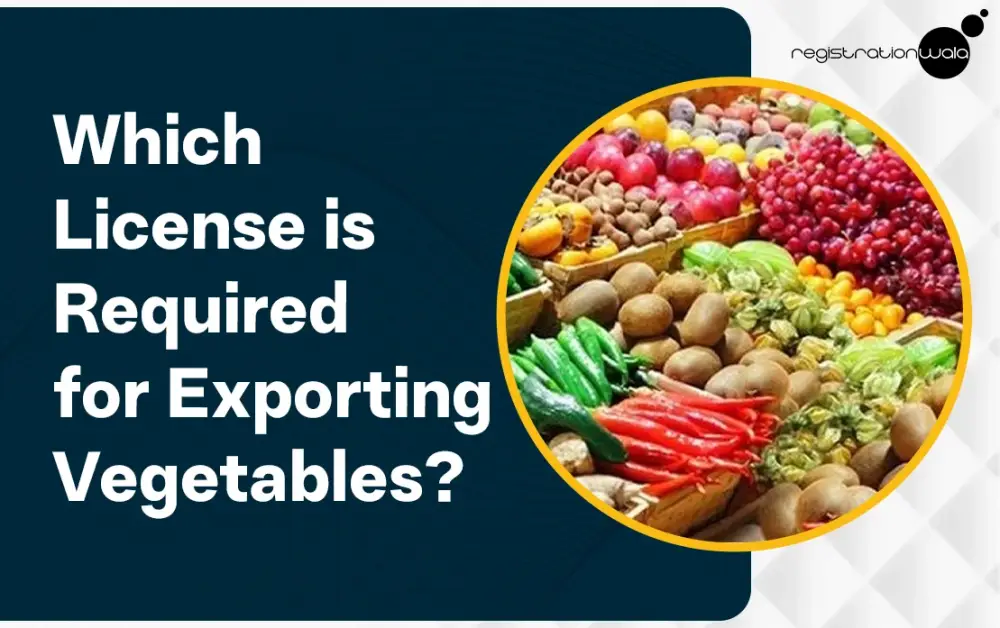
India is the largest exporter of onions. Apart from this, it also exports tomatoes, potatoes, peas, beans, cauliflowers and chillies. Vegetable export business from India can be quite profitable due to the demand of Indian vegetables in countries like Bangladesh, UAE, United Kingdom, Malaysia, etc.
If you are wondering about the licenses and registrations required for exporting vegetables from India, then check out this blog post!
Why Start a Vegetable Export Business?
The Indian agriculture sector provides livelihood support to approx. 42.3 percent of the population. Our nation contains diverse agroclimatic zones and is capable of producing a wide variety of fresh vegetables all year round. This makes our nation one of the top global producers of veggies in the world. For the vegetable exporters in our country, the growing international demand for fresh and organic produce gives rise to tempting export opportunities.
Also, the sector offers competitive production rates and supportive government policies and initiatives. Exporting not only gives a rise to foreign exchange earnings but also helps secure better prices for the hard-working farmers working in the fields even in the scorching heat. The key target markets for Indian vegetable exports include the Middle East, Europe and Southeast Asia. In all these markets, the Indian vegetables are highly valued.
Apart from these markets, many other markets have certain Indian vegetables in demand. Due to all these reasons, starting a vegetable export business seems like a wonderful idea for exporters.
Licenses and Registrations Required for Exporting Vegetables from India
For vegetable export from India, you need to ensure you have secured certain licenses and registrations, including the following:
Business Registration
First and foremost, you must choose the business model for your export business for vegetables. If you don’t want to register your business and want to operate the business alone without a partner, then you can go for the sole proprietorship business model. However, if you want to run your business with a partner (without registration), then you must go for the partnership firm model. Remember, in both sole proprietorship and partnership firm models, the debts and liabilities of the business are incurred by the owners and their personal assets are at risk.
If you want limited liability protection, you must choose models like one person company, private limited company, limited liability partnership, etc. For these models, you need to file a business registration application with the Registrar of Companies (ROC). The process for application filing needs to be completed via the official MCA portal.
Along with the application, you will be required to file certain business incorporation documents depending on the exact model you choose. Once your application has been filed, it’ll be reviewed and verified by ROC. If the application aligns with all the legal and regulatory requirements, the ROC will register your business and issue an incorporation certificate.
APEDA Registration
APEDA Registration is a mandatory registration for individuals and business entities wanting to export vegetables from India to another country. It is issued by the Agricultural and Processed Food Products Export Development Authority (APEDA) - a statutory body under the Ministry of Commerce and Industry. By securing the APEDA license, exporters of vegetables ensure their products comply with the international standards and feel the quality norms of foreign markets.
According to the official APEDA website, “In compliance of the DGFT Trade Notice 35/2021-22 dated 24.2.2022 APEDA has started using DGFT portal for issuance of Registration cum Membership Certificate (RCMC) w.e.f 17th July, 2023. The exporters may apply for e-RCMC through the link given under “Services” menu for obtaining RCMC for APEDA scheduled products after getting IEC Code from DGFT.”
Therefore, to secure APEDA registration, the process needs to be completed via the official DGFT portal. For assistance in securing this registration, feel free to connect with our APEDA license consultants at Registrationwala.
Import Export Code
Import Export Code (IEC) is a 10-digit number mandatory for businesses to engage in import or export activities. It is issued by the Directorate General of Foreign Trade (DGFT). Without obtaining the importer exporter code, you cannot export vegetables from India. So, you need to make sure you secure it.
To apply for IEC, you must file an online application through the official DGFT portal. Once your application is reviewed and approved, you will receive IEC. This code remains valid indefinitely and does not require renewal. However, it is essential to update the IEC details annually.
FSSAI License
Another important license to conduct a vegetable export business is the FSSAI License. This license is issued by the Food Safety and Standards Authority of India. It is a mandatory requirement for any business that is involved in the handling, manufacturing, processing, packaging, storage, distribution or sale of the food products.
There are three types of FSSAI licenses i.e., the FSSAI Basic License, the FSSAI State License and the FSSAI Central License. The exact FSSAI license you require to export vegetables from India is the FSSAI Central License. By securing this license, exporters ensure compliance with the food safety standards and regulations set by FSSAI authority.
GST Registration
Usually, GST registration is required for businesses when their annual turnover exceeds Rs. 40 lakhs for goods or Rs. 20 lakhs for services. However, for businesses engaged in exporting products from India to another country, GST registration is mandatory regardless of the annual turnover of the business.
To apply for registration, the process is entirely online and has to be completed via the official GST portal. Therefore, you do not need to visit any government office to complete the registration process. After successful GST registration, you will receive a Goods and Services Tax Identification Number - proof of GST registration.
Conclusion
For exporting vegetables from India, you need to secure several licenses and registrations such as business registration, APEDA registration, IEC registration, FSSAI license and GST registration. Need a helping hand in establishing a vegetable export business? Connect with our consultants for professional guidance and support in securing licenses and registrations!
Frequently Asked Questions (FAQs)
Q1. Is FSSAI license required to export vegetables from India?
A. Yes, FSSAI license, specifically FSSAI Central license, is required to export vegetables from India to another country.
Q2. Do exporters require GST registration?
A. Yes, exporters require GST registration to export goods from India to overseas.
Q3. What is the threshold for vegetable exporters for GST registration?
A. There’s no threshold limit set for vegetable exporters for GST registration. All the vegetable exporters, regardless of their business annual turnover, must get registered under the GST regime.
Q4. What is the validity of IEC?
A. IEC, issued by DGFT, comes with a lifetime validity. It does not require renewal. However, IEC details need to be updated on an annual basis.
-
Published: August 13, 2025
4240 Views