The Banking Laws Amendment Act 2025 was officially notified by GOI on 15 April 2025. This piece of legislation consists of 19 amendments that affect five key laws in India. These laws are: the Reserve Bank of India Act of 1934, the Banking Regulation Act 1949, the State Bank of India Act 1955 and the Banking Companies Acquisition and Transfer of Undertakings Acts of 1970 and 1980.
The amendment’s primary objectives are to enhance governance standards within the banking sector, provide better protection for depositors and investors, improve the quality of audits in public sector banks and extend the tenure of directors (excluding the chairperson and whole-time directors) in cooperative banks.
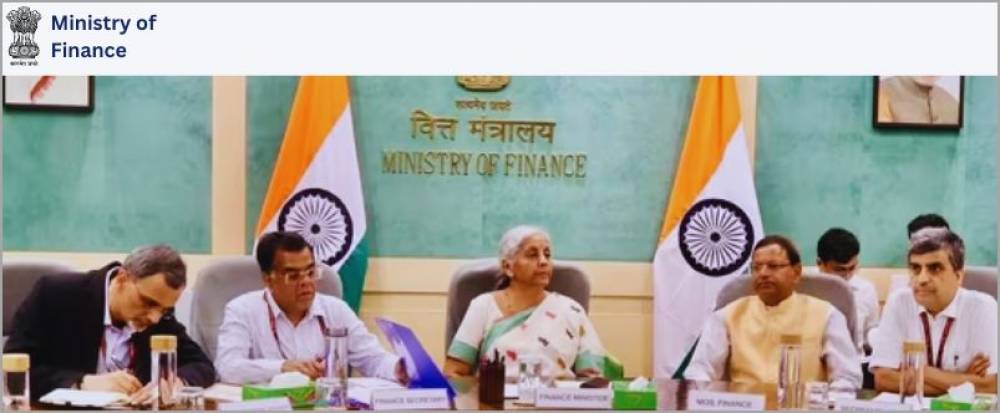
The Central Government has set 1 August 2025, as the date when the provisions of sections 3, 4, 5, 15, 16, 17, 18, 19 and 20 of the Banking Laws (Amendment) Act, 2025 (16 of 2025) will come into effect. This information was notified via Gazette Notification S.O. 3494(E) dated 29 July 2025.
The provisions of sections 3, 4, 5, 15, 16, 17, 18, 19 and 20 will redefine the threshold of substantial interest from Rs. 5 lakh to Rs. 2 cr. This change revises a limit that has remained unchanged since 1968. Also, these provisions align the tenures of directors in cooperative banks with the 97th Constitutional Amendment by extending the maximum tenure from 8 years to 10 years. However, the chairperson and full-time director are excluded.
Now, public sector banks will be able to transfer unclaimed shares, interest and bond redemption amounts to Investor Education and Protection Fund and bring them in line with practices followed by companies under Companies Act 2013.
The amendment also authorizes the public sector banks to offer remuneration to statutory auditors. This change aims to attract high quality audit professionals and improve auditing standards in India. Implementing these provisions represents a major step toward strengthening the country’s legal, regulatory and governance framework.
Source: Press Information Bureau (PIB)
Comments
No comments yet.
Leave a Comment