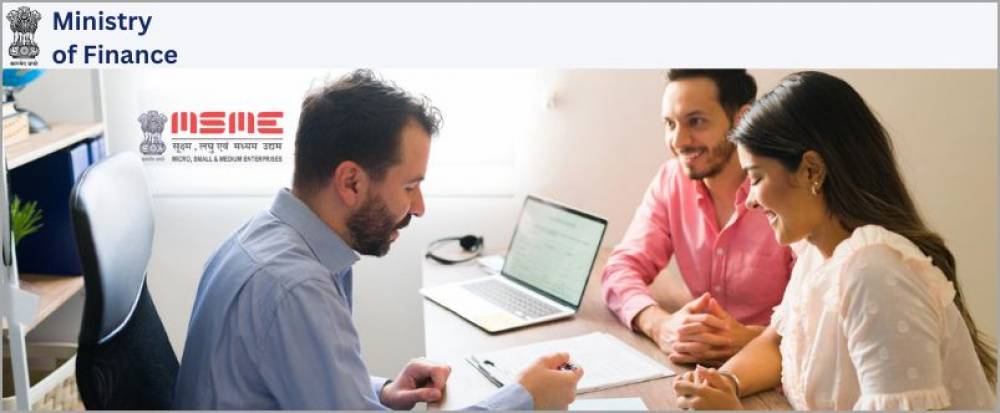
In the Union Budget 2024-25, the New Digital Credit Assessment Model for MSMEs was announced. This model visualized the public sector banks to build their in-house capability for evaluating MSMEs for the credit rather than depending on sources for external evaluation. The Public Sector Banks (PSBs) would develop a new credit assessment model that focuses on scoring the digital footprints of Micro, Small and Medium Enterprises (MSMEs) within the economy.
On 6 March 2025, the Union Finance Minister had officially launched the New Credit Assessment Model for MSMEs. This model takes advantage of the digitally sourced and verifiable data to create automated processes for MSME loan appraisals. It employs objective decision-making for all loan applications and uses model-based limit assessments for both Existing to Bank (ETB) as well as New to Bank (NTB) MSME borrowers.
The digital footprints utilized by the new model may include a number of verification methods, such as PAN authentication through the NSDL, mobile and email verification using One-Time Passwords (OTPs), API access for GST data from service providers, bank statement analysis via account aggregators, ITR uploads and verification as well as API-enabled data retrieval from commercial and consumer credit bureaus through Credit Information Companies (CICs).
The New Digital Credit Assessment Model also includes fraud checks conducted through APIs and other measures. This model is now operational across all banks in the country, with varying loan amount thresholds. When we talk about traditional or manual methods, banks depend on the physical documents that their customers provide for manual underwriting. But under the new credit assessment model, an entirely digital process is followed for credit request and data submission as well as evaluation.
The new model’s introduction doesn’t include any fundamental change for basic eligibility requirements for MSME loans in terms of regulatory norms/policy guidelines of individual banks. However, it does make the process of sanctioning loans simpler for banks and provides a more user friendly and standardized approach via dependency on digitally accessible data.
A total of 98,995 MSME loan applications were sanctioned under the New Credit Assessment Model, between 1 April 2025 to 15 July 2025, by the public sector banks. Via the new model, the bank loans are decided within a maximum of up to one day. It significantly reduces the turn around time as compared to traditional or manual methods.
This model offers several benefits for micro, small and medium enterprises (MSMEs) like the ability to submit loan applications online from anywhere. This helps to minimize paperwork and the need for in-branch visits. Additionally, the model allows for instant in-principle approvals through digital channels, smooth processing of credit proposals and objective credit decisions based on data and transactional behavior. Under this new model, credit decisions are based on the objective data and credit history of the borrower.
The entire credit request submission and assessment process is conducted in a digital mode. This helps to reduce subjectivity and the risk of fraudulent information and errors in decision-making. The new model enables a faster, more transparent and objective evaluation of creditworthiness via system-generated credit logic and scorecards. Furthermore, the Business Rule Engines (BREs) of banks capture all risks as per their credit risk management policies.
The Minister of State in the Ministry of Finance Shri Pankaj Chaudhary gave this information on 28 July 2025, as a written response to a question in Lok Sabha.
Source: Press Information Bureau (PIB)
Comments
No comments yet.
Leave a Comment