Online Trademark Registration in India: Protect Your Brand Identity
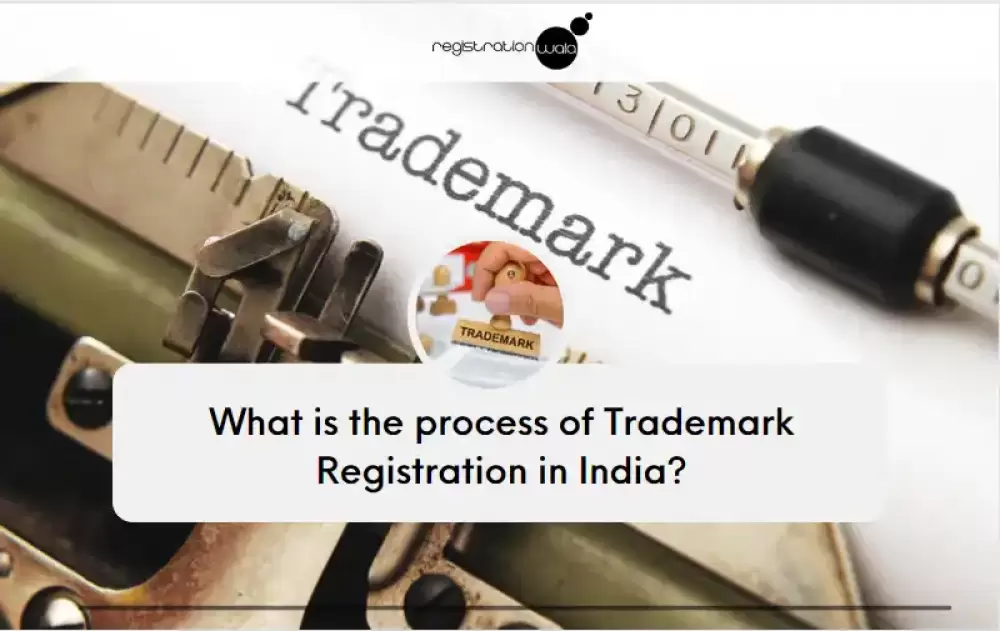
If you want to protect your brand identity, one of the most important steps you can take is to register your trademark. The trademark registration application process is an entirely online process, doing away with the need for physical paperwork and in-person visits.
However, even then, trademark registration India isn’t as simple as you might think, as many applications face objections or delays due to technical errors or improper classification. Therefore, connecting with trademark consultants at Registrationwala is recommended to ensure a smooth registration process.
What is a Trademark?
A trademark is a mark that uniquely identifies you, your business, your products, or the services you provide. Simply put, it is a mark of your trade or brand. There are many ways to define your Brand. A trademark can take many forms. It may be a name, a distinctive smell, a unique shape or even an image that represents your brand.
Registering a trademark gives your business a unique legal identity but it requires following a well-structured process. First of all, you need to check the availability of the trademark. Next comes selecting the appropriate class and gathering all the required documents you’ll need to submit along with the TM application.
Once that’s done, you can file the application. Finally, if any objection is raised, you must submit a counter statement to the Registrar within a period of two months so you can proceed further.
To protect your brand identity through online trademark logo registration in India, it is advisable to hire experts at Registrationwala to reduce your efforts, save your time and avoid unnecessary costs.
Start Your Consultation Today
Why Your Business Needs Trademark Registration: Benefits
Trademark registration in India is governed by the Trade Marks Act, 1999 and administered by the Trade Marks Registry. After trademark registration, you will become the exclusive owner of your brand name in the eyes of the law. Other benefits of trademark registration are as follows:
Exclusive Rights on Product
The trademark registration provides you with complete rights over the trademark. The owner can apply for trademark registration for all the goods. By registering the goods, it provides exclusive rights to take action if anyone is found using a similar or identical trademark without authorised permission.
Builds Goodwill
After registering a trademark it provides goodwill and trust to the brand. When the brand becomes popular among customers then having a registered trademark will help loyal customers to recognise the brand. A trademark having good value and reputation will help in obtaining funds from different institutions.
Usage of Registration Symbol
Once the trademark of the business gets registered, the owner can use the Ⓡ symbol on the logo. This symbol shows to the third parties that the brand is trademark registered, and cannot use it without permission. Also, the customer will get the assurance that products and goods are original and have high quality.
Protection for Long Term
The validity of trademark registration is 10 years and it cannot be used in an unauthorised way by a third party for 10 years. Similarly, it provides protection to brands in a cost-effective manner. After ten years, the owner has to apply for renewal of the trademark.
Trademark Classes: Categorizing Your Business (Classes 1-45)
There are a total of 45 trademark classes in India, and all the products and services are categorized into these classes.
Some of the most famous trademark classes in India are:
Explore more Trademark Classes
Eligibility Criteria for Trademark Registration in India
How to register a trademark in India online? Before one moves to register the Brand logo, one must ensure that they have observed all the relevant pre-conditions before filing for a Trademark Registration. Therefore, we have enlisted the eligibility criteria for online trademark registration in India below for you:
A trademark must be unique.
A trademark should not be deceptively similar to an existing one.
A trademark should be distinct from an existing one.
Who Can Apply For a Trademark in India?
Any company can apply for a trademark registration to save their products and services. Below are the entities that can opt for trade mark registration:
Types of Trademarks You Can Register
There are different types of trademarks that can be registered with the Trade Marks Registry, including:
1. Product Mark
This type of mark is used on products only and not on services. It shows the origin of a good and product which initially maintains the reputation of a business. All the applications related to trademark classes 1 to 34 are classified as product marks. The time taken in registering a product mark is approx. 18-24 months. Some examples are Nestle and Amul.
2. Service Mark
The service mark is similar to the product mark but it is not applicable to products. The main use of this service is to differentiate the proprietors and the legal owners of the service. The applications filed under class 35-45 come under service marks.
3. Collective Mark
This type of mark is owned by an association and organisation. It shows a collaboration of superior quality services and products.
4. Certification Mark
This mark shows the origin of the product such as material, quality or any other detail that is provided by the proprietor. The main motive to this type of mark is to issue some standards to any product. Example - ISI marks, FSSAI marks.
5. Shape Mark
The shape mark protects a particular shape of a trademark so that consumers can identify the product from its structure and can buy from the right manufacturer. Example - Coke bottle and Dairy Milk shape identifies the brand.
6. Pattern Mark
Companies which are making some type of specific pattern products can trademark their products to protect the work. A company has to prove first that their work is unique. Mostly, this type of mark is used in the fashion industry, such as big brands like Louis Vuitton, Gucci, and Calvin Klein. In India, brands such as Sabyasachi, and Manish Malhotra use this mark so that no one copies it without permission.
7. Sound Mark
This mark is to protect sound, for example in India, the IPL tune is famous, so it is a sound mark registered. To get the sound mark certification, the company has to show that sound is original. Different associations, institutions, or even individuals can apply for sound mark registration.
Documents Required for Trademark Application
Different business entities can apply for their Brand's logo registration. Accordingly, their need for required documents to be attested with the trademark registration application differs. Therefore, we have mentioned the relevant documents to be submitted according to the nature of the applicant's business.
Individual/Startups
Company/LLP
-
Shops Establishment License
-
Certificate of Incorporation
-
Address proof of the company
Partnership firm
The Partnership Deed
Things To Know Before Applying For Trademark Registration in 2026
These are the important things that you should know before you apply for trademark registration, so these are the following things:
1. Must ensure that your trademark will provide you with a unique identity. This needs to be done prior to initiation of the trademark registration process.
2. Choose a coloured or black-and-white logo. Must ensure you protect your brand colours and these colours should not be similar to others. A unique colour logo helps customers to remember the brand, for example - McDonald’s.
3. Select the appropriate class for the trademark registration, if you find multiple classes then you can submit the request for all the marks.
4. Verify your availability, check if your desired trademark is available in each class or not. If you register online for multiple classes.
5. Claim the user date, which means the applicant has to choose the date on which the owner first uses the mark for commercial purposes. Because if two applications come, then priority will be given to the one who states the prior user date.
Note: Claiming a wrong user date is illegal, if the date is not confirmed, you can state “planned to be used”. Here the trademark will be safeguarded against future exploitation.
Post-Filing: Handling Objections & Opposition
Some applicants are lucky enough to get their trademark registered successfully without facing any objection or opposition. However, some applicants tend to face legal hurdles like examination objections by Trademark Registry and opposition by third parties.
In these situations, it is very important to respond quickly and correctly to the Trademark Registry or the third party's concerns. This could mean writing a detailed response to the examination report, sending in supporting documents, going to hearings or filing counter-statements against the opposition.
To deal with these problems well, you need to know trademark laws and procedures inside and out. If you don't respond correctly or on time, your application may be rejected or dropped. So, getting help from a professional can greatly increase the chances of a successful registration and make sure that your brand stays legally protected.
Step-by-Step Process for Online Trademark Filing
There are several benefits of registering a Trademark with the authorities. But how does one apply online for a Trademark? You must first obtain the trademark registration certificate to avail the registration benefits. The steps involved in Online Trademark Registration process in India are as follows:
-
Trademark Search: Before filing the registration application with the RoT, every applicant must conduct a Trademark Search in India. To conduct a Trademark Check operation in India, the applicant must consult the appropriate consultancy, which can conduct a thorough Trademark Search on your chosen logo. If the trademark design is unique, the applicant can proceed with the online trademark application filing.
-
Application filing: First, you need to file the online trademark registration application. When filing this application, you need to make sure that you have access to all the requirements, namely:
-
Submit Application: Submitting the application leads to the Registrar of Trademarks receiving it. The examiner then checks the application and carefully creates an examination report.
-
Application Assessment: The examination report can either yield positive or negative results. You shall be notified about the report by the department. Or, you will have to make a trademark registration inquiry to get the answers.
-
Publishing the Trademark: The trademark application is accepted and will be published in the trademark journal.
-
RoT registers the Trademark: Once in the journal, it shall remain published for four months. During this period, the general public can check the journal. Then, if the general public doesn't oppose you trying to register the Trademark, your Trademark shall be registered. Then, the RoT will issue the applicant the trademark registration certificate.
Why Choose Registrationwala for Trademark Consultancy?
We at Registrationwala provide end-to-end solutions for online Trademark Registration in Delhi. Our trademark registration agents provide you with the following services:
Collection of information and starting the process
Reviewing the draft and making changes if necessary
Assistance in trademark objection and opposition
Registrationwala.com is a leading legal consultancy firm providing comprehensive services relating to Trademark Logo Registration in India. Contact us now if you seek to register your Trademark.
Frequently Asked Questions (FAQs)
Q. How to register a trademark in India?
A. To register a trademark in India you need to cover following steps:
-
Conduct a trademark research and choose the trademark which does not exist.
-
File a trademark application to the Trademark Registry in India.
-
Verification of application and upload the documents. The designated official will verify the application.
-
Publish the trademark in the trademark journal.
-
When no error is found in the application, the registrar will grant a trademark certificate.
Q. What is the cost of trademark registration in India?
A. The government fees for trademark registration in India vary depending on the type of applicant. For individuals, startups and small enterprises, the fee is Rs. 4,500 per class per mark for e-filing and Rs. 5,000 for physical filing. For all other applicants, the fee is Rs 9,000 per class per mark for e-filing and Rs. 10,000 for physical filing.
Q. How long does it take to complete TM process?
A. Trademark registration in India typically takes 6 to 24 months depending on objections, examination and opposition.
Q. Who can obtain a TM registration?
A. Any entity or individual who claims to be a proprietor of a trademark can file a trademark application in respect to protect the goods or services.
Q. What are the documents required for trademark registration?
A. The required documents are a copy of the logo, duly filled registration form, incorporation certificate or partnership deed, identification proof of signatory, address proof of signatory and Udyog Aadhar Registration Certificate (for partnership/ LLP/ Company). In case the logo is not provided, trademark application can be filed with the word.
Q. What is trademark registration eligibility?
A. The following entities are eligible for TM registration:- Joint owners, proprietorship firm, partnership firm, LLP, Indian company, foreign company, trust and society.
Q. How to protect a company name and logo in India?
A. To protect a company’s name and logo, the owner must file a trademark application with the Registrar of Trademarks. After the application is examined as well as accepted, the trademark is then published in the Trademark Journal. From the date of publication, third parties have four months (or 120 days) to file an opposition against the TM. If no opposition is filed within this period, the trademark proceeds to registration and the registration certificate is issued, providing official confirmation of the trademark rights.
Q. What are Section 9 and Section 11 objections in trademark registration?
A. Trademark applications are often objected to u/s 9 (i.e., lack of distinctiveness) or u/s 11 (i.e., similarity with existing trademarks). In such cases, the applicant needs to submit a well-drafted reply to examination report or appear for a hearing before the Registrar of Trademarks. A proper legal response can greatly increase the approval chances.