Using UPI (Unified Payments Interface) has become a part of everyday life for millions of Indians. From buying groceries and shopping online to paying for courses, ordering food and splitting bills with friends, UPI has made digital payments quite convenient. A quick scan, entering a PIN and the payment is complete within a few seconds. However, recent discussions about potential UPI charges have raised a significant question, i.e., will users eventually have to pay fees for larger UPI transactions?
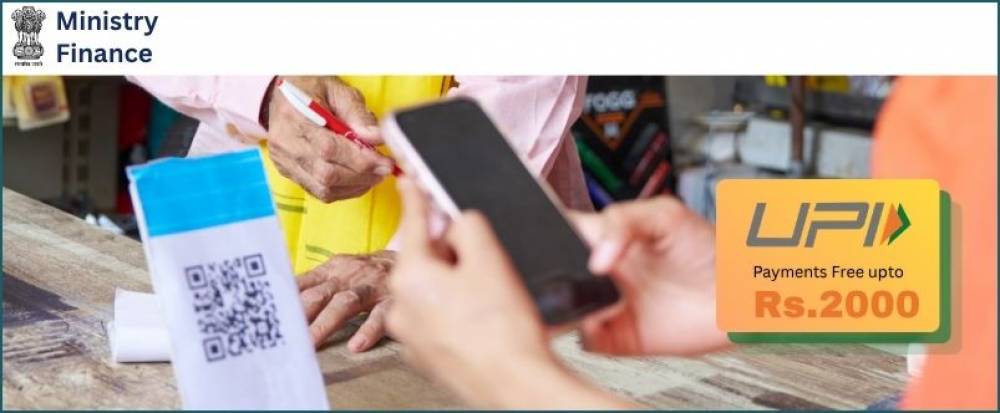
On 14 September 2026, the government had clarified an important aspect of this issue. It said that UPI transactions of up to Rs 2,000 cannot incur any direct or indirect charges from banks or payment service providers. But what happens with payments of Rs 2,500, Rs 5,000 or even Rs 20,000? That is where further clarification is needed.
What did Government say?
The Finance Ministry issued a notification on September 14 stating that UPI transactions up to Rs 2,000 and payments made using RuPay debit cards are classified as electronic payment methods on which banks and service providers cannot impose charges. The notification explicitly indicates that no bank/service provider is allowed to charge either directly or indirectly for payments made or received using these specified methods.
This means that consumers do not need to worry about any transaction fees being added when they are making a UPI payment of Rs 2,000. The same protection is applicable to payments made with RuPay debit cards as well.
Will UPI Payments Above Rs. 2,000 Attract Charges?
No. UPI payments above Rs. 2,000 will not automatically attract charges. Many individuals are misunderstanding this part. The latest notification of the government does not say that an individual making a UPI payment exceeding Rs. 2,000 will now be required to pay a fee.
Instead, the recent changes to the Payment and Settlement Systems Act create a legal framework for charging fees only in certain cases. The government previously indicated that any future MDR will be applicable only to certain merchant transactions that go beyond a certain threshold limit. What’s more, it has also given assurance to consumers that they will not face transaction charges at the time of making UPI payments.
In summary, Rs. 2,000 is not actually a newly established limit for free UPI payments for consumers. Currently, there is no announced consumer fee that applies just because a UPI payment exceeds Rs. 2,000.
Then Why Is Rs 2,000 Figure so Important?
Because of the latest notification of the government, the Rs. 2,000 figure has become really important. This notification specifically identifies the UPI transactions up to that amount as a protected category. The broader policy discussion revolves around how the UPI ecosystem will finance the infrastructure necessary to support its vast and growing transaction volumes. UPI has experienced remarkable growth. Number of banks participating in UPI rose from 44 in fiscal year 2016-17 to 741 by July 2026, according to government data.
Monthly UPI transactions reached a record 2,366 crore in month of July in 2026. The government argues that a sustainable revenue model is essential for system. This is especially true as expenditures on infrastructure, cybersecurity and fraud prevention continue to increase with time. This is where MDR comes into play.
What Is MDR? Who Could Pay It?
MDR full form is Merchant Discount Rate. It is a fee that is charged for digital payments processing. The ongoing discussion regarding UPI has centered on whether a fee could be introduced for certain large merchants accepting higher value UPI payments. Government officials have given an indication that if MDR gets introduced, it would likely be nominal and also stated that it will be applicable only to specific transactions by selected merchants above a certain threshold.
Reports suggest potential rates could range from 0.25% to 0.4% although no official rate has been announced in government's latest notification. If an MDR is implemented, it would be a charge on the merchant or within the payment ecosystem and it does not necessarily mean that a customer making a payment of Rs 5,000 through UPI will see an additional fee deducted from their bank account. The government has consistently emphasized that UPI services will remain free for citizens.
What UPI Users Need to Know…
For an ordinary individual, there are no UPI charges for making payments of Rs. 500, Rs. 1,500 or Rs. 2000. If you decide to make a payment of Rs. 5,000 or Rs. 10,000 using UPI, there is no government announced consumer transaction fee that automatically applies simply because the payment exceeds Rs. 2,000.
In the future, the banks, payment companies and certain merchants could change the way they recover the cost of processing larger transactions. Therefore, the Rs 2,000 threshold should not be interpreted as a new spending limit for UPI. Instead, it should be viewed as part of government's new framework for determining where digital payment charges can and cannot be applied.
Source:- MSN
Comments
No comments yet.
Leave a Comment