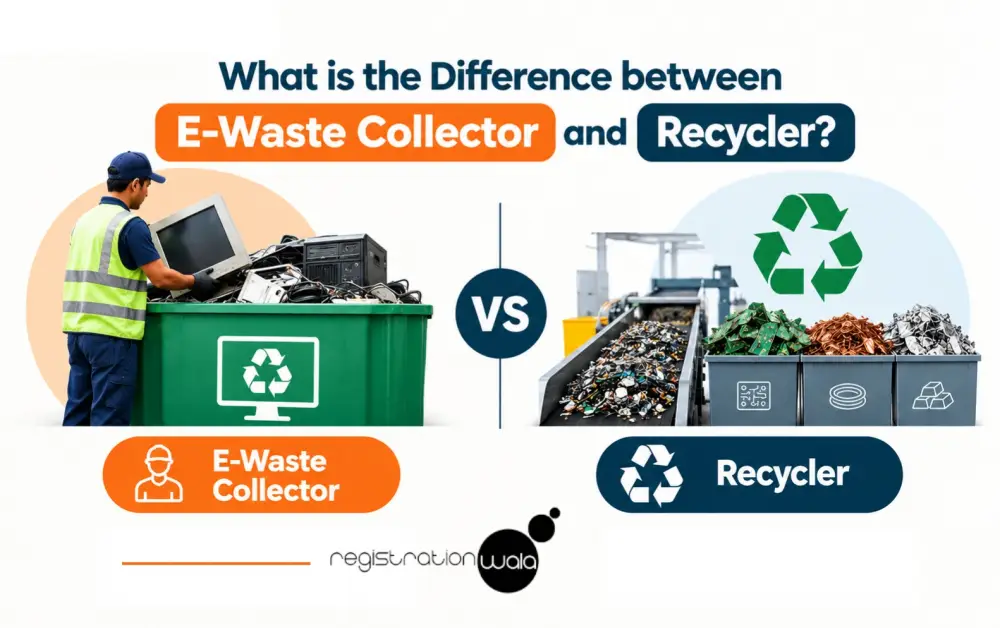
Under the Extended Producer Responsibility framework, both e-waste collectors and recyclers play an important role. They are responsible for managing electronic waste properly and protecting environment. An e-waste collector is responsible for collecting e-waste like discarded smartphones, laptops, televisions and refrigerators and then delivering them to a recycler or dismantler.
A recycler, on other hand, is responsible for processing and recovering raw materials from collected e-waste in an environmentally sound manner. This is the basic difference between them. Apart from this, there are several other differences between them that we shall discuss in this blog post.
E-Waste Collector vs Recycler: Key Differences
In table below, we have explained main differences between an e-waste collector and an e-waste recycler. Once you go through the table, you will have a clear regarding about their unique roles in EPR framework:-
|
Parameter
|
E-Waste Collector
|
E-Waste Recycler
|
|
Definition
|
An e-waste collector is an individual or agency that is authorised to gather and store end-of-life electronic products under E-Waste Management Rules.
|
An e-waste recycler is an individual or agency that is authorised/registered by/with CPCB to legally process, recycle and recover raw materials from waste electrical and electronic equipment under the E-Waste Management Rules.
|
|
What Do They Do?
|
An e-waste collector is engaged in the following tasks:
-
Collection of e-waste from offices or drop off points.
-
Safe storage of materials so as to prevent environmental harm/damage.
-
Transportation of e-waste to recyclers or dismantlers.
|
An e-waste recycler is engaged in the following tasks:
-
Dismantling and physically/chemically processing e-waste.
-
Extraction and recovery of valuable material from e-waste like copper, aluminium, precious metals, etc.
-
Generation and issuance of recycling certificates and EPR credits to producers and bulk consumers.
|
|
Material Processing
|
A collector of e-waste does not engage in material processing.
|
A recycler of e-waste does engage in material processing.
|
|
Compliance
|
The e-waste collectors are required to fulfill basic compliance and transport registration requirements.
|
The e-waste recyclers are required to adhere to strict requirements to ensure environmental safety and hazardous substance management.
|
Who is an E-Waste Collector?
An e-waste collector refers to an individual or organization that primarily deals with e-waste collection under EPR framework. They may be engaged in collecting electronic waste from domestic sources, medical facilities, offices, schools, collection centres or certain drop-off points. Once they collect this waste, they proceed to store it temporarily for a certain period and then finally hand it over to authorized recycler or dismantler.
The law does not allow such collectors to dismantle/recycle electronic waste on their own. Doing so may result in certain penalties for failing to follow applicable rules. Dismantling and recycling are jobs of authorized dismantlers or recyclers, not collectors. Therefore, collectors must ensure that they function only within their permissible limits.
That’s not all. The collectors must also maintain proper and detailed end-to-end records showing where e-waste came from and where it was later transported for recycling or dismantling purposes so as to comply with EPR regulations.
Who is a Recycler?
An e-waste recycler is different from an e-waste collector. A recycler is an individual or organization that primarily deals with recycling e-waste rather than merely collecting it. Therefore, we can say that their responsibility is a bit more difficult and complicated. The purpose here is to extract reusable materials from e-waste. This includes silver, gold, copper, plastic and other materials. These materials can later be reused for other purposes, such as manufacturing new electronic products, industrial goods and other products.
This work isn’t easy and sometimes harmful substances can be released during the recycling process. Therefore, recyclers must follow strict rules to ensure environmental protection. Rules relating to waste processing, storage, handling, transportation and disposal must be followed during the entire process.
Before starting recycling activities, recyclers must first obtain the required CPCB approval and other environmental permits. These requirements may vary from state to state. Without the necessary approvals and permits, engaging in e-waste recycling is not permitted.
You May Also Read:- Construction and Demolition Waste Rules, 2025: All You Need to Know
Conclusion
To ensure environment is protected and not harmed by e-waste, both the roles of e-waste collectors and recyclers are quite important. A collector ensures e-waste like computers, mobile phones, batteries and other electronic items, to name a few, is collected from different sources and then temporarily stored until it is given to a recycler or dismantler. The recycler is responsible for processing such waste, ensuring toxic materials are handled with care and valuable materials are recovered and reused for manufacturing new products like computers, mobile phones, appliances, etc. Therefore, both are essential players in e-waste management system. The responsibilities of a recycler, however, are more complicated and they also issue EPR certificates against EPR targets to entities. Collectors cannot do this.
In case you need professional guidance and assistance in securing the EPR registration or ensuring post-registration compliance, you can get in touch with our experienced EPR consultants at Registrationwala. Our consultants are well versed in EPR regulations and can handle even most difficult compliance requirements without a hitch. We make it a lot easier for businesses to comply with applicable EPR rules as well as regulations.
Frequently Asked Questions (FAQs)
Q1. What does an e-waste collector do?
A. An e-waste is responsible for collecting e-waste like used cellphones, laptops, tablets, etc., and then delivering them to dismantler or recycler.
Q2. What does an e-waste recycler do?
A. An e-waste recycler is responsible for processing electronic waste and also for recovering raw materials from collected e-waste in a manner that is environmentally friendly.
Q3. Why is it important to recycle e-waste?
A. Recycling e-waste is important to ensure that toxic materials (like lead and mercury) are contained and valuable raw materials (like gold, copper and aluminium) are recovered. Recycling such waste is also necessary to ensure prevention of environmental pollution.
Q4. Under the EPR framework, who is a dismantler?
A. Under the EPR framework, a dismantler is an individual/agency responsible for end-of-life products’ environmentally sound breakdown, segregation and decontamination.
-
Published: September 14, 2026
48 Views