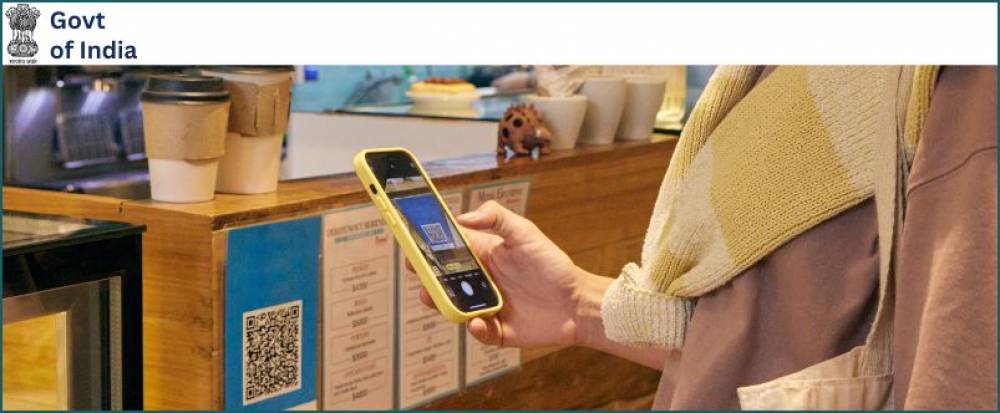
To clear the confusion about whether the government plans to charge people for digital payments, the Centre has clarified that UPI will continue to be free for consumers. Most UPI payments made to merchants will also remain free. According to government, all person-to-person (P2P) UPI transactions will continue to have no charges. If a Merchant Discount Rate (MDR) is introduced in future, then it will apply only to a limited category of merchant transactions that cross a specified amount.
Even in such cases, the charge is going to be nominal and is expected to be lower than MDR that is generally charged on most debit and credit card transactions. In simple words, you will not have to pay a charge every time you use UPI. Only certain high value merchant transactions may be subject to a small charge if MDR gets introduced.
Clarification Comes Amidst Proposed Change to PSS Act
The clarification by the government comes after the proposed amendment to Section 10A of the Payment and Settlement Systems (PSS) Act, 2007 raised concerns that charges could soon be applied to UPI transactions. The government stated the amendment is only an "enabling provision" and does not itself impose any MDR on UPI transactions.
The government said, “Once the Parliament passes the Taxation and Other Laws (Amendment) Bill, 2026, which proposes to amend Section 10A of the Payment and Settlement Systems Act, 2007, the ‘UPI and Services Steering Committee’ headed by NPCI will decide on the MDR, if any.”
The government also made it clear that any future MDR would be based on threshold rather than applicable across all the UPI transactions. This will ensure that the vast majority of merchant payments continue to be free. According to the government, the proposed framework is meant to create a sustainable revenue model for the UPI ecosystem.
This has become important as UPI transaction volumes continue to grow and require greater investment in cybersecurity, fraud prevention and payment infrastructure. Defending the amendment, the government said that the changes are aimed at supporting UPI’s long term sustainability, technological development and ability to deal with emerging risks. It also said that depending only on government subsidies would not be a sustainable approach for the next stage of UPI’s growth.
“It is necessary to increase competition by encouraging more companies to expand their operations, which requires a self-sustaining revenue model,” the statement said, adding that a balanced framework is required to keep UPI “robust, inclusive and future-ready.”
The government also rejected claims that the proposed changes were made because of external pressure. It called such claims to be “unfounded, completely false and misleading.”
“If external pressure had been a factor, the government would not have introduced UPI in 2016 or made it free of charge for both merchants as well as citizens since January 2020 and ensured that it became the world’s largest real-time interoperable payment system,” it said.
UPI: World’s Largest Real-Time Payment System
UPI has grown into the world’s largest real-time payment system since its launch in 2016-17. Its use has increased significantly over the years. In July 2026 alone, UPI processed 2,366 crore transactions worth around Rs. 29.9 lakh crore. UPI is currently operational in 11 countries. Several other countries are also exploring the adoption/integration of this system.
The government has advised citizens to rely only on information that gets released through official sources like Ministry of Finance, the Reserve Bank of India and the National Payments Corporation of India. People should also avoid forwarding or sharing unverified messages about UPI charges.
Source: MSN
Comments
No comments yet.
Leave a Comment