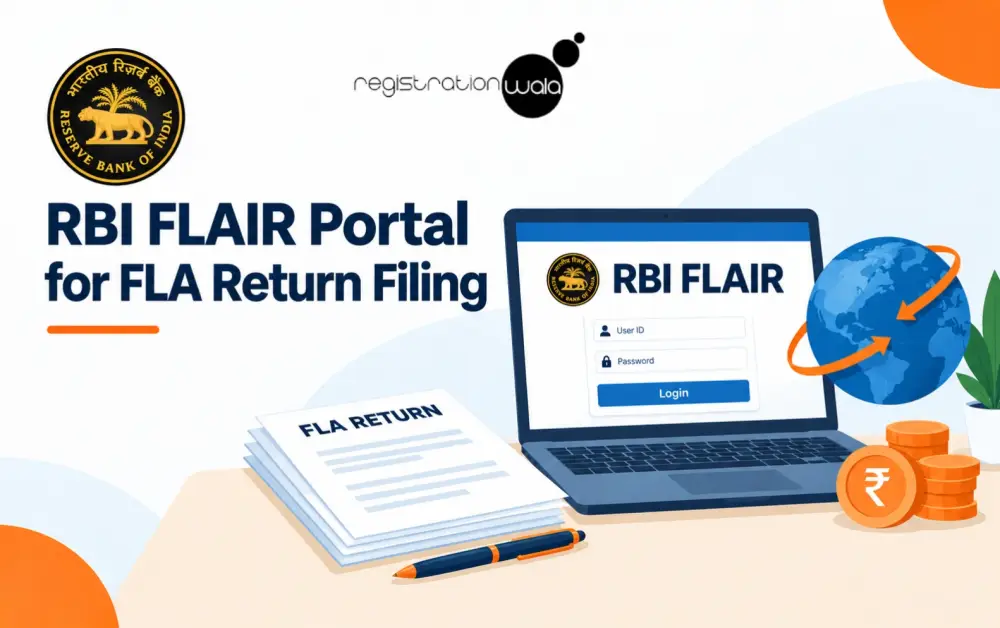
RBI FLAIR Portal is the official portal of RBI where the Indian entities can submit their annual Foreign Liabilities and Assets (FLA) return. FLA return filing is mandatory for all Indian entities, including companies, Limited Liability Partnerships (LLPs), Alternative Investment Funds (AIFs) and partnership firms, that have received Foreign Direct Investment (FDI) or made Overseas Direct Investment (ODI).
By filing this return, the entities ensure compliance with the Foreign Exchange Management Act (FEMA), 1999. In this blog post, we shall discuss the FLAIR portal in detail and also explain to our readers how they can file FLA return through this portal.
What is RBI FLAIR Portal?
FLAIR full form is Foreign Liabilities and Assets Information Reporting. It refers to the online web-based platform of RBI that allows the Indian entities to submit their FLA returns annually.
The FLA Return is an annual compliance filing required from Indian entities that have made or received foreign investments. It has to be reported to the Reserve Bank of India as per the requirements of the Foreign Exchange Management Act.
Who Needs to Register on RBI FLAIR Portal?
The following entities need to register the RBI FLAIR platform if they have received foreign direct investment or made overseas direct investment and need to file FLA returns for the same:-
-
Companies incorporated under the Companies Act, 2013.
-
Limited Liability Partnerships incorporated under Limited Liability Partnership Act, 2008.
-
SEBI-registered Alternative Investment Funds (AIFs).
-
Public-Private Partnerships.
-
Sole Proprietorships.
-
Partnership Firms.
Which Documents are Required for RBI FLAIR Registration?
The following documents are generally required for RBI FLAIR Registration:-
|
Document
|
Purpose
|
|
Certificate of Incorporation
|
Proves the legal formation and registration of the company.
|
|
PAN Card
|
Provides the PAN details of the company/entity filing the FLA return.
|
|
Address Proof
|
Confirms the registered address of entity.
|
|
Verification Letter
|
Confirms the entity’s identification details and the details of the authorised person.
|
|
Authority Letter
|
Confirms that the concerned person is authorised to submit the FLA Return on behalf of the company.
|
|
Digital Signature Certificate
|
Used by the authorised signatory to authenticate and submit the ret
|
How to Register on RBI FLAIR Portal?
To file the Foreign Liabilities and Assets Return, it is mandatory to first complete the RBI FLAIR registration process. The registration process can be completed by following the steps given below:-
Step 1:- Begin by visiting the official RBI FLAIR portal @ https://flair.rbi.org.in/.
Step 2:- Once you are on the portal, you need to click on Registration (for new entity users).
Step 3:- After that, you need to fill out the FLA User Registration Form. In this form, you need to provide entity details, such as entity type, name, PAN, registered address, etc. After that, you need to enter the authorised person’s details, such as first name, middle name, last name, user name, PAN, etc.
Step 4:- Once you provide all the required details, upload the authority letter and verification letter in the prescribed format.
Step 5:- Then, once the form is complete, you can click on the ‘submit’ button. Once you do this, a confirmation message stating that the record has been saved successfully will appear on the screen.
Step 6:- Once the RBI receives the FLAIR form, it verifies the details and documents submitted. This process can take a few working days, depending on the number of applications received by the RBI.
Step 7:- Finally, if all the requirements are properly met, the registration is approved. Once approved, a User ID and default password are sent to the authorised person’s registered email address.
How to File FLA Return via FLAIR Portal?
Once you have successfully registered on the FLAIR platform, you can begin the FLA return filing process by following the steps below:-
Step 1:- Log in to FLAIR Portal
First, you need to log in to the FLAIR portal using the User ID and password received after successful registration. During the first login, you may be asked to change default password. You need to set a new, strong password to keep your account secure.
Step 2:- Go to FLA Return Filing Section
Once you have logged in to portal, you need to click on FLA Return Filing tab. After that, you need to choose the ‘New Return’ option.
Step 3:- Fill Out FLA Return Form
Now, you need to fill out the Foreign Liabilities and Assets Return form. The form consists of different sections where you need to provide required information, such as Identification Details, Accounting Information, Foreign Liabilities, Foreign Assets and Variance Report.
Step 4:- Review and Validate Information
Once you have entered all the required information, you need to review form carefully to make sure everything’s correct and complete. If there are any errors or discrepancies, make sure to correct them before submitting the return.
Step 5:- Submit FLA Return
After reviewing and validating all information, you can then move to submit Foreign Liabilities and Assets Return via FLAIR portal. Once the return has been submitted successfully, you will receive an acknowledgement receipt containing a unique reference number. Keep this receipt safely for future reference.
You May Also Like:- What is RBI Pravaah Portal?
To Wrap Up
In India, domestic entities need to file the FLA return if they have received foreign investment or have made foreign investments abroad, as applicable. The return has to be filed online through the designated portal, i.e., the RBI FLAIR Portal. First, the entity’s authorised person needs to complete the FLAIR registration process, which is quite simple. After successful registration, they can log in to the portal, fill out the FLA return form, review the details and finally submit the return.
Frequently Asked Questions (FAQs)
Q1. Which portal is used for FLA return filing?
A. The FLA return is filed online via official RBI FLAIR Portal.
Q2. Is it necessary to create an account on FLAIR to file the FLA returns?
A. Yes. It is absolutely necessary to complete the FLAIR registration process before filing the FLA returns.
Q3. Do AIFs need to file the FLA returns?
A. Yes. An AIF definitely needs to file the FLA return if it has received foreign investment or has made investments outside India and falls under reporting requirements.
Q4. What is the FLA return due date?
A. The FLA return is usually required to be filed by July 15 every year for previous financial year. However, for FY 2025-26, the due date for filing this return was 31 July 2026 due to extension provided by the RBI.
Q5. What does Foreign Liabilities and Assets Return mean?
A. The Foreign Liabilities and Assets Return is an annual reporting requirement for Indian entities that have received foreign investment or made investments outside India. It gives the Central Bank details about the entity’s foreign assets and liabilities and is filed as per requirements under FEMA.
Q6. What is Foreign Direct Investment and Overseas Direct Investment?
A. Foreign Direct Investment refers to investment made by a foreign person/company in an Indian business entity. Overseas Direct Investment is the complete opposite, where an Indian person/company makes a direct investment in a business outside India.
Q7. What is the government fee for filing FLA RBI return?
A. Actually, there is no government fee for filing the FLA RBI return. However, if you reach out to a professional consultant for assistance in filing this return, they may charge you a professional fee for their services.
Q8. What is FEMA?
A. FEMA stands for Foreign Exchange Management Act. It regulates cross-border trade, foreign exchange transactions and foreign investments in India.
Q9. What is FLA return applicability?
A. Filing this return is mandatory for a domestic entity that has foreign/overseas direct investment on its balance sheet.
|
Disclaimer:- This blog post is purely intended for general information and educational purposes. While the author made their best efforts to provide accurate and latest details at the time of writing this article, the rules, regulations and processes may change with time. Therefore, we request our readers to check the latest information through the official government websites and sources prior to making any financial or legal decisions.
|
-
Published: September 07, 2026
469 Views