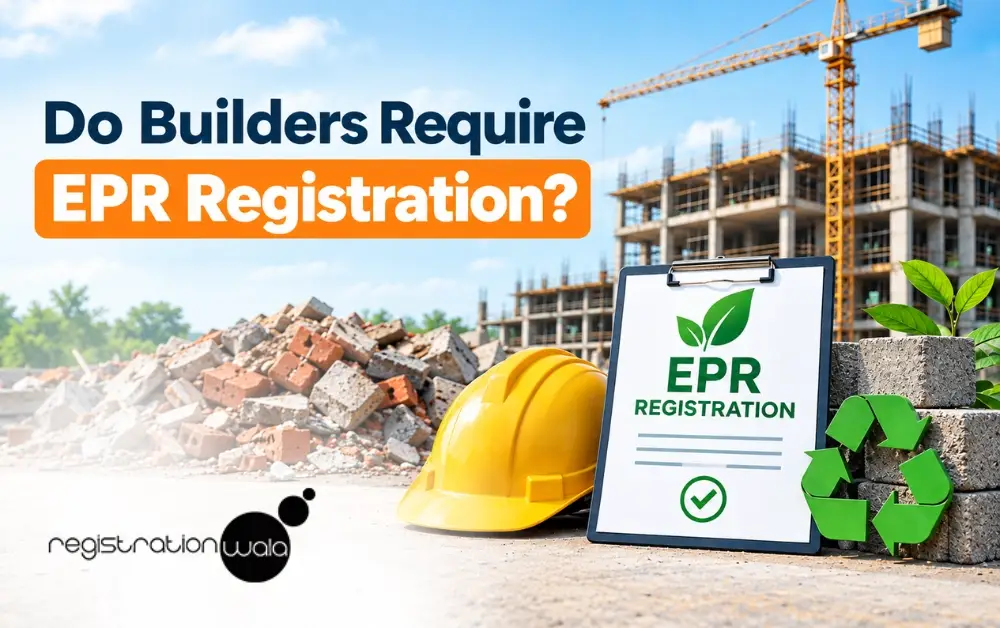
From 1 April 2026, the Environment (Construction and Demolition) Waste Management Rules, 2025 came into effect in India. These rules introduced an Extended Producer Responsibility (EPR) system for construction and demolition waste.
Under these rules, the EPR registration is mandatory for a builder if they are managing a building or building complex project with a built-up area of 20,000 square meters and above.
What is EPR Registration for Builders?
It is a new environmental compliance requirement under the EPR framework. It was introduced through the Environment (Construction and Demolition) Waste Management Rules, 2025, which came into effect on 1 April 2026. Under these rules, builders, developers and other project owners may be required to register as a “producer” when they are the waste generator and are the occupier or in charge of a building or building-complex project having a built-up area of 20,000 square metres or more.
Such producers are required to register on the CEPR portal and comply with all the applicable EPR requirements. The main purpose of this requirement is to ensure that construction and demolition waste, such as cement concrete, bricks, tiles, ceramics and other materials, is collected, managed, processed and recycled in a proper way. The rules also require producers to meet the prescribed EPR targets for proper waste management.
Benefits of EPR Registration for Builders
The benefits of the EPR registration for builders can be understood with the following points:-
-
It helps the builders to ensure compliance with the Environment (Construction and Demolition) Waste Management Rules, 2025.
-
It allows them to avoid fines and penalties associated with not having EPR registration.
-
Builders having EPR certification showcase their eco-friendly building practices and also encourage a circular workflow where building materials don’t end up in landfills.
-
The EPR registration certificate helps builders and developers to build a good reputation in the market, especially among those who value environmental protection and sustainable development.
How Can a Builder Obtain EPR Registration?
A builder can obtain EPR registration for C&D waste by following the steps below:-
Step 1:- Visit the CEPR portal @ https://epr.cpcb.gov.in/home.
Step 2:- Once you are on the homepage, click on ‘Construction & Demolition Waste Management’.
Step 3:- Now, you need to log into the portal. If you do not have an account, then you need to register before you can login.
Step 4:- After logging in, you can begin filling out the EPR application. Make sure all the details you provide are correct and complete. You must also attach the necessary documents.
Step 5:- Pay the prescribed government fee for EPR registration, so you can submit your application.
Step 6:- After receiving your application, the concerned authority will review it carefully and check it against the applicable regulatory and legal requirements. If everything is found to be in order, the authority will approve your application and issue an EPR certificate.
Also Read:- What is the Common EPR Portal?
Conclusion
For builders and developers who fall under the definition of a “producer” under the Environment (Construction and Demolition) Waste Management Rules, 2025, the Extended Producer Responsibility registration is an important compliance requirement. Builders managing projects with a built-up area of 20,000 square meters or more should verify if they meet the criteria for being classified as a producer and complete the necessary registration process via Common EPR portal.
By adhering to all the applicable EPR requirements, builders can ensure proper management of construction and demolition waste. This commitment not only promotes responsible waste management practices but also contributes to a cleaner and more sustainable construction industry.
Get Free Consultation
Frequently Asked Questions (FAQs)
Q1. What type of waste is covered under C&D waste rules?
A. The construction and demolition waste management rules cover waste generated from construction, demolition, remodeling, renovation, repair and maintenance activities. It includes waste like soil, sand and gravel, bricks and masonry, concrete, metal, wood, plastic, ceramic and other similar materials.
Q2. Do real estate developers require EPR certificate for C&D waste?
A. Yes. They require this registration if they qualify as a “producer” under the C&D Waste Management Rules, 2025.
Q3. Who is a producer under construction and demolition waste management rules?
A. Under the construction and demolition waste management rules, a producer is defined as a waste generator who is the occupier or in charge of a building or building complex project having a built-up area of 20,000 square metres or more.
Q4. Is EPR registration mandatory for all builders?
A. No. It is only mandatory for builders who meet conditions of a producer under C&D rules, i.e., a waste generator who is the occupier or in charge of a building or building-complex project having a built up area of 20,000 square metres and above.
Q5. Under the C&D waste management rules, what does extended producer responsibility mean?
A. Under these rules, “extended producer responsibility” means the producer’s responsibility to manage construction and demolition waste and meet recycling targets to ensure environmentally sound management.
|
Disclaimer:- This blog is for general education and informational purposes only. Rules, procedures, fees and registration requirements are subject to change from time to time. Therefore, the readers must check the latest requirements of the concerned authorities before applying for an EPR registration.
|
-
Published: September 08, 2026
354 Views