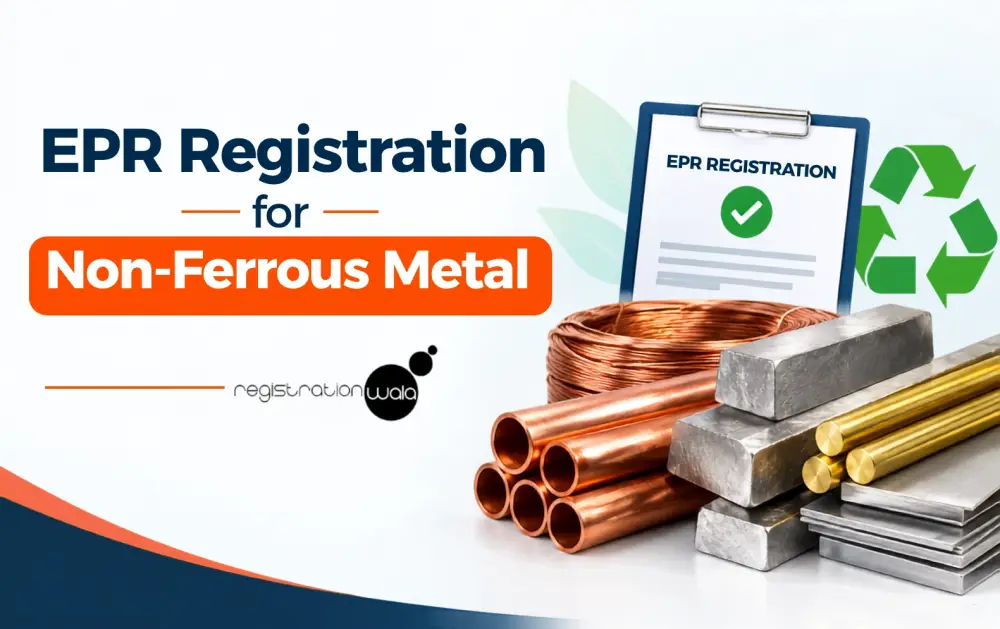
The Indian government introduced a new Extended Producer Responsibility (EPR) framework for non-ferrous metal scrap under the Hazardous and Other Wastes (Management and Transboundary Movement) Amendment Rules, 2025 w.e.f. 1 April 2026. This framework covers materials such as aluminum, copper, zinc and their alloys. The new framework aims to manage as well as trace metal scrap properly. It encourages recycling and minimizing environmental impact of improper disposal and handling.
It also introduces an online certificate-based system to help businesses meet their EPR obligations. In this blog post, we will discuss EPR Registration for Non-Ferrous Metal Scrap in detail, including who needs to register, the required documents, registration process and more.
EPR Registration for Non-Ferrous Metal refers to a mandatory registration for certain businesses that manufacture, produce, collect, refurbish or recycle non-ferrous metal products and scrap specified under Hazardous and Other Wastes (Management and Transboundary Movement) Amendment Rules, 2025.
The registration is handled via Central Pollution Control Board (CPCB) portal known as Common EPR Portal, under the EPR framework. Non-ferrous metals mainly covered under the amendment rules include aluminium, copper, zinc and their alloys. The rules also cover different products made from these metals, such as utensils, wires, electrical fittings, doors and windows to name a few.
The main purpose of the EPR non-ferrous metal registration is to make sure that metal products and scrap are properly collected, refurbished or recycled after their useful life. The entities covered under the rules must obtain EPR registration for non-ferrous metal from CPCB before carrying out their activities.
Under Schedule X of the Hazardous and Other Wastes (Management and Transboundary Movement) Amendment Rules, 2025, a list of products made from non-ferrous metals has been specified. These products are covered under EPR framework for non-ferrous metals. The list is given below:-
|
S. No.
|
Products
|
|
1.
|
Cans for beverages, aerosols and other such products
|
|
2.
|
Packaging Foils for food, pharma and other such products
|
|
3.
|
Doors, windows, shutters
|
|
4.
|
Aluminium Composite Panel
|
|
5.
|
Aluminium partitioning, grills and other such products
|
|
6.
|
Utensils (cookware, canisters, storage and other such products)
|
|
7.
|
Furniture tables, chairs, benches, ladders etc. including doorknobs, handles, hardwares
|
|
8.
|
Roofing and Ceiling sheets
|
|
9.
|
Motors, pumps, alternators and other such product (other than automobile grade)
|
|
10.
|
Conductor cables and Wires, strips (other than automobile grade)
|
|
11.
|
Sanitary ware and fittings
|
|
12.
|
Electrical fittings (other than automobile grade)
|
|
13.
|
Aluminium Alloy Bicycle
|
|
14.
|
Transformer (other than automobile grade)
|
|
15.
|
Electric Generator sets
|
|
16.
|
Centralized air conditioning plants
|
|
17.
|
Apparel products e.g. Belt Buckles, Zip, Shoes
|
|
18.
|
Toys
|
The following entities need to obtain EPR registration for non-ferrous metals specified under Schedule X:-
|
Entity
|
Meaning
|
|
Manufacturer
|
A manufacturer is a person/entity/company that manufactures products, components or spare parts made of non-ferrous metals covered under Schedule-X of Hazardous and Other Wastes (Management and Transboundary Movement) Amendment Rules, 2025, such as doors, windows, shutters, sanitary ware and fittings, electric generator sets and toys.
|
|
Producer
|
A producer refers to a person/entity that either sells or offers to sell products made up of non-ferrous metals. This includes businesses that sell these products under their own brand, sell products made by another manufacturer under their own brand name, sell imported products or import used non-ferrous metal devices, products or scrap.
|
|
Collection Agent
|
A collection agent refers to a person or an entity that collects scrap of non-ferrous metals.
|
|
Refurbisher
|
A refurbisher is defined under the rules as a person or entity that repairs or assembles used non-ferrous metal products covered under Schedule-XII of Rules to extend their working life and allow them to be used for same purpose. These products may be sold under same brand or a new brand name.
|
|
Recycler
|
A recycler is simply a person/entity involved in recycling scrap of non-ferrous metals.
|
The following documents are generally required for EPR registration for metals:-
-
Certificate of company incorporation, where the entity is a company.
-
Partnership deed, where the entity is a Partnership Firm.
-
LLP agreement, in case the entity is a Limited Liability Partnership
-
Any other business constitution document, in case of any other form of business entity.
-
Business PAN Card of the applicant entity.
-
GST Registration Certificate.
-
Digital Signature Certificate.
-
Import Export Code, where the applicant entity is an importer.
-
Authorised Signatory’s Aadhaar Card as well as PAN Card.
-
Board Resolution & Authorisation Letter authorising appointment of Authorised Signatory.
-
Details of Non-Ferrous Metal Products.
-
Product specification sheet indicating content of Aluminium, Copper, Zinc or their Alloys.
-
Annual data on production, import and sale of covered products.
-
Estimated Quantity of Non-Ferrous Metal Scrap.
-
EPR Plan.
-
Consent to Establish and Consent to Operate from State Pollution Control Board (SPCB) or Pollution Control Committee (PCC), where necessary.
-
CPCB/SPCB/PCC registration/authorisation details, if already available with the applicant entity.
-
Declaration by applicant for confirming compliance with EPR obligations.
-
Other documents required during EPR application process.
Also Read: What are the Solid Waste Management Rules 2026?
The EPR registration process for non-ferrous metals involves a few important steps. Below, we have explained these steps:-
Step 1:- First, you need to collect and prepare all the documents required for EPR registration. Check all the documents properly before starting application.
Step 2:- Next, you need to create an account on Common EPR Portal.
Step 3:- After creating your account, fill in required details about your business and applicable non-ferrous metal products. You also need to provide details of your annual sales and production along with required declaration.
Step 4:- You must then make arrangements with authorised recyclers. These arrangements will help you meet required recycling and resource recovery targets under extended producer responsibility framework.
Step 5:- After you submit application, the CPCB reviews information and documents provided by you. If any clarification or additional document is required, you may need to submit it through the portal.
Step 6:- Once your application is verified and approved, you will receive an EPR registration certificate for non-ferrous metals. You can then fulfil your applicable EPR requirements for recycling and recovery.
Conclusion
For businesses covered under EPR rules for non-ferruous metals, EPR registration is of utmost importance. The registration process involves preparing documents, submitting the application and receiving EPR certification via CEPR portal. If you need assistance in securing the EPR certificate, you can get in touch with our team at Registrationwala.
Get Free EPR Consultation
Frequently Asked Questions (FAQs)
Q1. When did the Hazardous and Other Wastes (Management and Transboundary Movement) Amendment Rules, 2025 come into effect?
A. The Hazardous and Other Wastes (Management and Transboundary Movement) Amendment Rules, 2025 came into effect on 1 April 2026.
Q2. What is the validity of EPR certificate for non-ferrous metals?
A. The EPR Certificate for non-ferrous metals comes with a validity of two years, from the end of the financial year in which it is generated. If this certificate remains unused for a long period, it will automatically expire.
Q3. Which portal is used to apply for an EPR Certificate for non-ferrous metals?
A. The Common EPR Portal, also known as the CEPR Portal, is used to apply for EPR registration for non-ferrous metals.
|
Disclaimer:- The information provided in this blog is for general and educational purposes only. We have tried to keep the content accurate and updated but applicable rules and requirements may change from time to time. Readers should confirm the latest details from official sources before relying on this information. This blog does not constitute legal, financial, business, academic or professional advice.
|
-
Published: September 09, 2026
420 Views